Think Twice About Eating That – CRPS and Diet

By Patricia Calderon, Guest Blogger for RSDSA

Who would have ever thought that what we eat while having CRPS/RSD would cause us more pain then we already experience? I found out the hard way when my symptoms were getting worst and worst each day, then some days not so much. “There has to be a reason for this,” I said to myself. So, I kept a diary of all the foods I ate and my pain scale throughout the day. Low and behold, I found out that I was making my pain increase each day with the foods I was eating. Consuming a lot of processed foods was one of them. Because I am always in pain and can’t stand for more than 10 minutes, microwavable foods were all I ate at one point. In this article, I will be sharing what foods to eat and which to avoid all together, along with a recipe that has helped my inflammation each day.

CRPS/RSD is often described as injury to a nerve or soft tissue that does not follow the normal healing path. Many physicians agree that the complications and pain from CRPS are due to inflammation. Basically, if you have CRPS, you suffer from chronic inflammation. Eating an anti-inflammatory diet focuses on eating foods that heal and naturally reduce inflammation and also reduce triggers of inflammation. Foods that tend to trigger the body’s inflammatory response can cause an increase in joint pain, stiffness, redness, swelling, heat, and even loss of function. Since most sufferers of CRPS/RSD already have a heightened inflammatory response, eating foods that can increase inflammation can worsen already inflamed and painful areas and lead to further damage.

Benefits of an anti-inflammatory diet

Following an anti-inflammatory diet provides the building blocks to:

  • prevent further nerve damage
  • help heal current nerve damage
  • increase circulation
  • improve sleep
  • increase energy
  • decrease pain perception
  • improve mood
  • increase joint mobility
  • strengthen immune system

Let’s talk about foods to avoid. Coffee and chocolate contain oxalic acid -so too much of these can inhibit mineral absorption. It has been stated that chemical compounds in coffee can interfere with the opiate receptor sites in the brain, interfering with nerve transduction and pain relieving mechanisms (though I haven’t read any scientific research on this) which results in a decrease in pain tolerance. So you have to imagine that I, a caffeine junky, can’t have caffeine anymore. This was one item in my food diary that I started to slowly ween off of and day by day I noticed less pain. My pain was not fully gone, just relieved a bit more than other days.

Stay away from sugars. Sugar triggers an inflammatory/aging process called “glycosylation”. Avoid white refined sugars and flour products including white bread, bagels and white rice. Also to be avoided are sugary sodas and other high sugar drinks.

Animal fats contain an inflammatory agent called arachidonic acid (AA). Unfortunately, this means avoiding or strictly limiting red meat, butter and whole eggs. Stay away from processed meats (hot dogs, sausages, bacon, etc.) that contain nitrates, which can really increase inflammation.

Now that we got the bad food out of the way, let’s talk about foods to eat. I know what you’re thinking… Do I have to become a vegetarian or go vegan? The answer is no, but if you find that eating that way works by all means GO FOR IT! Eating a variety of colorful fruit and vegetables, and rotate them, to get the maximum nutrients (don’t just eat the same vegetable every day). Smoothies are a great way to get more nutrients into your diet if you are in pain and not feeling particularly hungry. I found that smoothies where the way to go for me in the morning and at lunch because they were less time consuming and due to all the medication I don’t feel hungry enough to eat a meal. Prepping the smoothies ahead of time and storing them in the freezer is best. When you feel like having a smoothie, all you do is empty the contents in the blender and add juice.

Turmeric, ginger, nutmeg, and cinnamon are particularly good spices to try to include in your diet. Not only do they enhance flavor, they also have various phytochemicals that have been studied for their anti-inflammatory and analgesic properties. Below is a turmeric juice recipe I drink every morning. This helps fight inflammation throughout the day.

Anti-Inflammatory Turmeric Juice

1 Medium Carrot

1 tbsp Ginger

1 juice from lemon or orange

1 tbsp Honey

2 tbsp Turmeric

2 cups Coconut Water

Directions: Place all ingredients into a high speed blender and blend until smooth. Drink as is or strain through a strainer. ENJOY!

Note: This is based on the writer’s experience and opinions.

RSDSA Spotlight: How CRPS Taught Me to Live In the Moment

CRPS enjoy the moment: Someday you'll be someplace else, enjoy here nowBy Anna Evenosky, Guest Blogger

Rewind to that time that is so vague in my head that I can barely remember it. The time of my life when I was as free as a bird spreading its wings for the first time. The time of my life when I didn’t know CRPS existed.

I can’t recall what being pain free feels like. Although, I can recall the happy times I would be lying if I said I didn’t miss. Going from a life where my biggest worries were passing a class, or getting something done on time, to a life of chronic illness, was an adjustment to say the least. Something I wasn’t exactly ready to take on. Although, I’m sure at no point is anybody ready to handle watching their life seemingly crumble to pieces.

Reflecting on my life before Chronic Illness is something I do more often than not. I always find myself coming to the same conclusion and same regret – why didn’t I appreciate how good I truly had it? Why is it that we don’t know what we have until it’s gone. No matter how many people claim that they don’t take for granted being able to walk from point A to point B, truth is they don’t know anything different to be able to appreciate it. To those people who wake up every morning and complain that they are “too tired” to get out of bed. I hope you appreciate that on top of fatigue you don’t need to deal with pain worse than child birth, swollen limbs, and wondering if your body will give out on you when you stand.

Surviving in a life with CRPS is something that nobody should need to face. To those Warriors who have no choice but to fight, I hope I can convince you to always live your life in the moment. Every Warrior deserves to live as “normal” of a life as possible. In fact you’re so busy fighting, worrying, thinking about the future all the time, that sometimes you must learn to let it all go and do what makes you happy. Life is too short and our ‘good days’ are too short to waste them on things that don’t ultimately leave a smile on our faces at the end of the day.

On that rare occasion where you have enough energy and feel well enough to go out with some friends or your family, but you’re torn on what to do, because you have a test in school tomorrow, or have been struggling with too much on your plate at work and should really work overtime, do yourself a favor. Live in the moment. Realize that not getting that A+ won’t make a huge impact on your grade; and realize that you avoiding your work for one more day won’t make a huge difference. Don’t think about what impact this decision will have in the days, weeks, months to come because chances are it has no impact that far into the future. Sometimes, we must stop striving to go above and beyond in everything we do, but shift our focus on making ourselves happy. I’m not saying school and work shouldn’t be a priority. I’m simply stating that your overall well-being and happiness should be just as important. Sometimes it isn’t even a matter of choosing between one or the other, but a matter of finding a happy medium. When a good opportunity comes your way, no matter the sacrifice you may have to make if it’s going to bring you happiness jump at it. You never know when your health may take a turn for the worse and that opportunity may no longer be available to you.

You, a CRPS Warrior, go through and have lost too much to lose your happiness too. Maybe there is no pill we can take or treatment to cure us, but I can assure you that happiness can go a long way and make this life you live a whole lot easier. This is one thing that you can do to truly help yourself. So next time you say “What if?” or “I can’t, I have a lot of work” or “I wish I could, but I really should ­­_______” , smack some sense into yourself and treat yourself to something you deserve. Never lose touch with what brings you true happiness. After all, we never know what the future may bring and I’m sure you would hate to look back at your life and have regrets. Live in the moment it truly is the best medicine you can give yourself.

So You Want to Dance – A New Way to Help CRPS

Lucrecia teaches dance as a form of physical theraphy for CRPS/RSD painBy Ryan Ferrell for the RSDSA website.

Do you sometimes struggle to get Enrique out of your head?

Yo quiero estar contigo, vivir contigo

Bailar contigo, tener contigo

So does Lucrecia Martinez, a physical therapist from the Silicon Valley. She wrote about wrestling with her chronic pain after an injury in last summer’s Community Update (page six):

Until then, my passion in life had been dancing. My husband and I met dancing. We loved to escape on date nights to dance salsa, cumbia, merengue, and any other Latin-infused music.

At first, I denied that pain could rob me of my passion. I would grit and push myself through the pain. I feared that, if my husband and I could no longer dance, he would feel sad. All of this dancing in denial, however, would cause are-ups that lasted for days.

Some years later, while working with my patients, I realized that neither dance nor pain needed to dictate my life, that my life was mine alone. I taught patients how to modify and pace their activities, helping them to manage pain, regain function, and reach personal goals. Why not do the same for myself? Why not modify dance?

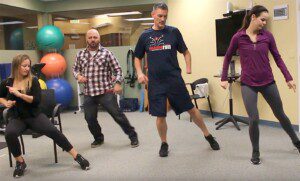
Lucrecia’s article on modified dancing a great read, complete with a playlist of songs whose rhythms are easy to adapt to new moves, no matter one’s physical limitations. Even better, she has now released videos on YouTube!

So if you’ve wanted to dance, but needed new moves… open YouTube, make some room, and start to groove.