Written for RSDSA by Erika Warren – CEO & Co-founder of Inciteful Med
If you have CRPS, you know what it is to not be believed. Your pain rates higher than cancer pain on the McGill Pain Index, and yet “out of proportion to the injury,” the phrase written into the diagnostic criteria, is also the line that gets you dismissed in exam rooms and sometimes at home. So I understand why so many people in this community, and other chronic and complex cases, turn to AI. About one in three Americans now use AI chatbots for health information, and when the health system makes you fight to be taken seriously, a tool that answers instantly is a relief.
I’m not a doctor, I’m a technologist. I built research tools used by academics and librarians, and it took becoming a patient and caregiver myself to see how few reliable ones exist for the rest of us. Most AI media coverage is all warnings and no education. So consider this your cheat sheet: understand how AI works, question it, and use it wisely.
Most AI is a language model
When people talk about AI, they almost always mean a specific category of AI called Large Language Models (LLM) like ChatGPT, Claude, Gemini, Perplexity. An overly simplified way to think of an LLM is to think of it as a sophisticated autocomplete. It responds to your prompt by predicting the next likely word from statistical patterns in its training data. And its training data is vast – basically the entirety of the internet, copyrighted materials, social media, open access journals and articles. The more content the model has, the better pattern recognition and predicting it can do.
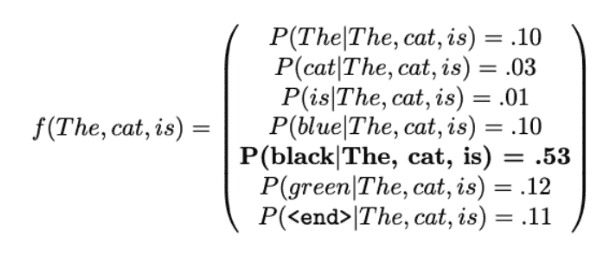
That means LLMs:
- Don’t look anything up by default, and can’t reason or verify.
- Have no built-in sense of true versus false.
- Guess fluently and confidently.
- Cannot create anything “original”. Everything is a derivative of other content.
In the AI world we say hallucinations are a feature, not a bug: confident guessing is simply what a probability model does.
“Pretty good” is exactly the trap
Knowing this, the answer isn’t “never use ChatGPT.” On a lot of general questions, today’s models are right more often than not. But “usually right” is a different standard when it’s your body, and the failures don’t announce themselves. A wrong answer arrives in the same reassuring voice as a right one, and it is not easy from the outside to tell which is which. So the move is simple: use LLMs for what they’re good at, and don’t use them for what they’re bad at.
Great for:
- Translating jargon: What does “allodynia” or a confusing clinic note actually mean? Or ask it to explain the Budapest Criteria in plain language. It is very likely that this general information is well-referenced in the training data.
- Summarizing: With language mastery, summarizing and translating is an LLM superpower. Use them to convert dense material into something you can understand.
- Prepping for appointments: Generative thinking here helps you. An LLM is likely to suggest common questions that others ask, which may give you ideas of your own. An example might be, “Help me write five clear questions for my pain specialist.”
None of these depend on the answer being factually correct. They’re about understanding language, which is where LLMs shine.
Do not rely on LLMs for:
- Anything time-sensitive or current: Models have a knowledge cutoff and may hand you outdated thinking as current. For instance, they may reference sympathetic nerve blocks as a definitive diagnostic test or a cure, an idea the field has moved away from in the last few years.
- Facts, stats, and citations: An LLM will confidently produce “76% of patients improved,” or even cite a study that doesn’t exist. Don’t use a plain LLM for research.
- Reading your data: Hand it a lab table and it can quietly swap a value. It looks accurate, but unless you can verify it, be cautious.
There’s no accountability built in. If it’s wrong, the consequence lands on you and how you act upon the information. You and your doctor are the verification step.
Not all AI is a language model
This is the part almost no one explains, and the thing I most want you to remember. Some AI health tools aren’t guessing from memory, they’re retrieval tools, and they work in a different order:
- 1. Your question hits a search index over a curated library of real documents – not a model’s memory, not the open web.
- 2. Actual papers that match are pulled from that library. They exist; they aren’t generated.
- 3. Then a language model does the one thing it’s good at – reading and summarizing – working from the documents it retrieved.
The industry calls this RAG (retrieval-augmented generation). It’s a real improvement: answers are anchored to sources you can theoretically open and check, and outright fabrication drops sharply. But it isn’t magic. A retrieval tool can still misread a study, overstate what it found, or land on the wrong source when the right paper isn’t retrieved. Better, not perfect – you still verify. That’s true of every tool here.
A few worth knowing:
- Consensus, Elicit – built for researchers working across the academic literature and different domains. These tools are not medicine-specific.
- Open Evidence – built for clinicians; limited access to verified medical professionals. Close to 60% of clinicians now report using Open Evidence to look up information.
- Inciteful Med – the one my team built specifically for patients and caregivers, referencing PubMed, ClinicalTrials.gov, and FDA FAERS data.
What matters more than which you pick is that you can tell this whole category apart from a chatbot.
The catch: “deep research” isn’t enough
The popular chatbots now do a form of retrieval too – ChatGPT search, Perplexity, Gemini, all have “deep research” modes. That sounds like the same thing as research-specific tools, but unfortunately it isn’t. They retrieve from the open web, where a clinic’s marketing page and a peer-reviewed trial look identical. RAG is a method, not a guarantee. What a tool retrieves from is the variable that matters. An open-web retriever is a better Google. It is not a reference librarian handing you the vetted peer-reviewed literature.
Three questions for any health tool
You don’t need to memorize the mechanics. You need three questions:
- 1. What’s the data source? A model’s memory, the open web, or a curated database of peer-reviewed research? This one question separates most of the good from the risky.
- 2. How transparent is it? Can you see the sources and dates, and click through to verify? If you can’t check it, don’t bank on it.
- 3. Who’s paying for it? The business model tells you whose problem the tool was built to solve. Free, subscription, ad-supported – none is disqualifying, but incentives shape a product and its answers, most often through what gets withheld. A tool provided from a health system has liability to manage, so it may be slower to cite emerging research. Open Evidence runs on pharmaceutical advertising, which keeps it free for physicians but leaves open questions about how pharma may shape what’s retrieved, and in what order, as the product evolves.
Run any tool through those three and you’ll have a better idea of how much to trust it for your use case.
Patient education facilitates collaboration
None of this is about turning patients into amateur doctors. It’s about closing a gap. CRPS patients get dismissed because of an information gap: the clinician has the literature and the vocabulary; you have the pain and no easy way to push back in terms the system recognizes or respects. The right tools narrow that. There’s a real difference between “I read online that…” and walking in with an actual study you can cite and an informed question. One is easy to wave away, the other earns you a real conversation.
Medical and AI literacy together are a kind of superpower: not a machine that tells you what to think, but access to what’s actually known, explained in a way that enables you and your clinician to use judgement. It doesn’t replace your specialist, but rather makes that relationship stronger, more personalized, and collaborative.
—
This reflects my own opinion and experience building research tools, not medical advice. Decisions about your care belong with you and your specialist.
Erika Warren is co-founder and CEO of Inciteful Med, a tool that helps patients and caregivers search peer-reviewed research and get answers cited to the studies. Inciteful Med runs on the same engine as Inciteful Academic, a forever-free research platform cited in over 100 peer-reviewed work across dozens of institutions and countries.