Written by Bryan Pope of The Cochran Firm – Dallas for the RSDSA blog.
Walking. We all take for granted the ability to do this. Unless we can’t…. and then it makes all of the difference in the world that we do not get to take it for granted.
I have been helping clients all over the country fight their legal battles for over 25 years who have various stages of CRPS. It is devastating to see how someone can be athletic, running, working out and healthy one day and then the next day something happens to change the fabric of their life. The ability to put one foot forward after another becomes a challenge to the point where walking and running are not even a possibility anymore.
Every day becomes a struggle just to get out of bed, off the couch, and then my clients just hope to be able to make it through the day without the burning pain that can reduce one to tears.
Walking. Today is a day that we walk for those who cannot. We are the spouses, the children, the parents, the friends, the relatives, the extended family, the legal counselors, the caregivers, the first responders, the medical providers. We walk to raise money to help find a cure for this hideous disease. We walk so the world will understand how the fire that breathes into their limbs can be so consuming that some think there is no way out. We walk with a purpose today so that those who have been knocked down can one day walk on their own. Today we Walk for CRPS.
Bryan Pope is the co-founder of The Cochran Firm – Dallas and is focused on cases involving victims of RSD or CRPS. Mr. Pope is also a sponsor of RSDSA’s 2nd Annual Virtual CRPS Awareness Walk.
Written by Erica Santiago. Reposted with permission for the RSDSA blog.
Back in November 2012, I was on my way to a doctors appointment out in Boston Massachusetts. I was hit on the left side of my car by a very large tractor trailer truck during a merge in the road. I did not know at the time that this accident was going to be the changing point in my life.
The condition I developed from this accident made everything different and quickly, seemingly overnight. My left hand ended up not working correctly five days after the accident. I woke up and felt a very strong weakness in my left hand. I called my neurologist that I see for migraines and he said he wanted to see me right away. I went to see him and he ran some tests, did a CT scan, and an MRI of my arm. He called me to tell me that everything came back normal.
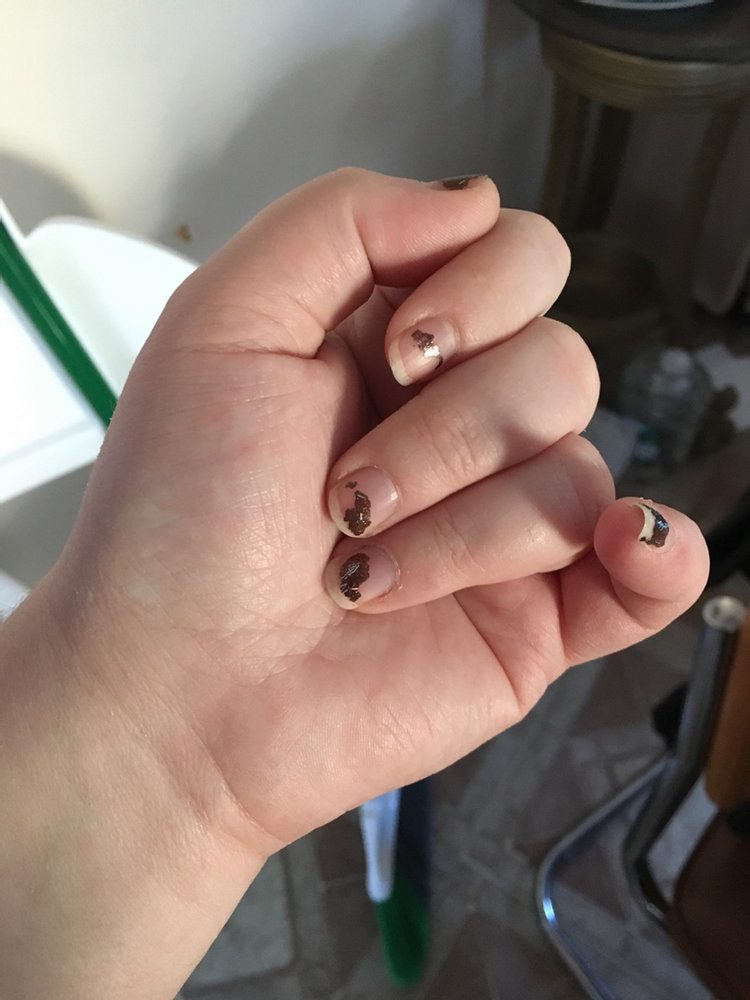
I was losing the ability to function my hand normally. As each day went by, my left hand started closing with severe muscle spasms into a fist. My fingers pulled in downward. I could not open it anymore. I only had a functioning pinky on that hand. Suddenly I was down from ten fingers to six. The photo below shows the position my hand was stuck in.
I had to relearn everything: How to open up packages using my mouth, how to button up shirts using my right hand and a pinky on my left hand. I needed to open up straws using my teeth. I was forced to relearn how to modify my life around using six fingers. I would get stares from strangers in McDonald’s and other restaurants. People of all ages just looking at me wondering why I was doing things the way that I was doing them. I tried not to let it bother me, but deep down it did.
My four-year-old daughter was in the car with me when this tractor trailer truck hit my car. Thank goodness she was not hurt, but it was hard taking care of her with this going on. I was in so much pain as the muscle spasms were so tight it was like a strange force overcame my left hand. My fingers were digging into my palm.
Anything touching that arm sent electric shocks down my arm into my left hand. Breezes hurt as the simple wind felt like stabbing sensations. Rain felt like stinging bees on that arm. The cold was like ice picks jabbing me repeatedly. I could not be touched on that arm. I was tortured. This was all day and night, constantly never letting up. So imagine my pain when I broke this exact same wrist in June 2018. My wrist cracked while gardening and I was laying on the ground seeing stars. I got a fancy purple cast and luckily about six months later it healed.
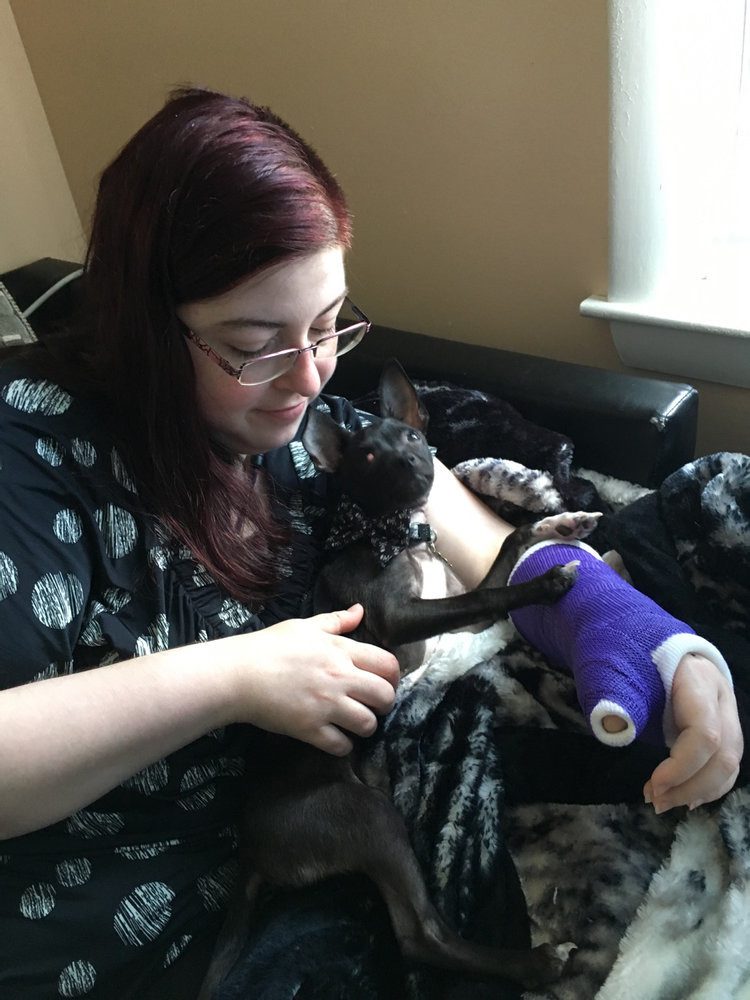
Here I am petting my dog Odin while wearing my cast. He was just a puppy then. He’s three years old now.
In 2013, a year after the accident, my hand was still closed after seeing a few specialists. What was worse is my wrist was now stuck flexed in a bent position towards my body. My left arm and hand became useless and I stayed that way for 3 1/2 years. I somehow made it through everyday with this excruciating pain.
I had seen many doctors and went through many different treatments some of which were very strange. I had a treatment where I had to stick my arm in a machine that was 107° and they were ground up corn husks inside that were blowing around my arm. I had another therapy, mirror box therapy, where I had to put my arm behind a mirror and my good hand in front of it. It is supposed to trick your brain into thinking that your good hand is your bad hand with the idea being that you can try to get some movement in the RSD affected limb.
I had so much physical therapy, years worth. I had about eight different therapists in three different places. I saw over 12 doctors in about a three year time span. It is really hard finding a doctor who even knows what RSD (also known as CRPS) is, never mind knowing how to treat this condition. I just wanted answers and no one was able to give them to me. I was losing hope and feeling immensely frustrated. I did not know where to turn.
It wasn’t until I went to a pain clinic out in Boston. I saw a pain doctor there who knew exactly what I had the moment that he met me.
My arm was purple, ice cold to the touch. It was shiny and it also was extremely tightly stuck in spasms. The muscle spasms I was having he told me was something called Dystonia.
He told me that the condition that I have causing the pain, discoloration and Dystonia is called Reflex Sympathetic Dystrophy. It’s also called Complex Regional Pain Syndrome. I went home and researched it and it scared the heck out of me. I now have this new condition that is completely life altering and I had a young child. I did not know what I was going to do.
Later on in my treatment, it was suggested that I get a major surgery and get an implant device called a spinal cord stimulator. I ended up having that surgery after going through extensive talking in counseling with people and specialists because that surgery does not always work. They put a battery pack into the right part of my back. I had over a 6-inch incision in the back of my neck, to make room for the metal plate. I also had about a 4-inch incision in my upper back.
That surgery ended up helping me for a few years and it did get my hand open. I had to use a remote control to up or lower the amount of electrical stimulation it was giving me. It basically blocks pain signals coming from brain and it confuses them, so it did help me for a few years, but then I started developing complications from that device. An infection after the first surgery was a big complication I had. I ended up having to be admitted in the hospital for five days and on pulse IV antibiotics.
I then also started developing an allergy to the metal of the product and started losing my balance and having very strange neurological symptoms. After all of this and after four years having it implanted, I decided to have my spinal cord stimulator removed. That was probably one of the hardest decisions I have had to make in my life because I knew that by removing this, I might lose my hand forever. I also knew though that if I left it in I might not have any quality of life going forward.
So I had to do what I thought was best. I still suffer with immense pain every day. I am happy to report that my hand is still open. I have kept it open by using it every day. If you do not use your RSD affected limb you can lose the function in it rather quickly. One of the biggest things I have learned is that you have to push through the pain every day, in your own way. Any way that you can do it.
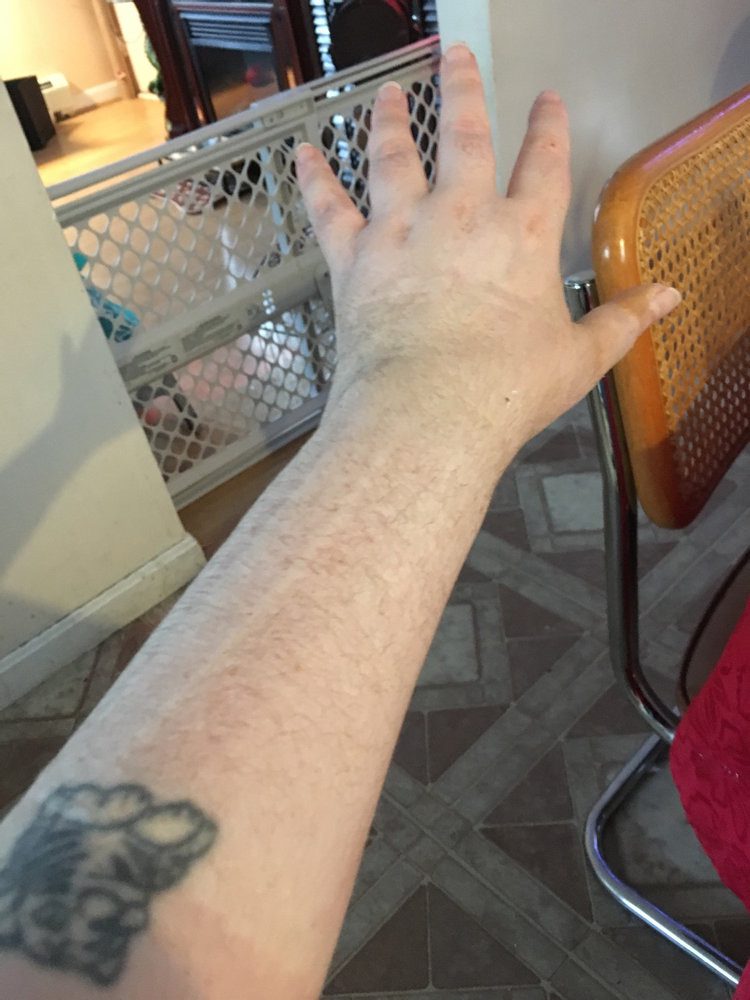
Here is a picture of my left hand shortly after my cast was taken off. My hand is open again. I can’t even describe the joy and relief I felt.
November 2021 will be nine years that I have had RSD. It is still extremely difficult and there are some days that I do not even know how I get through them, but I have great support from my parents. I have great support from my family and my daughter, who is now thirteen, understands a lot more about this condition. She also helps me around the house with the animals and cleaning. I am very blessed that I have such great people in my life that are able to support me in the way that they have.
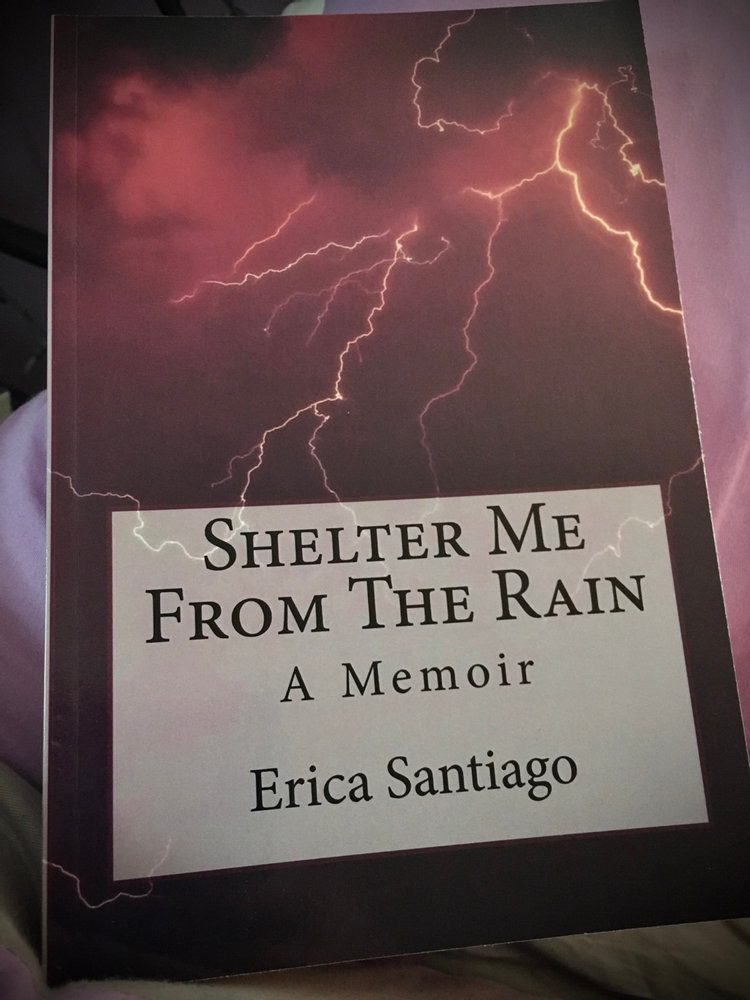
My book details my journey even further than what I have written here. My book also has a chapter for family and friends to help them learn what they can say or do to help someone affected with RSD. In addition, it has a more medical in-depth explanation of what this condition is.
My book is called “Shelter Me From The Rain” and it is available on Amazon. I hope you do check it out and I hope that by sharing my story I can help others.
I am in the process of writing a sequel memoir called “Shelter Me From The Pain.” This book follows up from the last half of 2018 and on. That book will also be on Amazon once it is published. If you have any questions, comments or just want to say hi, please feel free to reach out to me at [email protected].
I may have the world’s most painful condition but I have learned my incredible strength by learning how to live life in a completely different way.
I have learned who my true friends are and whom I can depend on. I have learned that by continuing to find hobbies and activities that mean something to you, it can help keep you going on your darkest days. I have learned to take the good with the bad, to know when I need to rest, to accept the things I can’t do anymore and to embrace the things I can do.
Never give up! You can do this! I have faith in you. In all of us! We are an RSD family and we can always be there for each other. I wish all of you fellow RSD warriors many low pain days to come.
The Transportation Security Administration (TSA) has launched TSA Cares, a new helpline number designed to assist travelers with disabilities and medical conditions, prior to getting to the airport. You may call TSA Cares toll free at 1-855-787-2227 before traveling with questions about screening policies, procedures and what to expect at the security checkpoint.
Since its inception, TSA has provided information to all travelers through its TSA Contact Center and Customer Service Managers in airports nationwide. TSA Cares will serve as an additional, dedicated resource for passengers with disabilities, medical conditions, or other circumstances or their loved ones who want to prepare for the screening process prior to flying.
A representative of TSA Cares, will provide callers assistance, with information about screening that is relevant to the passenger’s specific disability or medical condition, or the passenger may be referred to disability experts at TSA. The organization recommends that passengers call 72 hours ahead of departure to allow TSA Cares to coordinate checkpoint support with a TSA Customer Service Manager located at the airport.
Every person and item must be screened before entering the secure area of an airport and the manner in which the screening is conducted will depend on the passenger’s abilities and any specific equipment brought to the security checkpoint. TSA strives to provide the highest level of security while ensuring that all passengers are treated with dignity and respect. The agency works regularly with a broad coalition of disability and medical condition advocacy groups to help understand their needs and adapt screening procedures accordingly. TSA holds quarterly meetings with this coalition to inform them about current training and screening procedures used in airports. TSA recently hosted a teleconference with members of these groups to announce the long-standing plans to implement TSA Cares for travelers and inform them of the upcoming launch.
All travelers may ask to speak to a TSA supervisor if questions about screening procedures arise while at the security checkpoint.
The hours of operation for the TSA Cares helpline are Monday through Friday 9am – 9pm EST, excluding federal holidays. After hours, travelers can find information about traveling with disabilities and medical needs on TSA’s website. Other communications tools include Talk To TSA, a web-based tool that connects directly, to an airport Customer Service Manager. You can call the TSA Contact Center, 1-866-289-9673 and [email protected], to ask questions, provide suggestions and file complaints.
In July of 2019 I slightly hit my shin against a piece of lawn equipment. Later that day I could tell something was wrong based on how it felt. In the following weeks and months, I visited with multiple doctors who ran multiple tests, yet none of them could explain my pain. After an EMG around February 2020, doctors noticed nerve damage in both legs. After ruling out almost everything else, they determined that I have CRPS.
What has daily life been like since your diagnosis?
In the simplest terms… different. Having had this for a little over 18 months now, I feel as though I have been on multiple journeys during that time. The first 9 months were full of a lot of confusion and frustration. Having this pain but no answer to what was causing it just did not make sense to me. Usually you have something wrong, you visit a doctor, and then they tell you how to fix it. I just kept getting “I don’t knows” from doctors. Through all this, the pain just kept fluctuating from day to day. My leg would swell and bruise at times, then go away days later. I felt very defeated most days since I had no answers or solutions.
I will always remember the day my doctor felt confident in diagnosing me with CRPS. I was hit with a rollercoaster of emotions within a matter of minutes. First was a sense of relief to finally have some kind of answer, but that quickly shifted to fear and sadness as I started to think about what this diagnosis now meant. I knew a little bit about CRPS by that time because a doctor had suggested it as a possibility, so I had already done some researching. I was flooded with emotion for what this meant for my life moving forward. It is quite an interesting feeling when you realize that your life, in that moment, has changed.
With guidance from my doctors, we quickly shifted into action mode as I have been told one motto of CPRS is “move it or lose it.” I immediately started PT and was very nervous at the onset. Worried that a movement here or a tweak there would cause some kind of setback. In the coming weeks I began to grow more confident and started pushing myself more and more during my PT sessions. I then bought all the equipment so I could begin doing these sessions on my own time. Finding that line of pushing yourself to improve, but not pushing too hard was a struggle at first, but I’ve grown more comfortable with it as time has gone on. Outside of that I have focused a lot more on my spatial awareness. Seeing as how I have had negative responses from pretty minor injuries, I’m just much more aware now about removing potential hazards around me.
What is one thing you wish those without CRPS/RSD could understand?
The mental toll this takes on us. There is so much to find out and so many changes to make to our lifestyle, all of that can seem a bit overwhelming. More than anything I have noticed it creates a tremendous amount of brain fatigue. I have learned to give myself time to say “I’m tired, I’m not going to search for any answers today,” and then be ok with that decision. Because so much of CRPS is not visible, it can be really difficult for those who are unaffected to have an understanding of the total effects. A therapist explained to me that those with CRPS are often grieving the loss of their former selves. Almost everyone has had to grieve the loss of a loved one at some point in their lives, but it is a very unique experience to grieve the loss of the self that you once knew.
What advice would you give to newly diagnosed Warriors?
Be diligent and be your own advocate with doctors. Take control of your journey. And almost as important, try to build a great support system. I’m extremely fortunate in that my family and friends have been my rock through this journey. I have heard of circumstances where tensions can build because our symptoms are often “invisible” and it’s really tough for others to understand. My circle has been an incredible support to me throughout all of this.
The other thing I have learned is that it is ok to rest… both physically and emotionally. Sometimes I may be too sore to exercise, so I don’t. And some days my brain may be too tired to work on my emotional well-being, so I opt to watch a movie or give myself other distractions. It is ok to give yourself a break from all of it. The key thing is to make sure you eventually get back to working on yourself so you keep moving forward.
What activities or treatments have helped you find temporary or long term relief?
Physical therapy helped me a lot. I started about one year after my onset of CRPS. Initially I was pretty scared to let a doctor touch my leg or push too hard during an exercise. But they built a program that eased me into it at my own pace. My wife and I also adopted a dog and I truly believe he has been great emotional therapy. He has given me another thing to focus on instead of the pain.
If you were injured at work and ended up with complex regional pain syndrome (CRPS) as a result of the injury, you may be eligible for workers’ compensation (WC). Under WC, your employer’s workers’ compensation insurance policy pays for your injury-related expenses (e.g., medical expenses and lost wages). Any WC case can be difficult, but a WC case that involves CRPS is typically even more difficult for a few reasons:
1. the disorder is not well understood 2. different individuals have different signs and symptoms 3. the symptoms can come and go
If you are having trouble with your WC paying for your medical care, you can contact your state’s WC official. WC laws vary by state, but each state has a WC official who heads an agency with a name such as “Division of Workers’ Compensation,” “Industrial Commission,” “Workforce Safety and Insurance,” or “Division of Labor & Management.”
The contact information for your state’s agency is in the blue government pages of your phone book and on the federal government’s Department of Labor’swebsite. Some states, such as Oregon and Kansas, also have an ombudsman to help injured workers through the process. The ombudsman’s office can be found through the state WC agency and may also be able to help you find legal advice.
In addition, you may also want to see if there is a program in your state that helps people with private health insurance.
If your state does have a program for private insurance, ask if it can handle WC complaints. WC cases may be handled differently from private health insurance complaints, but still the staff may be able to help, especially if the complaint relates to provider billing problems.
Getting a Legal Referral
Given the complications of CRPS WC cases, they often require a lawyer who specializes in WC, and ideally a lawyer who understands CRPS and how it affects you. If you decide to look for a lawyer to represent you in a WC case related to CRPS, first ask your friends, colleagues, family members, fellow support group members, or neighbors for recommendations. Word of mouth is often the best way to find a good attorney, especially if you get the same recommendation from more than one person. Another source of recommendations is through an Internet chatroom or bulletin board support group.
If you cannot find an attorney for your case through personal connections, several organizations have referral services.
The American Bar Association (ABA) has a referral service by state on its website.
Some links let you search for a lawyer by specific specialties (such as WC or the broader term of employment law). There are also many state and local bar association with directories of their members, often listed by specialty; you may contact those associations for suggestions.
In addition, many trial lawyers take WC cases, and the American Association for Justice has a referral service for anyone who is considering suing another party in civil (not criminal) court. The Association has a CRPS litigation group whose members hold seminars to discuss strategies with CRPS cases and exchange medical information, so someone who is a member of this group may have a better understanding of your situation than someone who is not.
There are several sources of referrals specifically for WC cases.
The Workers Injury Law & Advocacy Group, a not-for-profit association of plaintiffs’ attorneys who represent workers, offers a referral service.
The California Applicants’ Attorneys Association, a not-for-profit association of lawyers who advocate for injured workers, also offers referrals to its members on its homepage.
The nonprofit Injured Workers Association of Utah offers referrals and information specific to Utah here.
Injured Workers of New York, Inc., a not-for-profit organization that sits on the New York State Workers’ Compensation Board’s Practices & Procedures Committee, helps injured workers in that state obtain the necessary medical, legal, and financial help.
One commercial website, a Lawyer Directory from LexisNexis, lets you search for a lawyer by specialty, including employment law. The site gives you information about the firm’s size and whether or not the firm offers a free initial (or first) consultation. (Remember that the order in which the lawyers are listed on some websites may be due to fees the lawyers have paid to the site.)
You can also find an attorney through the listings in the business pages of your local phone book under the subject area “lawyers” or “attorneys.” Still, remember that it is often better to find a lawyer—like any other professional you may hire—on the basis of a personal recommendation from someone you trust who knows the attorney’s skills and abilities.
If you do not have much income, LawHelp may help you find a free or low-cost legal aid program to help with a variety of issues, including employment issues. (Keep in mind that legal aid programs typically focus more on issues such as housing, bankruptcy, and disability.) You may also find a legal aid clinic in the phone book or through a bar association. Some bar associations may be able to refer you to lawyers who may help you for reduced fees if your income is limited.
Choosing a Lawyer
If you decide that you definitely need an attorney—whether for a WC case or other issue—it is generally a good idea to speak with a few lawyers before deciding which lawyer to hire or to retain. You may want to have a friend or family member—someone whose opinion you value—come to the meeting with you. Then asking the lawyers questions, such as those below, may help you make a good choice.
What do you charge, if anything, for the first or initial consultation?
Do you accept workers’ compensation cases on a contingency* basis?
What do you expect the fee for your services to be?
What do you estimate your expenses will be?
How long have you been practicing law?
What experience and credentials do you have in workers’ compensation law?
How much do you know about CRPS?
Have you attended any relevant seminars or courses?
How many similar cases have you had and how successful have you been?
What do you think my chances of success are?
How long do you think it will take to resolve my case?
What paralegals or other lawyers, if any, will work with you on my case, and who will be my primary contact?
Do you have malpractice insurance?
Can I review your attorney-client contract that I would be expected to sign? (It is a good idea to take it home with you to review carefully before signing.)
You may also want to call the Better Business Bureau to see if any complaints have been filed against the attorneys you are considering. The lawyers’ associations and some states also keep a record of attorneys against whom complaints have been filed or legal action has been taken, but these lists vary by state. If you still are not sure about your choice of attorneys, ask for a follow-up meeting if that will help. Make sure you feel comfortable with your decision before you agree to hire anyone.
Having Co-Counsel on Your Case
You may end up with more than one attorney, especially if your case is complicated. If your lawyer needs the expertise of another lawyer, your lawyer will arrange for the other lawyer (the co-counsel) to help with the case. Sometimes the co-counsel is a prominent expert in one aspect of your case but is not licensed to practice law in your state; thus he/she works with your attorney who is licensed to practice law in your state.
Changing Lawyers
If you become unhappy with your attorney, you do not have to have that person continue to represent you. You may simply inform the lawyer, in writing if required (or preferred), that you wish to hire other legal counsel. (In some states you must complete forms about your change in attorneys; ask the state’s WC agency for details.) However, make sure that you know the status of your case, including all upcoming deadlines, and that you are aware of any consequences from firing your lawyer. In addition, you should expect to pay for the services provided up to that point and for the time that it will take for the next attorney to become familiar with your case. Generally, your legal file belongs to you.
Written by R. Norman Harden, MD for the RSDSA blog.
We get many queries from our members looking for information. We asked R. Norman Harden, MD, Clinical Co-chair of the RSDSA Scientific Advisory Committee, to comment on some of them. Dr. Harden would like to emphasize that the comments that follow are based solely on clinical observations since there have been no epidemiologic studies conducted on these topics. Are sleep disorders common in people who have CRPS? Yes, I would say that at least 75% of people with CRPS, possibly as many as 90%, have some sort of sleep disorder. Pain is, of course, the main culprit for those who have difficulty falling asleep and for those who have difficulty staying asleep. At bedtime, the mind starts to relax, and since there are no distractions the mind naturally focuses on pain. Early morning awakening may occur if a person rolls onto the affected limb and is awakened by pain.
Treating the sleep disorder is critical, not only because people who sleep well feel better, have more energy, and are in a better mood, but sleep is critical to the body’s recuperation, repair and healing, especially with chronic disease. Repair and some parts of the recuperation process occur only during sleep; for instance, 90% of Somatamedin C, a hormone that is critical in maintaining nerve and muscle health, is produced in deepest stages of sleep. If you don’t make Somatamedin C, you are not going to repair tissues from normal wear and tear, which in turn causes more pain. It is a vicious circle. People in chronic pain don’t get into these deep stages of sleep so essential to healing, and Somatomedin C is only one example of critical neuroendocrine products produced during sleep.
We treat sleep disorders very aggressively. and try to use agents that hit “2 or 3 birds with one stone.” For example, some of the antidepressant drugs (such as nortriptaline or doxepine) are actually great analgesics. The brain stem (where you produce several critical neurochemicals such as serotonin and norepinephrine. coordinates pain, sleep, and mood. These “antidepresseant agents” modulate serotonin and norepinephrine, critically important for quality and quantity of sleep, normal mood and pain modulation. Since you only have to take these agents once a day you can use them as anti-insomnia agents as well as analgesics to help initiate sleep, prolong it, improve the quality of sleep, and relieve the pain.
The Stages of Sleep There are five stages of sleep that cycle over and over again during a single night: stages 1, 2, 3, 4 and REM (rapid eye movement).Stages 1 through 4 are also known as non-rapid eye movement sleep (NREM). Approximately 50% of our sleeping time is spent in stage 2 and 20% in REM. A complete sleep cycle, from the beginning of stage 1 to the end of REM, usually takes about 90 minutes. An adult normally sleeps more than 2 hours a night in REM.
Stage 1: a light sleep during which the muscles begin to relax and a person can be easily awakened.
Stage 2: brain activity slows down and eye movement stops.
Stages 3 and 4: deep sleep, during which all eye and muscle movement ceases. It can be difficult to wake a person during deep sleep. Stage 3 is characterized by very slow brain waves (delta waves), interspersed with small, quick waves. In stage 4, the brain waves are all delta waves.
REM: It is during REM sleep that people dream. The muscles of the body stiffen, the eyes move, the heart rate increases, breathing becomes more rapid and irregular, and the blood pressure rises.
The team here at RSDSA is appreciative of the contributions provided to us as we work to fulfill our mission.
Since we are here to meet the changing needs of the CRPS/RSD community, we also want to inform our community of the ever changing ways you can help fundraise and donate to our organization. Here are a few ways you can donate to RSDSA so we can continue to provide support, education, and hope to all affected by the pain and disability of CRPS/RSD, while we drive research to develop better treatments and a cure.
Donating Funds From an IRA
Money that you have in an individual retirement account (IRA) can be donated to RSDSA. Additionally, if you have reached an age where you need to take required minimum distributions from your traditional IRA(s), you can avoid paying taxes on them by donating that money to charity.
You can also donate a “qualified charitable distribution” aka money you send directly to a charity from your pretax retirement account.
Since RSDSA is a designated non-profit on Facebook, users often create fundraisers on our behalf throughout the year, especially on their birthdays or other important dates/holidays.
Instagram now allows users to launch fundraisers from their profiles!
When posting a photo or video to your feed, you’ll now see an “Add Fundraiser” option under the space where you write your caption. Once you select that option, you’ll be taken to another page where you can search for “RSDSA” and add our donation information to your post.
Additionally, a line stating that you are raising money for RSDSA will show on your profile for 30 days. Learn more here.
Post About Donating to RSDSA in Your Story
It is also easier than ever to ask your Instagram followers to donate to RSDSA via an Instagram Story sticker. Simply follow the instructions found here to add the sticker to your Story today!
I rolled my ankle while working in a high stress environment in September 2019.
What has daily life been like since your diagnosis?
For the first six months, I did not know if I would get better; it seemed to only get worse. I could hardly walk with my left foot as it felt like the tissues in my ankle and foot were tearing, my foot was rigid, often strangely discolored and had strange temperatures. It felt like I had muscle spasms tearing my ankle and foot apart from the inside, even while at rest. At high stress times, my past injuries and pains in other parts of my body also acted up with a vengeance, including knee problems and carpal tunnel, which was extra disabling to have all those things acting up at once.
What is one thing you wish those without CRPS/RSD could understand?
Those of us with CRPS need to be able to make life changes to bring our stress levels down permanently.
What advice would you give to newly diagnosed Warriors?
Consider all the chronic stressors in your life and have enough compassion for yourself to change your life to be low stress.
What activities or treatments have helped you find temporary or long term relief?
I was directed by William Rubine, MS, PT at OHSU Physical Therapy Services at South Waterfront in Portland, Oregon to use the Recognise Foot app (iOS and Android), which I highly recommend. This app shows you images of feet for you to identify as either left or right (there is a hand version of the app as well called Recognise Hand on iOS and Android). The app gets more advanced when you chose the abstract option, showing you abstracted images of feet. Using the app caused my pain symptoms to act up, but to a lesser and lesser degree as I continued building my tolerance. Within days it did not hurt to look at images of feet anymore and all my symptoms were disappearing. I was blown away!
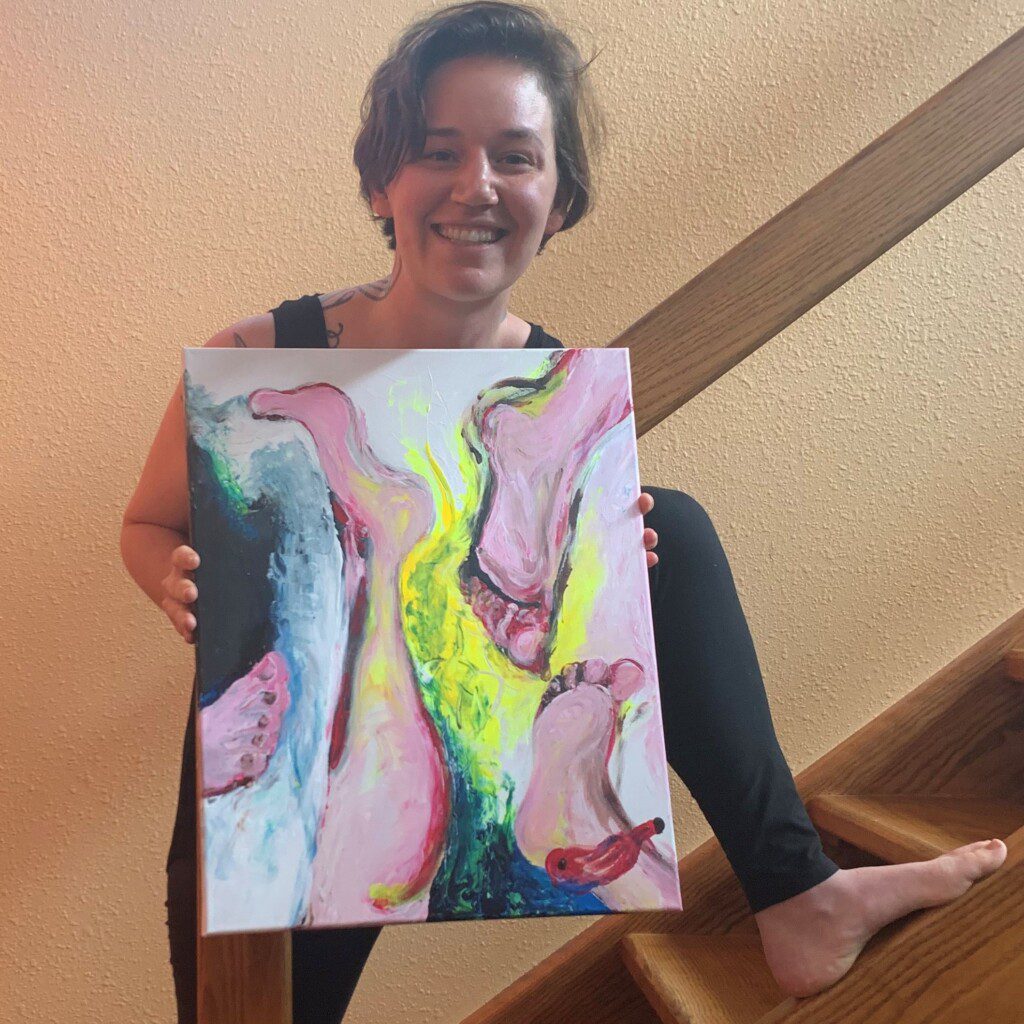
I realized I can get these benefits also by drawing my feet. Then I also painted my feet. It was fascinating because one foot I painted looked sickly like my foot did at its worst in real life (swollen, discolored, atrophied – corresponding to my CRPS affected foot) and the other foot looked instantly healthy and fit the first time. I kept painting layers and layers over the sickly foot until both painted feet looked healthy. I have had almost no symptoms of CRPS since. It seemed to clarify the image of my feet in my brain. Now I only have pain in my foot for passing moments when I experience stress.
Anything else you would like to add?
While massage and physical therapy treatments and such feel good in the short run, try building your brain’s image of your body, no matter how disfigured the images you make are to start. Keep redrawing it. If you cannot draw or paint, or do not want to, use the Recognise apps.
If you want to connect with me about using art to treat CRPS, you can email me at [email protected] or connect with me on Instagram!
Click here to view RSDSA’s list of practitioners who utilize graded motor imagery.
Listen in as Lisa details how a 2015 injury of her left pinky finger caused her CRPS, her diagnosis, education for friends and family, treatments, and much more.
If you’re interested in writing or recording your story for the RSDSA blog, please send us an email at [email protected]. Please consider making a donation to RSDSA today!
—
We’ve also included the full transcript of Lisa’s video:
Hi, everybody. My name is Lisa, and I am the 44-year-old wife to a wonderful and handsome husband, the mom to three pretty darn good kids that are now in their 20s and Noni to an absolutely adorable infant grandson. Life with CRPS began about five and a half years ago in May of 2015 when I fractured my left pinky finger, of all the smallest things you could possibly do, with the injury of what’s called a boilerplate injury. Now, if you’re like me, and about 98, 99% of other people, you have absolutely no idea what a boilerplate is. What it is, is a small disk that is located on the inside of your fingers over the middle joint of each one of your fingers. And it’s attached by two small ligaments to the bones on either side of it. So it’s located, like I said, in the middle joint, and it’s attached by two small ligaments to the other bones. What I did was I turned my pinky finger completely sideways, 90 degrees, and I tore the ligaments completely off the bone and it took a piece of the bone with it and caused a fracture.
Well, by September of that same year, 2015, I was still in pain, which shouldn’t have been that way because most fractures, you know, will heal within about six weeks. And the ER doctors had already tried immobilization, which of course, all our RSDSA folks know., immobilization is probably the worst thing you can do for CRPS patients. But of course, by September, I was still in pain, severe pain, and it was starting to hurt. It was starting to crawl up my wrist and forearm. And so I went to an orthopedist who told me there was no reason I should still be in pain. He took his X-ray and told me there was no nerve damage, there was no bone problems, there was nothing wrong with the bones. And so there were there, therefore, there was no reason I should still be in pain. And I absolutely hate those words. Because I’m pretty sure that every CRPS patient has heard them at some, you know, some time or another. But he sent me to an orthopedic hand surgeon who was just as baffled as the orthopedist was, and so I got shuffled back and forth between the two for quite some time before the orthopedist decided that, you know, maybe I had a compressed ulnar nerve.
Well, the ulnar nerve is the nerve that runs along the back of your arm, all the way up your shoulder, into your neck and into the brain. And if you’ve ever you know, hit your so called funny bone, You know exactly what your ulnar nerve is. So they did a surgery called the cubital tunnel release, and essentially widens the channel that the owner nerve sits in. And they figured that they had resolved the problem. Well, long story short, all they did was cause my CRPS to spread because it was a new injury, new surgery, new injury, and it caused my CRPS to spread all the way up the back of my arm into my shoulder and part of neck. So that continued with the burning and the crushing pain. And by January, you know myhusband, my poor husband, by that point, I was keeping him awake at night. I was no longer sleeping properly. I was thrashing around just trying to get comfortable. And by January that same by January of 2016. He was like you know what you are done. We’re taking you to pain management. And that’s it. So, I was fortunate in that, you know, in in sort of searching out Google Maps. I happen to pick out, pick the name out of the hat so to speak, of the one doctor in my town that was one of the leading doctors in the state for CRPS. It was phenomenal. It was like God had just opened the heavens and given me a blessing beyond belief that, you know, this doctor was positively the greatest in the state, you know, when it comes to this disease.
And so we went to see him and I gave him the down low on all of my symptoms, what I had been going through, the misdiagnosis I had received, which was thank, thank goodness, it had been my one and only misdiagnosis. And he essentially said, you, you have textbook RSD. And he handed me you know, this brochure that started detailing all the symptoms, and all the issues that come with this come with this disorder. And I was like, holy crap. I didn’t have any idea that this disorder existed, I hadn’t Googled any of my symptoms, because I know that Dr. Google is sometimes a dangerous thing. Um, and all I had done was just, you know, outline what I had been going through to him, and he handed me my diagnosis without, you know, without skipping a beat, you know, I had undergone all the testing, the MRIs, the laboratory testing, the clinical examinations, the EMG’s. You know, all and it took maybe a month or two before he had handed me my diagnosis. And that was by about February or March of 2016. And life, daily life since then has been, you know, sort of touch and go. I feel sometimes, like I’ve been at a treatment guinea pig because, you know, what works for one patient doesn’t always work for another CRPS patient and unfortunately, that’s just sort of the way it goes for us, you know. One treatment may not work for another. And so we had to sort of test out all the different treatments and all the different medications to see what would work for, what would work for me. And, of course, you know, when it comes to the home life, there’s no such thing as a schedule, because you never know how you’re gonna wake up. You don’t know, if you’re gonna wake up in a flare. You never know, if you’re gonna wake up stuck in bed. You never know how you’re gonna end up feeling that day. You may be full of energy and full of pep and you may be able to go run all your errands, and you may be able to do some of your housework, and get everything done and you may feel like Superman. But then the next day, you are just down for the count. So there’s no such thing as a schedule. And my husband is fully aware of this and he makes, he makes tentative plans. He pencils things in and hopefully we can do them,but he knows that if I I can’t, then I can’t. And then we just, you know, sort of take a chill day at home and we watch TV or we play board games or we you know, just have a semi fun day at home as much as we can.
The one thing that I really wish that people who don’t have this disorder could understand would be you know, I just wish they could understand that, you know, there are some days that even [sigh]. There are some days when even our skin hurts, and that we don’t mean any offense when we say please don’t touch me. We’re not being distant. We’re not being snobby. We’re not being, how can I say this? We’re not mad at them in any way. We’re not being ugly to them. We just can’t deal with the human touch because allodynia and hyperesthesia are a thing and those are big fancy words for the fact that things that shouldn’t cause us pain, do. And our skin is way more sensitive to touch and to outside stimuli than the normal human being. I’ve often said that I can feel a mosquito land on my arm before she can bite me. Which is kind of a handy superpower to have, but it’s not always a happy thing. I can feel a single hair land, you know, and I kind of brag on it as being a superpower, but it’s not really the most fun superpower to have all the time. And so I just wish that, you know, sometimes people can understand that we don’t mean any harm when we say, “Please don’t hug me, please don’t touch me.” We just can’t handle it on that particular day. And I wish that they could understand that yes, CRPS is a physical disorder. It’s not a mental one. It is. It is a clinical, physical diagnosis that has been verified by multiple physicians across multiple disciplines. And it’s been documented since the Civil War. And there’s no, there’s no denying it at this point. You know, it’s real, and the pain is real. The McGill University pain scale has bumped up the pain level, from a 42 to a 46.5, which is more painful than the amputation of a finger or toe without anesthesia.
You know, I have and the one thing I missed, I failed to mention is that, you know, through subsequent injuries, you know, I have developed CRPS in all four of my limbs. I have had sprained toes, multiple sprained toes. I have dislocated another toe. I have sprained an entire foot. I have had surgery to get a spinal cord stimulator. And I have had a radio frequency ablation, to try and help with some of my back pain because I do have some spinal issues on top of everything else. Well, every single one of those procedures, surgeries, injuries, and all of that have caused my CRPS to spread to every single one of those sites. And so my case is absolutely no joke. And I truly wish that, you know, people without this disorder could understand that, you know, the pain associated with this disorder is just unreal.
When it comes to the advice that I would give newly diagnosed Warriors: Be patient with your doctors. You know, they’re not incompetent. At least most of them are not. It’s just that they have to find what works for you. You know, what works for me, may not work for you. So, please be patient. You’re not a guinea pig. They just need to find what will work for you specifically, you know, I have found for me in particular, that ketamine is a wonder drug. It is the best thing that has worked for my CRPS pain ever. You know. And so my doctors have given me you know, oral ketamine capsules to take, they’ve given me an intranasal spray, as well as most of the other traditional medicines that will work for that have been tried and true for CRPS like Gabapentin and Cymbalta, etc. Now, that may not work for you. It may be that you know only opioids will help you. You just have to go through your process and understand that you may have to do a little trial and error when it comes to your treatment regimen. And, you know, just be patient with your doctors, be patient with yourself, please. And be kind to yourself, don’t beat yourself up when it comes to your hard days. They’re gonna come. They’re not going to be easy, but they’re going to come. And even though you might feel useless on some days, you might cry, you might get depressed, but you know, be patient with yourself as much as you are with your doctors, as much as you are with your family. Be patient with yourself, be kind to yourself, be loving to yourself. And, you know, give yourself as much self care as you need. Do the hot baths, the hot water therapy. Do your physical therapy. Do everything that you can to help ease your pain and get back to what your normal might be.
For the Warriors that have been there for many, many, many years, help us help those of us who are who are still in our journey, still in the early stages of our journey early to mid stages of our journey, and to the newly diagnosed Warriors. We need guidance, you know from the long termers. We may not understand what the long term effects of the illness will have on our bodies. Whereas you might. I’m still five years maybe I’ll be six years in this May. I need guidance just as much as the newly diagnosed Warriors do. So you know, reach out to us help us to understand where we’re going to be 20 years from now. We need it. We need the help. We need the guidance. And we need the kindness and the love from those of you that are, you know 20, 25, 30 years in. Reach out to us and help us you know, help us get there and help us to help others.
When it comes to treatments, you know the only thing that I have found that helps me is physical therapy. Warm water therapy and meds. Those are the only things that have really helped me in the long term. I have tried epidurals. I have tried steroid injections, the Toradol injections, I have tried. As I said the radio frequency ablation for my lower back. I have tried well the spinal cord stimulator has done wonders. I will say even though the implant site has become an RSD site, when it comes to the pain relief in my limbs, the spinal cord stimulator is a technological wonder and it gives me so much relief that it’s unbelievable. And so I would highly recommend that to anyone who is finding their pain, unresponsive to meds, or other treatments. But like I said, physical physical therapy, warm water therapy, my stimulator and my meds. Those are the only things that have worked for me in particular, the injections don’t usually last very long for me the nerve blocks the sympathetic nerve blocks don’t usually last long for me. That’s not to say that they won’t work for others, that’s simply saying that they don’t work very well for me.
That’s just about it. I don’t have too much else to add other than to say you know, I want to help as many people as I can when it comes to this disease. And so I have started social media channels you can find me under the username @thespoonbunny. And I have you know, I have tried to include as much information there as I possibly can including some ways to help save energy around the house. Including you know, some some informational videos that outline symptoms and you know, how to you know, sort of recognize the signs and symptoms of CRPS and hopefully, I like to add a little humor, but I just want to help as many of you as I can, that’s all I can say. I enjoy it and you know, when it comes to just being there for others I feel like it’s my calling and you know, what else am I going to do when I’m you know, disabled and at home? I have like I said, a wonderful handsome husband who allows me to just be me and allows me to be home and not you know, have to deal with working or dealing with anything but healing myself. And so I will leave you with my normal sign off when it comes to my social media channels. Until next time, my friends this is The Spoon Bunny signing off. May your spoons be plenty and your troubles be few. Have a great day.
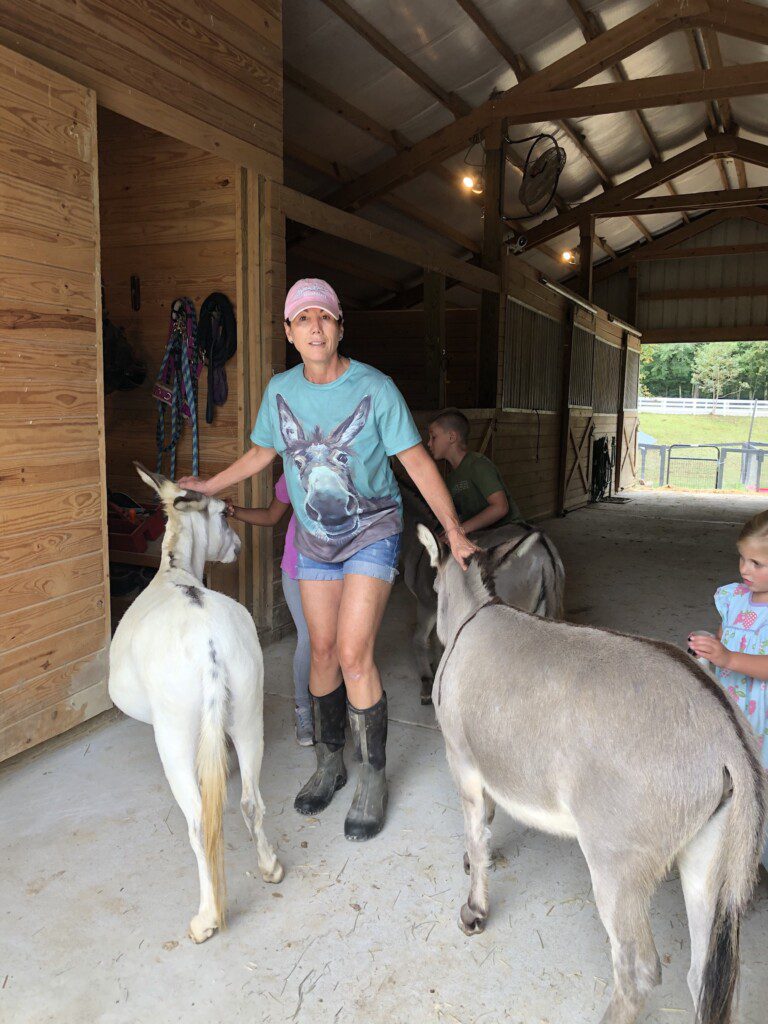
On June 4, 2020 I sustained a fractured bone in my right hand from a kick from my horse.
What has daily life been like since your diagnosis?
I had never had a broken bone in the 54 years of my life and I was very active, so I was not sure what to expect. Things went fairly well at the onset as I have a high tolerance for pain and was a certified personal trainer, so I felt that I could bounce back relatively quickly. I also own and operate a wellness spa, so I felt that I had all I needed at my disposal. This turned out to be a godsend because as the next few months played out, I found that my hand had become unusually immobile post incident. My right hand was very swollen when the cast came off, there was a burning pain, and the color of my entire right arm was very different from my left.
I immediately started physical therapy and added a variety of treatments. I used far/near infrared light, PEMFT (Pulse Electromagnetic Field Therapy) as it was good for microcirculation. I had no idea what was wrong but began working hard to decrease the pain and inflammation. I used homeopathic pain management products, massage therapy, and acupuncture, yet still the hand was not getting better. This did not make sense to me as I understand much of the science behind inflammation.
My right hand was very sensitive to touch, and the skin discoloration and edema were beyond what was normal after several weeks of PT. My surgeon offered to give me a cortisone shot in my wrist due to the pain and immobility. This was the most pain I had felt up to that time. He also put me on a prednisone pack.
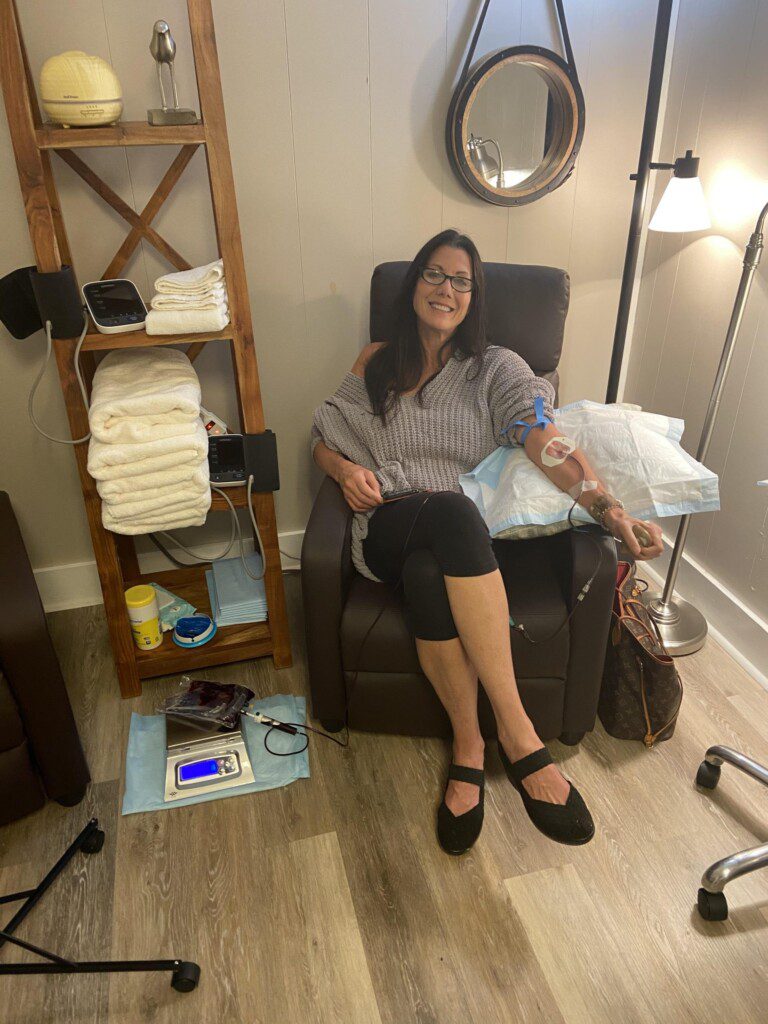
By August, I was still unable to really use my right hand and I was not sleeping well at night due to the pain. I continued to do therapy at home, ice baths (ouch) warm magnesium soaks, etc. It was a full- time job and I was also trying to run a business. I finally insisted that this was “not normal” and looked closely at the new x-rays in August showing a very different looking hand as far as the bones were concerned. My doctor shockingly said how sorry he was and that he sees now it is “classic signs of CRPS.” I had never heard of this but he felt that I was in a good place with all the therapies I was utilizing. He felt that I had made such good progress that he felt I may have already put it into remission. The next step was a stellate ganglion block with a pain management specialist. These shots compiled with the therapies I was already doing have given me hope and have allowed me to gain function and to decrease pain to a very manageable level. I also added ozone therapy and hyperbaric chamber therapy as I did not want to leave a single option behind.
The second battle I fought and won was against the insurance company. They denied several times payment of the nerve blocks, the very procedure that with the other therapies will, according to my doctor, leave me with a normal hand within the next several months.
What is one thing you wish those without CRPS/RSD could understand?
This disorder affects not just the physical body, but the psyche of the individual dealing with it. It is debilitating and causes multiple layers of dysfunction beyond just the pain.
What advice would you give to newly diagnosed Warriors?
When you are newly diagnosed, you need to hit the ground running with everything you have. Time is of the essence with this disorder and science has not quite caught up with this disease. Be your own advocate and find multiple ways to treat this including natural therapies such as acupuncture, ozone therapy, hyperbaric therapy, and massage therapy, when tolerated, as it will work if caught early. Do not give up and be diligent to do all the homework necessary.
What encouragement would you give to Warriors who have had CRPS/RSD for many years?
If this has become a chronic issue for you, you must find natural ways to manage the symptoms. I practice daily Sudarshan Criya breathwork as it calms the nervous system and helps you to get your mental state grounded. Yoga, movement, homeopathic pain management all will allow you to be the captain of the ship and take control back over your body. Your body is a miracle and when you give it the right environment, it can heal itself. Also watch the foods you eat. I did notice quickly that certain foods flared the pain more than others. Try to go on an anti-inflammation diet if you can.
What activities or treatments have helped you find temporary or long term relief?
Acupuncture, physical therapy, ozone therapy, hyperbaric chamber therapy, yoga, cardio, strength training and working diligently with my farm animals all have helped me progress in my healing.
Anything else you would like to add?
Make sure to monitor your “self talk”. I had no idea that I had developed a nervous system disorder, so I started to feel over time that I was “weak” or my body was “less than”. I did all I could to stay positive around that and decided to just make jokes and try to see a positive outcome. I never allowed myself to succumb to the internal conversation of “Why am I not healing when other people heal quicker from this type of injury?” My ego was bruised until my orthopedic surgeon eventually confided in me how amazed he was at not only my progress, but my overall attitude towards what I was dealing with. He feels it is in part contributing to my ability to beat this and put it into full remission. It may be a year after the original trauma that I will regain full use of my right hand without pain, according to him, but I see this as good news. There is a light at the end of the tunnel, and if my knuckles do not go back to their pre-injury size, then there are jewelers who can fix all my rings that are just waiting to be worn once again. We can do anything as human beings we want to, we just have to believe.
 How and when did you develop CRPS/RSD?
 How and when did you develop CRPS/RSD?
 What advice would you give to newly diagnosed Warriors?