SPPAN Tracking State Issues- How Can We Help CRPS/RSD?

This blog was originally titled “How SPPAN Went From Tracking A Few State Issues A Year, To Monitoring 1,900- And Changing the Rules in Several States.” It was initially posted on Connectivity.

At RSDSA’s Nashville conference, pain-related legislation was a major hot topic. Some of the most frequently asked questions were about pain legislation and how to move towards change. RSDSA was offered this blog by CQ Roll Call to help explain a little bit of what SPPAN does and how one person can make a difference. How can this help people with CRPS/RSD? How can we move towards progress? The article starts below:

“Here’s how one organization (for whom policymaking is currently on fire in the states) moved from managing a handful of pieces of legislation at state level four years ago, to keeping on top of 1,400 different bills and 500 regulations, in all 50 states, D.C. and Puerto Rico. Without missing anything of importance.

And it’s all done by ONE policy director.

Katie Duensing is the assistant director for legislative and regulatory affairs at the Academy of Integrative Pain Management. Like many busy policy directors, a huge part of her job is juggling federal and state tracking for which she has CQ’s StateTrack to see what’s going on with her issue. But four years ago pain management, and patient access to it, wasn’t yet treated as a legislative and regulatory issue of top priority in the states. Then came awareness of the opioid crisis. Suddenly states all across the country were being confronted with huge spikes in prescription pain medication addictions and overdoses. Lawmakers needed to legislate fast regarding the prescribing and dispensing of opioid analgesic medications. But that led to a lot of knee jerk policy being written.

Need to watch what’s happening in the statehouses? Check out StateTrack

Enter the State Pain Policy Advocacy Network (SPPAN), set up just five short years ago as the policy department of the Academy of Integrative Pain Management, to tackle the policy barriers relating to optimal pain management.

The Academy of Integrative Pain Management has nearly 4,000 members that represent the various members of a “pain care team” necessary to provide effective integrative or multidisciplinary care. Half their members are physicians, but other disciplines include nurses, behavioral health specialists, physical therapists, pharmacists, acupuncturists, physician assistants, chiropractors, massage therapists, and more.

The Recent Shift in Action

‘I’ve been doing this for four years, and the first year it was just a handful of states dealing with pain management regulations and opioid prescribing,’ says Duensing. ‘Now it’s really every state on some level. It’s a constant deluge. There used to be a break in the summer, when the legislatures were out of session, but now that’s when the regulations start coming fast and furious, and the pain management rules are written.’

The Dilemma

The sheer numbers Duensing has to stay on top of are staggering: ‘I track all legislation and regulation related to pain management in all 50 states and in D.C., as well as federally. It’s intense to say the least. We don’t work on all of them in-depth, but we still track each one, and I go through them all to decide if it’s relevant or not. If it is, I categorize it in case we need to look it up quickly. We track by issue and by jurisdiction, and there are 13 different issue trackers we’re watching with StateTrack.’

How SPPAN Has Translated That Tracking Into Big Wins

In Florida last year the Board of Pharmacy was looking at redoing their dispensing guidelines for controlled substances in response to a big patient access issue. A couple of years previously, there had been a significant push in the state to shut down what are referred to as “pill mills”, the so-called clinics where patients could get prescriptions for large numbers of opioid analgesics without getting a proper evaluation. While the clinics were forcefully shuttered in Florida, the unintended consequence was that the scales tipped too far in the other direction, says Duensing. ‘Even patients that were getting legitimate prescriptions from legitimate practitioners, couldn’t get them filled. Pharmacists were so terrified of the backlash from all of the rules, and from the fear of the DEA looking at them very carefully, that they essentially said, ‘we’re not going to fill these prescriptions.’ So all these patients couldn’t get their medications. Even the media reported on it, which was a testament to the efforts of a coalition of patients and providers in the state highlighting these terrible disparities.’ Duensing picked up on the Florida prescribing-issue using StateTrack, and used it to get updates as the rules were amended. ‘The rules were published in proposed form three different times, so it was quite the process. But we were able to keep up to date, keep tracking the changes, keep putting in our comments and pulling together the necessary stakeholders,’ she says.

The states are a whopping 17 times more productive than Congress. How are you staying on top of state legislation? Check out StateTrack!

‘We wrote numerous letters to the Board of Pharmacy and had suggestions on how they could deal with the issue. But we also attended hearings and convened many interested stakeholders to really discuss the issues. We spoke with the DEA at length, the Florida Attorney General’s office, and really tried to work the issue from within. Florida can be a difficult state to crack if you’re not on the ground.’

The Result

For SPPAN and their stakeholders, their constant tracking and commenting meant the resolution was a clear win as they effectively ended up completely rewriting the Board of Pharmacy rules. ‘The new rules really enabled pharmacists to practice the way they wanted and should be practicing, to give patients their medications. That was a really huge win in Florida, with a lot of stakeholders who worked closely together. Luckily everyone saw that there was a problem and that doesn’t always happen,’ says Duensing. The icing on the cake came when Florida’s attorney general, known to be tough on crime, and who had been behind the push to get the pill mills shut down, came out and said the pendulum had swung too far in the opposite direction, and the issue of patient access needed to be addressed.

Spotting The Trend In Delaware

Thanks to those almost 2,000 pieces of legislation and regulations Duensing is keeping an eye on, she was also able to spot bothersome regulations in Delaware. In August 2015, the Delaware Control Substance Advisory Committee released the first draft of their rules related to safe prescribing of opioid analgesics. Duensing saw that bubble up from her StateTrack alerts. ‘The first draft was worrisome for us, and we submitted seven pages of comments in response, proposing alternate language and explaining why some language might not be correct,’ she says. While the final proposed regulation is expected any day now, SPPAN can mark things down as another solid win. ‘They ended up adopting a good amount of what we suggested verbatim, which was really very exciting,’ says Duensing. ‘I found this originally using StateTrack, tracked it all the way along, and have been alerted to each new proposed version. StateTrack has been very reliable through the whole proposed regulation, and we’re anxiously awaiting the final version any day now!’

How Having a Tool Makes Life Easier

Having a tool that tracks diligently state by state, means Duensing and her small team can stay on top of the multiple pieces of legislation that have spiraled relating to pain management throughout the states. ‘Because we’re a national organization, and the fact our field covers legislation and regulations that are both federally and state controlled, it would be almost impossible to do this without a tracking tool like CQ StateTrack. I certainly wouldn’t get the coverage or depth needed. Or the timeliness.’

Legislative Tracking – The Quiet Man On The Team

‘We used to be a three-person department, but the director of policy and advocacy became the executive director of the organization, so we like to call ourselves a two and one third department now,’ says Duensing. ‘I know some people that track manually, but they usually only target a few states, or for a very narrow issue. When I tell people how much I’m tracking, they’re blown away. The sheer amount is ridiculous.’ ‘I still track a lot more than what our top priorities are, because we do deal with other issues,’ Duensing says. ‘If I see a hearing has been scheduled for a bill having to do with pain rules, or a piece of legislation having to do with a prescription monitoring program, I’ll do a deeper analysis to see if it’s something we need to support or oppose. If so, I start writing letters.’

Advocacy With A Twist

Those letters sometimes take the form of giving the perspective of pain physicians, and show unintended consequences for patients, and how they might be resolved. ‘Other times we’ll reach out to our stakeholders and try to do sign-on letters. If you can get 70 organizations to sign onto a letter, you’re going to get much further. The way we depend on action getting done is by finding and disseminating legislative and regulatory updates to the SPPAN network organizations, and reaching the leaders of these organizations.’ SPPAN has a long list of network organizations, such as the Center for Lawful Access and Abuse Deterrence, the American Medical Association and American Cancer Society – bodies concerned, but not necessarily directly involved with pain management. ‘We try to be both a warehouse and a distributor of pain policy information, keeping stakeholders up to date on the most important issues that need action,’ she says. ‘In my opinion the most important aspect of my job is the letters I send out to policy makers because for us that’s where the rubber meets the road, and how they hear from us. A hugely important part of my and my colleagues’ jobs, jointly, is outreach to other organizations, because that’s also how things get done, too.’ While Duensing’s organization has been at the eye of a hurricane of policymaking for the past few years, it’s not showing any signs of letting up. ‘When I first started, our field was such a kind of niche one off to the side. No one really talked about it and getting any media attention was next to impossible. But in just a few short years, policies related to pain care have quadrupled! It’s a really intense time. I can’t even imagine not having a tool like StateTrack. It’s really vital to what I do.'”

CRPS/RSD warriors, be sure to find SPPAN online and follow their efforts. See how you can help make a difference for people living with chronic pain syndromes, such as CRPS/RSD. It is important to get involved!

RSDSA Finds Great Success At Nashville CRPS Conference

Treating the Whole Person: Optimizing Wellness conference for CRPS was a huge success in Nashville, TNWritten by Samantha Barrett, Special Events Coordinator

As we regroup after a fabulous weekend in Nashville, Tennessee, we thought it would be nice to do a quick recap of the events that happened this past weekend. An amazing group of people with CRPS, caregivers, and supporters joined us to make this one of our most successful conferences yet!CRPS pre-conference reception was held at the beautiful delta atrium in Nashville

This past weekend, RSDSA staff and board members traveled to Music City to host Treating the Whole Person: Optimizing Wellness at Opryland Resort and Convention Center. This was our first time to Nashville and excitement was abundant. After months of planning, we couldn’t believe how quickly the event came up.

Upon arriving at Opryland Resort and Convention Center, our jaws dropped. We never imagined how gorgeous and incredibly large this hotel would be. There were waterfalls, restaurants, boat tours, and sky walks throughout the hotel. A beautiful site. We knew our pre-conference reception would be taking place at the Delta Atrium on the Delta Pavilion. That was one of the first places we tried to find upon arrival. When we did find it, we were amazed by the beauty of it. A fabulous gazebo surrounded by lights and plants made for a great reception space. We were excited to get the day going.

Our pre-conference reception was a huge success. More people than ever before showed up to our Nashville reception. We had music, a silent auction, food, and plenty of time to chat with one another. Bonds were being made instantly as people passed into the atrium, beyond the registration table. People that had never met before were becoming instant friends. This is why we find our receptions so important- they really help us help you create support systems and find sources of hope within other people with CRPS, caregivers, and medical professionals.

After a long day, we all retired to our rooms to prepare for the big day- conference day. RSDSA staff and board members were up bright and early preparing the conference room and exhibitor lobby. Exhibitors came from all over the country to help members of the CRPS community with everything from legal issues to insurance and everything in between. As 7:45 a.m. approached, everyone started arriving. Red name tags from people with CRPS, blue name tags CRPS faculty panel at the Nashville conference for caregivers, loved ones, supporters, medical professionals, and anyone in between. Our conference was completely sold out. We had a fabulous line up of speakers and panels aimed to help everyone in attendance. The day went by smoothly and the presenters did wonderful jobs. Our caregiver panel brought out tears through the room and reminded us all about the true importance of caregivers and how caregivers need support, too. Our faculty Q&A panel helped us shine a light on important issues and really got our gears going. Thank you to Dr. Terri Lewis, Dr. Pradeep Chopra, Dr. Benjamin Johnson, Tammy Gipson, Omega Kimoto, Gracie Bagosy-Young, and our caregiver panel members for bringing such important topics into the spotlight. Our videos from this conference will be up within the next couple of weeks. We will share these videos when they are up to give the other members of our community a chance to hear these great presentations.
One of the best things I saw this weekend was true friendship and solidarity among CRPS warriors and caregivers. I saw people coming out of the room to take a break with people they hadn’t arrived at the conference with, but acting as though they had been friends for decades. I saw people rushing to hold doors open for those of us with assistive devices. Tears were shed, hugs were given, and hope was abundant. We had several people that hadn’t met others with CRPS before, despite being diagnosed for years. As a matter of fact, for one conference attendee, I was the first person with CRPS they had ever met. While none of us would wish this on anyone, it is an overwhelming feeling to meet someone that understands your experiences. It is life changing. With every conference we hold, my heart grows even more, as my own network of people that understand my experiences expands.

This conference was fabulous for so many different reasons. We had several people without CRPS stop to ask us about what it was, how they could help, and where they could find more information. We had a news station feature an article on our conference, which can be found here. But most importantly, we helped provide education, support, and hope for over 150 people in a sold out ballroom at the Gaylord Opryland Resort and Convention Center.

Thank you to all of our attendees, sponsors, and to Omega Ann Kimoto and Larry Vondrasek! You made this a truly incredible weekend.

Our next conference is April 30 in Fayetteville, AR. Feel free to join us there to help us create even more memories and make more strides towards progress. Click here to register!

The Impact of Mindfulness on RSD/CRPS

Mindfulness with RSD can be a key part of healing and reducing pain. Emily details how she practices mindfulness to manage her RSD/CRPSBy Guest Blogger Emily Salser Nunez

How important is mindfulness and CRPS/RSD? According to Emily, it is crucial. Read Emily’s story and then see how being mindful helped her.

Eight months after fracturing my small toe in a simple misstep, I was diagnosed with Reflex Sympathetic Dystrophy (RSD).  I had never heard of this disorder when my podiatrist concluded this was what was causing my excruciating pain and inability to walk.  I knew something was seriously wrong, as over time my foot felt like it was burning and became bluish-black in color.  So, at first, I was relieved that I finally had an explanation for what was happening to me.  But then the podiatrist looked at me with deep concern and told me this condition can result in lasting, debilitating pain.  “This is beyond my realm of expertise,” he told me.  “You’ll need to find a specialist who can hopefully help you re-gain use of that foot.”  Hopefully, I thought, was not a word I like to hear from a doctor.  He wrote down the acronym RSD on a sheet a paper, and told me to go research the condition.

Following the doctor’s instructions, I went home and immediately Googled RSD.  As I read about the horrors of this neuro-inflammatory disorder, I naturally became overcome with fear and anxiety.  I wondered whether I’d ever be able to walk again, or whether this condition would spread through my body like so many others with this nightmare of a disorder.  And as my fear and anxiety levels crept higher and higher, I noticed something—the swelling in my foot got more and more severe.  This was a very important observation, as I noted a direct connection between my emotional state and my level of inflammation.

A couple months later, I saw a pain specialist who was able to successfully treat my RSD.  She was the first person to confirm what I had observed on my own—that high emotions cause an increase in neuro-inflammation.  Of course, the flip side of that is maintaining a calm emotional state can help lessen the severity of the inflammation and pain.  She was quick to remind me that being fearful and anxious did not cause me to get this disorder in the first place.  There is still a lot unknown about RSD, including why it occurs, but for me it is related to an autoimmune process already very present in my body.  I also have lupus, and my pain doctor believes that RSD may be a manifestation of systemic lupus in my nervous system.  So, while we can’t blame the disease entirely on emotions, we do need to acknowledge that emotions can have a profound impact on the disorder.

As I began a series of sympathetic nerve blocks to treat my RSD, I also began seeing a pain psychologist.  He was able to explain to me the connection between stress, pain, and inflammation.  When we are stressed, we tend to tense up our muscles, thus constricting blood flow and increasing pain.  When we are calm, we let our muscles relax, and our pain is lessened by increased circulation.   He taught me how the more I became anxious, stressed, and worried about my condition, the severity of the pain would increase.  “Don’t worry about the pain,” he told me.  But of course, this was much easier said than done.  We all know that someone demanding us not to worry does not help mitigate our worries in the least bit.  I needed more instruction on how not to worry.

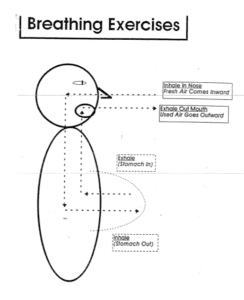
To help decrease my stress and anxiety about living with RSD, the pain psychologist began a series of sessions with me on mindfulness training and biofeedback.  The first exercise we did was a deep breathing technique. The breathing exercise is simple: inhale slowly through your nose, filling not only your lungs but also your stomach with air, and then exhale slowly through your mouth.  Your exhale should ideally be much longer than your inhale.  My pain psychologist had me to do 15 of these breaths at once, with my eyes closed.  He instructed me to start doing these 15 breaths at set times during the day.  So, I set an alarm on my phone at five times throughout the day as a reminder.  Once I began incorporating these meditations into my daily life, I definitely noticed I was becoming more calm and centered.  Even if I was in the middle of doing something, when that alarm went off on my phone, I stopped what I was doing to just focus on breathing.

Now, to be clear and honest, my RSD symptoms did not disappear when I started meditating consistently.  But, I was able to cope with the symptoms better, and I was able to better control my emotional reactions to the pain I was experiencing.  As my doctor noted, relaxation is incompatible with feelings of anxiety, frustration, tension, and pain.  When I was having a particularly painful day, I would just breathe.  The breathing exercises gave me a distraction from pain.  After all, allowing yourself to focus only on the pain is a dangerous path to go down.  By directing your attention to breathing, you’re directing your attention away from the pain.

My pain psychologist even showed me how meditation was having a physiological impact on my body.  He connected my hands to thermometers, which were connected to a computer.  As I breathed deeply and consciously relaxed my body, I could see on the computer that the temperature of my hands increased—a sign that my body was more relaxed with increased circulation.  When the doctor asked me to speak about stressful topics or solve difficult math problems, I could see the temperature of my hands falling on the computer—a sign that my body was stressed and tense, with more constricted circulation. This technique is called biofeedback, and has helped me learn to control the blood flow to my hands and feet.  As someone who also has Raynauds Phenomenon (a circulation disorder that causes blood vessels to narrow), this has been particularly useful!

Another important mindfulness tool that the pain psychologist taught me was about the impact of positive self-talk.  Self-talk (or they way in which we speak to ourselves) can have a big impact on pain levels.  For example, negative self-talk would include phrases such as:

  • “I can’t believe this is happening to me.”
  • “I’ll never be able to enjoy anything if I can’t walk.”
  • “I can’t take this anymore!”
  • “No one will ever understand the pain that I’m in.”

Negative self-talk results in a self-defeated mind, which translates into pain signals being interpreted as suffering and misery.  Now, if we change some of that negative self-talk into positive self-talk, it might sound more like this:

  • “It’s unfortunate that I can’t walk today, but there are many other things I can still do and enjoy.”
  • “I’ve had days this painful, and I have always gotten through them. I can get through this one.”
  • “I can distract myself from the pain by meditating, watching a movie, or reading a book.”

Mindfulness training teaches us to be conscious of our own self-talk.  By training yourself to be more understanding of your own illness, you can bring in more positive self-talk and decrease your level of overall discomfort.

There is certainly a lot about this disorder that is out of our control.  But it’s comforting to know that we have the power to control how we respond and react to the pain of RSD.  Pain doesn’t necessarily have to result in suffering.  Learning mindfulness and meditation techniques was and continues to be a very important part of my RSD treatment plan.  My RSD has improved a great deal, but it is still very much present in my life.  When the next flare comes, I know that I have many mindfulness resources and tools to use to help me cope with pain and stress effectively.

The CRPS Wedding Chronicles – Almost There!

By Samantha Barrett, Special Events Coordinator

Getting closer to the wedding date, Samantha updates everyone on some of the tips she has learned through the wedding planning process with CRPS. What questions do you have for Samantha? She can answer them in the next edition!

Hello friends! It’s been a while since I’ve update you on the wedding chronicles. We are just about 3 months out from the big day (I know, crazy, right)? But I’m getting extremely excited, although a tad overwhelmed.

Recently, my health hasn’t been the best it could be. My CRPS has gone into occasional flares, but the EDS and POTS have been what is really affecting me. But the EDS contributes to CRPS pain for me and then the POTS just makes it so I’m down for the count. I’m really glad I started planning actively so early in the process. I’ve had quite a few days when I had intended to do so much, but was able to do so little. It is a gentle reminder that we have to pace ourselves and roll with the punches. Some days will be bad. That’s when you have to listen to your body.

Since the last time I blogged, we’ve had a lot go on. Our best man dropped out of the wedding, but was replaced with a best woman. Our amazing photographer also did a super fun engagement picture session for us. We’ve had suits and dresses ordered, started on the floral arrangements (which I’ll get to below), almost completely finished our centerpieces, received our invitations, and we’ve been getting all of the other décor items and accessories in stages. It’s all really coming together!

Our engagement photography session was fantastic. I found an amazing photographer whom is all about making sure I’m not straining myself. Plus, she lets you do whatever you feel is natural, so most of our pictures are just how my fiance and I are as a whole. It was so much fun. She even found a location that looked like it was right out of Beauty and the Beast (which is my wedding theme after all). We did a lot of pictures sitting down so I could rest, since I had been flaring around that time and had just recovered from a dislocated hip. It was incredible to have someone that was so willing to work with my limitations. She’s now on the top of my recommendation list for everything. This whole day was just really special and so much fun. I can’t wait to see what she does for the wedding. She even came up with a plan for if I get a pain surge the day of the wedding! Woohoo!

The floral arrangements are really a fun element. My maid of honor is the one that is actually doing my flower arrangements. Because of my dye allergy and the sensitivity of my hands, we decided to go with fake flowers. I was extremely hesitant about this decision, as fake flowers can look, well, fake! But Michael’s Craft Store has some extremely realistic flowers that even the petals feels real (but the stems don’t). They are coming out beautifully. Even better, now I don’t have to try to preserve fresh flowers as a memento. Since my main flower is a rose, now I don’t have to worry about de-thorning either. It’s a win all around. I can’t wait to share these floral arrangements with you.

So, what is my current source of stress due to CRPS? Thinking about trying to write out all the invitation envelopes and finishing the centerpieces. While my hands aren’t too bad, my back and arms start to burn if I lean forward for too long (i.e. to write out anything with a pen and paper). My mom and my maid of honor have volunteered to help me with this so I don’t have to do too many, but it is frustrating. There are so many envelopes to fill out, but I’m working on accepting help. It’s the only way it’ll get done without sending me into a full flare after all. For my centerpieces, I have to paint some stands and get some appliques printed out with the Cricut. I know my grandfather will be the one doing the Cricut, but it’s the application that stresses me. Much like the writing, any kind of leaning forward for extended periods of time, or extending my arm out for extended periods of time, sends me into terrible flares (and I tend to dislocate because of all of the extending). I think my fiancé will have to put the appliques on our teapots. I can at least spray paint the stands. Other than that, I just need to arrange some flowers for inside of the teapots and I’ll be good to go!

We did some cake testing about a month ago. My fiancé hates cake so he’s a fun one to bring. Granted, I’m just as fun with all of my restrictions (no red dye, gluten intolerant, lactose intolerant, etc.). We had wanted to bring my grandmother to our cake testing, but unfortunately, she was too sick to come, which was a blessing in disguise since her wheelchair wouldn’t have fit. I’m lucky that I was using my cane and not my wheelchair, because there is no way I would have been able to fit in to the testing area with my own wheelchair. What a reminder that you must check EVERYWHERE. Even if they say they are handicap accessible, some places do the bare minimum. I realized in college how many places do the bare minimum. I almost started something I wanted to call Sammie’s Challenge, where business owners or higher ups have to navigate their entire place of business in a wheelchair without assistance. I always thought that would open their minds and eyes a little more. I think I saw that someone recently started something like this. I hope they go far with this. But, I digress.

I’m currently working on customizing a cane for the big day. I feel as though the zebra print may take away from some of the classier details. Let me know if you think I should do a cane customization tutorial or share links to where I found a cane that fit!

I recently booked my honeymoon trip as well. How on earth I’m going to get through the full wedding, then flying, and then a ton of walking at theme parks is beyond me. You know how when you really want something, you pull the strength from deep inside of you and pay the price later? I have a strong feeling that’s what’s going to happen. But I’m strategizing. I’m going to start with the theme park that has the most walking. I’m also making dining reservations so there are designated times when I have to sit and rest. My fiancé is one of the best people I could take a trip with in terms of resting. He makes sure that I don’t overdo it when we just go out to do errands. I imagine this is going to be interesting.

So, now that we’re a little closer to the end of this process, let me give you some more tips. Whether you’re the bride, groom, maid of honor/best man, or parent of the bride/groom, you can make these tips your own.

  1. Start planning and buying things as soon as you can. This will save you time and energy as the big day gets closer. It’ll also seem like less of a financial hit since you’ll be doing everything in stages.
  2. Take breaks. If your health is doing poorly, focus on getting yourself better. Nothing is worth overdoing it, especially because it could take away from your special day.
  3. Make a realistic budget. Remember, a budget is an estimate. Don’t go over what you can handle. The day is about you and your soon to be husband or wife, not about how many flowers you had, how extravagant things were, or anything else. Do what feels best for YOU!
  4. Make changes based on how/where your CRPS affects you. Have it in your feet? Ladies, avoid the heals and opts for cute flats or sneakers (or whatever you can tolerate). Make time to sit (even if you have to schedule it), and online shop as much as possible. Have it in your hands? If you can’t grasp flowers, consider a pinned corsage on your dress. Can’t wear a ring? Find a necklace that you can put a ring on or a necklace that will symbolize your marriage.
  5. Call everywhere to see if they are handicap accessible, especially in the areas that you will need to access. You don’t want any unpleasant surprises.
  6. Accept help! Have an envelope writing party and have snacks or food for everyone that helps out. Don’t be afraid to ask for help either. The worst they can say is no! This applies to every part of your wedding.
  7. Find vendors that will work with you and that will accommodate your needs. You are paying them for their services, don’t settle!
  8. Find bridesmaid dresses and suits with plenty of time to spare. Everyone has at least one flaky bridesmaid/groomsman that will wait until the last second to get what they need to get.
  9. If you’re going on a honeymoon, try to find somewhere that you think your body can handle the best. Can’t handle the feeling of sand on a beach? Don’t do a beach resort. Can’t have anyone bump you? Don’t pick a popular tourist destination during tourist season.

You Know You’re a Hospital Kid When… Life with CRPS

What is it like being a hospital kid with CRPS? Read Melissa's article and see if you can relate to her CRPS/RSD adventuresWritten by Guest Blogger Melissa Lovitz

This piece about being a hospital kid, especially one with CRPS/RSD, was originally posted on The Mighty.

When you’re a spoonie you spend a lot of time in the hospital. About 10 years ago, I spent more than 10 cumulative weeks of my freshman year of high school either in the hospital or at doctors’ appointments. During my middle and high school years, my experiences with reflex sympathetic dystrophy syndrome (or CRPS) landed me two six-week stays at Children’s Hospital of Philadelphia, two 10-day stays at Boston Children’s Hospital, and more doctors’ appointments than I can realistically count.

When I was in high school, most of my inside jokes were with physicians who liked to dance every morning. I got excited about making toga costumes with hospital sheets and having photo shoots with the other girls in the clinic. My main priority, aside from going home, was befriending the nurses so they would steal pillow cases for us to tie dye or extra ice cream cups at lunch.

Every so often I reminisce with a few close friends, who I met in the hospital, about out “those days.” Many of us are in remission or have found ways to cope with our illnesses outside of frequent appointments and emergencies. Others are still struggling, but have an amazing network of family, friends, and doctors who are there to support them every moment of their journey.

There’s something special and unifying about being a “hospital kid.” There’s something comforting about knowing that other people “get it.” There’s a relief that comes with not having to explain yourself. There’s a sensation of belonging that is revitalized every time I text, “I just smelled Purell” and get a response that reads, “OMG yesss” or “I know what you mean.”

When I was talking with my friends, I realized we all had fond memories of our nurses knowing our favorite shows, what we were studying in school, or which activities we were excited to go back to! We all had jokes about which arms or veins were best for blood draws and IV’s. We were all confident we could navigate the hospital so well, perhaps better than our own towns, that we could give directions to other people even to this day; most importantly we knew approximately five ways to get to the cafeteria!

So, when I asked my friends to respond to the phrase, “You know you’re a hospital kid when…” here’s what they said:

You know you’re a hospital kid when… 

1. Your biggest allies are the nurses.

2. You almost always anticipate that your plans will fall through because of an unexpected trip to the ER (or an appointment you forgot about).

3. Random things like the smell of Purell, concrete staircases, or writing your order with a golf pencil at restaurants remind you of the hospital.

4. Your best friends are people you met in the hospital, and over a decade later you still keep in touch.

5. You laugh whenever someone asks you to rate your pain on a scale of one to 10.

6. You’ve perfected realizing when someone isn’t really “fine” because you too perfected looking “fine” when you’re not.

7. Even though it’s a bit twisted, you get excited if you learn someone has the same condition as you.

8. Getting blood drawn or an IV is “no biggie.”

9. You watch “Grey’s Anatomy” and scream at the TV because that would never happen in real life!

10. Your hospital stories are so intense or dramatic that most people don’t believe you or think you’re exaggerating (e.g., “I relearned how to walk twice by doing PT/OT for eight hours a day for six weeks – twice! It was more difficult than the conditioning we do at gymnastics practice.”)

11. You can explain the spoon theory with more accuracy and detail than your actual homework!

If you ask most hospital kids, they’ll say their upbringing inside the walls of the hospital was definitely not traditional! They’ll probably tell you that they’d never wish chronic illness on anyone, but in hindsight they can’t imagine their lives without their stories of medical struggles and victories. Our illnesses don’t have to define us, but the definitely shape who we are and how we encounter the world.

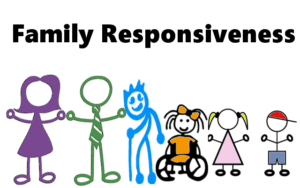
Chronic Pain and Family Responsiveness

Chronic pain and family responsiveness image. How can caregiving be different with different ages for CRPS/RSD?Written by Laura Lustig, PhD for the RSDSA blog.
Originally Titled: “Chronic Pain And Family Responsiveness: Stories Of Courage In The Face Of Unimagined Change.”

There are many types of chronic pain experienced by people all over the world, many of which have been well recognized and have treatment regimens that are prescribed regularly by doctors and allied professionals. To categorize the pain of Reflex Sympathetic Dystrophy (alternately referred to as Complex Regional Pain Syndrome) as chronic pain is almost a disservice.

To begin with, people suffering from this syndrome go through indescribable pain that can strike without warning and become unmanageable. Then, there is the agony of waiting for someone to diagnose it correctly because, unlike so many other types of chronic pain, it is not commonly recognized until it grows in intensity. Even then, it is still not well understood.

All of this as preamble is known to those of you out there who are experiencing the pain, and to your families who are suffering the mental anguish of going from pillar-to-post trying to alleviate your family member’s pain.  My hope is that in reading my thoughts and suggestions, you will respond and tell your stories, your actions toward relief and your questions, through me to others like you and thus become a support team for each other. Your stories should not be silent and unnoticed; they should reach the ears of medical professionals and researchers.

But to any who have not experienced personally the anguish described above, those of you who are friends, relatives, neighbors, or associates of these families- my hope is that this article will better acquaint you with what they are going through in the hopes you find incentive for assisting them in whatever ways you can offer. Even the common family duties of everyday life are disturbed by the disabling effects of this syndrome.

The Role of Caregivers: The term “caregiver” has a multitude of meanings. It can range from a service provider taking care of a disabled person, to a parent, a spouse, a sibling, a son or daughter, or other relative taking care of the individual affected with CRPS. Each of these roles are different by the nature of the category and each can vary within the same category for individual families. It has life-changing consequences. Complicating things even more, many members of the same family not in a caretaking role may have their lives changed because of their relationships within the family.

So, how does one describe the duties of a caregiver in these situations? The best I can come up with is to compare them to the normative roles of individual family members and the variations that may occur in those roles.

For example, a mother and father of a fortunate child who is healthy of mind and body are expected to nurture and train their child for increasingly independent life as he/she grows. Along the way, their needs as spouses and individuals can be attended to with increasing confidence that they will, one day, launch Junior and move onto, or continue, their own interests and relationship needs. This paradigm cannot help but be hindered when a child has more dependency and critical care needs. The question is: can a parent of this child eventually reach normative life functions? Can the child eventually find ways of becoming independent? There is no general or right answer to this question.  Each family has to find their own way through the morass they encounter. It is all too common to deal with day-to-day issues and let time go by without thinking further about the future until it is upon you. But what is important is the recognition that your roles have been modified so that better planning can occur.

At this point, I would like to further identify myself and the role I took as a caregiver in my own family, because I faced a similar question as I raised my physically and mentally challenged son. I went day-by-day, doing everything I could for him: researching his condition, talking to doctors, going to clinics in the hope of finding diverse professionals who might lend their composite expertise for the medical, psychological, social and educational needs of my son. I think that in the back of my mind, not fully consciously thought out, I was looking toward a future in which he could be successfully launched toward a life of his own, and not remain in my caregiving role for the rest of my life. I have other children, and I always wonder if I gave each of them enough attention, not to mention my husband. Eventually, I was fortunate enough for my son to be moved to a life of his own, certainly not an independent one – he will never achieve that – but, at least a life in which he has contentment, work, and home life that approaches the normative environment I wanted for him.

I went through agony, crises, family troubles, and roadblocks within the social and educational environment that may, in some ways, be similar to what many of you are going through. At some point, I found myself asking who I was before and what I became after my experiences with my son Jesse. I wonder how many of you have thought about that. If anyone wishes to learn more about my story, my book “Attics of the Mind: The Story of Mother and Her Special Son,”  is available online or at Amazon.com. I was fortunate, also, to have 2 older children who love their brother and have taken courageous roles in helping him. Their story is also available online. But, I could not have done it alone, which is why I emphasize the importance to each of you of reaching each other and some helping professionals along the way. Your solutions are not only medical; they are psychological, social, educational, and ongoing. There is always one more thing to do, I found, and you may also.

But what of the role taken by a spouse? One hesitates to call this a caretaker role, though it may end up that way. In the so-called normative environment, one marries with the idea that there will be love, family, a division of tasks in the everyday life, a companion to share the good times and bad times. The readjustment becomes obvious when one spouse is hit with CRPS. How much adjustment is dependent on the state of the illness, and more than this, the understandings between the spouses of their responsibilities to each other. This is an even more difficult readjustment than one borne out of a natural caregiving responsibility of parent to child. In each case, the spouses will face a complete change in roles. Yet here again, the backdrop of attempts on the part of both spouses to approximate as normal an environment as possible is most likely to result in more harmony between them.

In some cases, it is a sibling who may find him or herself in the role of caregiver? Here, a whole life may be unintentionally upended. He or she may have the least expectation of anything in the natural course of events to prepare for this new role. It leaves many more questions than answers. For example, where does a new companion fit in; what of the expectations for career building and family development? How much does one continue moving in these directions when the needs of the CRPS brother or sister is suffering? If there are several siblings involved, the complications can cause rifts between them. Who takes the major role; is it divided equally; are there explanations one or more siblings give for taking a lesser role? Again, no easy answers.

I haven’t mentioned the reverse order of child to parent. In the ordinary course of events, children are expected to take some responsibility for providing a basis of helping their aging parent who may become ill. There are many agencies and living arrangements which can be found to provide care for the aged, but not so many for the parent who may not be elderly but who is suffering from CRPS. This condition may exhaust or go beyond the abilities of nursing care to know what to do or to provide the amount of care needed.

So, in all of these cases, what does it mean to do a good job. A caregiver can be thrown off his or her balance when confronted with the extraordinary problems involved. Even the best of care may seem insufficient – with attendant guilt feelings, loss of confidence, and eventually, despair.

In all of these cases, it is vitally important that people in the caregiver role find other supportive help. Talking to a therapist and other professionals, intimate friends and medical people can help create better balanced judgment and relief. It is vitally important that caregivers not become stressed out to the point that their own health is affected.

I know I have raised many more questions than answers. But, I feel confident that in each family there are strengths that can be found and resources to use. Each of you out there has your own story. Many of you can help with the solutions you have found, the resources you know of, and the empathy you can lend to each other. Together much can be accomplished; alone the troubles you face can feel impenetrable.

If you would like to share your story or have any suggestions for others involved with caregiving, please email RSDSA at [email protected]

How RSD Potentially Stole My Dreams – Cope With RSD/CRPS

Tatiana blogs about how RSD CRPS stole her dreams but also about how to cope with RSD CRPSWritten by Tatiana for the RSDSA blog.

Being diagnosed with RSD/CRPS is challenging at any age. Being young and going through the challenges of school can make it hard to cope for children and teenagers. Tatiana writes about her experience being diagnosed with RSD/CRPS, her stolen dreams, and how she has ultimately learned how to cope.

When I was a young girl, only five years old, I had crazy dreams. Every single time someone asked me what I wanted to be when I grew up, I’d smile, and tell them that I was going to be a dancer. A ballet dancer, to be specific, though I often dreamed of ballroom dancing. Getting to wear a ballgown, heels, and having a handsome gentleman’s hands draped on my waist, as I twirled around to music over and over was beyond exciting to me. I yearned for it. I lusted for it. Something I didn’t know when I was five years old was that the daydream would have ended sooner, rather than later. I did not know that by the time I’d turn sixteen, I’d already be living with a chronic illness.

Something that almost everybody knows about growing up is that it’s hard. Sometimes, it may even seem impossible. You may even feel like you just can’t do it. Between juggling school, and just everyday life, it can be hectic and stressful. Just imagine what it’s like to go through your day with pain so horrible, you’d wish to saw off one of your limbs, in hopes of finding some sort of relief. Imagine what it must feel like to have various parts of you set on fire, but realize that this fire cannot burn out, no matter how much water thrown on it, no matter how much ice you throw into the mixture. So, you want to fight fire with fire, and throw in some heat? I’m sorry to tell you this, but that’s not necessarily going to help you either. Reflex Sympathetic Dystrophy, now known as Chronic [Complex] Regional Pain Syndrome, is an autoimmune disease that attacks the sympathetic nervous system. It causes the brain to constantly send pain signals to different parts of the body, but the pain that it causes is not as simple as a muscle ache or a simple sprain. Reflex Sympathetic Dystrophy causes a burning pain that can be brought to a point in which one cannot take it anymore. Many people with RSD/CRPS turn to suicide as their only option, leading RSD/CRPS to also have earned the nickname of “The Suicide Disease.” Unfortunately, although I am just a child, and I am trying to grow up, although I am trying to make something of my life and finish school to move onto college, and [find] my place in the real world, I also have the burden of RSD/CRPS to carry with me.
I started to experience my pain six years ago, when I slowly lost my ability to even just walk. I had previously sprained both of my ankles, and had finally recovered. Or at least I thought. At just ten years old, I was able to say that I could watch all of my friends running around in the school yard, but I couldn’t run after them. It hurt me to a point in which the pain resembled walking on shards of glass. As a clumsy child, I, unfortunately, had the joys of knowing what that felt like. And with that I spent an hour in the podiatrist’s office, being told that it was simply a case of plantar fascitis, and that I simply needed orthotics. And so, it was orthotics that I received. I didn’t know that these would not solve my problem, though. I was unaware that my pain would come and go as it pleased, and leave me practically crippled, from time to time.

On my fourteenth birthday, I had the joy of returning to the podiatrist, after being unable to walk again. This time, I was told that I had tendinitis, and a bruised bone. I was given a note that stated for no gym until further notice and an array of braces to wear on my ankles. At that point in time, friends of mine began to question me. They’d ask me questions that not even I could answer at that point. “Tatiana, what is wrong with you?” “Dude, you’ve been out of gym for eight months, when are you coming back?” etc. For a fourteen year old, being out of gym for more than eight weeks alone was a huge deal. And when teachers started to question me and my walking boot, that I was in to prevent pressure from being put on my foot, I had no clue what to say. But as before, my pain went away for a while.

September of 2015 came around, and I was in Florida with my family, trying to have fun, and enjoy myself in the various theme parks. I’ll never forget the night that we were simply walking through Epcot, and it was as if someone had literally torched my foot. I brushed it off, thinking it was just muscle soreness, from walking around way too much, without sitting. Everyone around me was having fun, and enjoying themselves. I didn’t want to ruin the trip. So, I kept my mouth shut until the end, when all of the walking, moving, and various rides jerking my body back and forth finally took a toll on me. Throughout our plane ride home, the turbulence brought me enough pain to make me want to crawl under a rock and never leave that sanctuary that that rock would’ve brought me. For days following our return, I stayed in bed and cried. I was in so much pain and discomfort- there was nothing that I did that would alleviate it. Another trip to the podiatrist, more false hope, and more joy stripped from my already stressful life. I was missing so much from my sophomore year of high school. I was missing out on everything my friends were doing, and the places they were going. I was at a point where I could barely even do the work I was given from my teachers. I was confined to my bed, living a painful life, full of depression and tears. Every single time that I attempted to leave my house to do something, the pain crept up on my shoulder, as if it were a ghost that was dying to tease me to no end, despite the fact that I could never catch it no matter how hard I tried. My pain to me was what a little black cloud was to a depressed person. It followed me around to no end. Toying with my emotions, making me hate myself more and more, with the less and less that I was able to do.
After missing twenty three days of school, and being out of gym for two and a half years, nobody believed me anymore. My friends began to doubt me, my family, even my own mother doubted me. Though my doctor always told me that she believed me, I started to doubt myself. I started to think that this pain was just a figment of my imagination. Something that my brain decided to make up because it had nothing better to do with itself. And that, that dragged me down into this depression that I was unsure I’d ever survive. I built up my walls and locked everyone out, including those closest to me. I no longer wanted to know anybody. I’d look in the mirror and see this broken, tattered body, looking back at me. And when I’d go to turn away, I’d whisper to the soul trapped behind the shards of glass, “You are such a liar.” I was breaking my own heart and I didn’t know if I could save myself.

In April of 2016, I could no longer move from the waist up. My ankles, believe me, they were just shot… I couldn’t bend down to grab a pen that fell from my bag, I couldn’t walk up two stairs, I couldn’t even sit up to do simple tasks such as drinking a tiny bit of water. I felt the weight of the world on my shoulders. I was falling behind in school and in life. Yes, I was surviving life, but was I really living it? Not at all! I’d drag myself from my bed every single morning, and force myself to get up, to go to school, where I’d suffer for 8 hours, only to come home and cry myself to sleep. Everywhere I went, I received pitiful glances and sad stares from people who knew me and the happy person that I once was. I begged the neurologist for answers. For a solution. For anything other than pity. And finally, after 11 MRIs, 8 X-Rays, and 3 C-T Scans, I was confronted with the fact that I have Complex Regional Pain Syndrome. By then, after much research, and suggestions from doctors, I had known what CRPS/RSD was. And I knew that it was one of the most painful conditions out there. At the end of the day though, the real question was, could I actually live with this?

I am almost seventeen now, and life is hard. Life is very hard. I have to work ten times harder to complete simple tasks than most people do. Getting myself dressed is an accomplishment alone. Occasionally, when I do have an endless amount of bad days, I do fall behind in school, and it is as if I am drowning in school work and the fact that I feel the need to impress my family. I think one of the most complicated things for me, though, is trying to keep up with my friends and people my age. Sometimes, I feel like an eighty year old woman, trapped in the body of a seventeen year old girl. Yes, I have friends. Yes, they have lives. They go out, they have fun. But I don’t always want to go out. I always want to have fun, but from time to time the pain becomes unbearable, to a point in which I cannot even go to school. Of course, people question me or accuse me of being lazy, but I know for a fact that I am not that at all.

Another huge problem about being seventeen and having CRPS/RSD is painkillers. I, like most patients with my illness, depend on painkillers to live a somewhat decent life. But, with the opioid epidemic, and me being just a teenager, people often accuse me of being a drug addict or a drug dealer. My question for the people who jump to conclusions would be, just who wants to take more than fifty pills per week? I take eight pills every single day, just to live a sufficient life. That’s fifty four pills per week. Do people actually find enjoyment from that? Because I don’t. I never could. Something that people don’t realize is that aside from naltrexone, I don’t take anything crazy. I take Lyrica, and if needed, gabapentin. It’s not like I’m popping oxy every hour on the hour. This is really a huge misconception, that I honestly hope is cleared up soon.

Despite all these struggles with people and their opinions, a topic that most teenage CRPS/RSD patients will not touch on is the struggle with themselves. Despite my hope, despite my dreams, my mind is a battlefield and I am constantly at war with myself. Being seventeen and struggling with such a chronic illness leads me to have such hateful thoughts towards myself. My mind is constantly pondering why I still have to be here, if I’m only going to suffer. The second I have a flare, I freak out, and wonder if I will ever find a lover who will care about me, despite my disease, despite the fact that it leaves me paralyzed with pain, and often, in tears. This is the part where my CRPS/RSD would want me to tell you that after this, I am giving up. That I refuse to go on. This is the part where it wants me to tell you that this is the end, that I cannot win this fight. However, I am not going to give that obnoxious ghost what it wants. I am the author of this story, and I refuse to lose this fight. I have been in therapy, working on my emotions affiliated with my illness for several months now. Finally, I have learned to love myself. I have learned to ignore what people have to say. I have learned to never give in, and to never give up. The second you allow it to win, is the second that you lose yourself. Although it might be hard, although this body may be cursed with such a painful disorder, I have decided to throw away that little dark cloud, and see the light again.

At the end of the day, no matter what happens, no matter how bad you feel, or how horrific your pain is, all that matters is you. All that matters is you and the fact that you can win this fight, no matter how hard it seems. Your pain tomorrow will not be as bad as the pain that you have felt today. Your life is not going to be horrible forever. Your initials are not RSD or CRPS. And all of us fighting this horrid disease, no matter how young or old, need to know that life does not end with RSD. This is only the start of my journey, and I am terrified for what is to come, but I am ready, and I am stronger than ever. Life starts now.

If you are feeling like harming yourself, feeling suicidal, or know someone that is feeling that way, please call the National Suicide Prevention Lifeline at 1-800-273-8255 or visit their website

Painting CRPS: A Nurse’s Reflection of the Bible and Its Correlation to CRPS

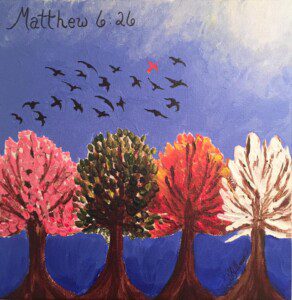
Alyssa's painting based on Matthew 6:26 reflects her thoughts on CRPSWritten by Alyssa Skillman for the RSDSA blog. Reshared with permission.
Alyssa Skillman, RN, BSN had the wonderful opportunity to create a canvas and acrylic painting for the Boston Scientific Neuromodulation headquarters in California. They have a program that allows their patients with implanted devices to create artwork and send it in to be hung at the corporate office. Alyssa stated, “My rep knew I like to paint so she was excited to get me into the program. The company sent me the painting supplies and guidelines (for consistency purposes). This is what I created and the meaning behind it.”

Thank you for the opportunity to share my artwork. I hope you will take a moment to read what this painting represents and what it means to me.

I based this painting on the Bible verse Matthew 6:26, that says “Look at the bird of the air: they neither sow nor reap nor gather into barns, and yet your heavenly Father feeds them. Are you not of more value than they?” This verse means a lot to me, because it reminds me to fully trust in God. Living with CRPS (Complex Regional Pain Syndrome), it is easy to feel anxious about the future.  This verse reminds me that the Lord cares for me, knows my every need, and will provide.

The trees represent each season of the year: spring, summer, fall, and winter. They also represent the seasons of life. This symbolizes that no matter what season we are going through in life, whether good times or hard times, it reminds us that the Lord is always with us in every season life brings.

The birds in the painting are a representation of the birds mentioned in Matthew 6:26. However, notice that all of the birds are the same color except for one. One bird is orange, while the rest are black.  The orange bird represents a person with CRPS. This signifies how CRPS is an invisible illness, and how patients like me often blend in with everyone else even though we are different.  Even though you cannot see our pain, we try our best every day to fly right along next to the other birds.

When Someone Offers You a Cure for CRPS

Being offered a cure for CRPS only to find out it isn't a legitmate cure can be frustrating. How should we deal with things like this?All people that have been diagnosed with CRPS/RSD want in this lifetime is a cure. That’s why so many of us focus on awareness, awareness events, fundraising, and even on keeping up with the latest research. There is nothing more we want than to be the “old” us- the ones that can hop, skip, and play with our dogs, children, grandchildren, nieces/nephews, and so on, without being in excruciating pain and facing all of the consequences that come with it (if we can even get our bodies to move in those ways).  Please note everything in this article is my own opinion.
Another common thing is that all of us have been told that someone has a cure. Most of the time, this is coming from a friend on Facebook/Twitter/Instagram who said that they lived with chronic pain until they tried XYZ supplement and did eight hours of hot yoga a day followed by four hours of pure barre. While I think it’s absolutely fabulous that this works for these people, who lived with a different form of pain, I understand that these things may not work for me. The crazy thing about CRPS is that what may work for me may increase someone else with CRPS’ pain level. If CRPS is that fickle within itself, it definitely can differ from other chronic pain conditions.

The other day, I was on Facebook when I saw a post from a man that was in one of my absolute favorite bands. He left the band and started his own band, but has mainly focused on his uber healthy lifestyle since leaving the band. He said that he was going to do a live stream at 8 p.m. and was going to tell people how they could get rid of their diabetes, asthma, anxiety, depression, xyz, and also chronic pain. I believe my reflex was to roll my eyes a bit. I looked at the comments and saw him going to war with a woman living with Ehlers Danlos Syndrome, which is another chronic pain syndrome I have, but it is a genetic condition. He continued to empathize that if this woman did what he said (and had started doing it in the womb apparently) that he would be able to get rid of her pain forever. People continued to remind him he wasn’t a medical doctor, but he went on. I was going to watch the stream, but I couldn’t.

Now, I’ll admit, if I’ve heard that a certain supplement, diet, or fitness routine would help my different conditions, specifically my CRPS pain, I’ve tried it. I always consulted with my doctor first (who would tell me I could try, but to be fair he also told me some of them were just outrageous). I understand that “clean eating” and movement over time can help ease pain and inflammation, but it is not a cure. One more time, for the people in the back, it is not a cure. For the longest time, things like this would upset me to no end. To be promised a cure only to find out it was someone trying to sell something or trying to push their views on me was incredibly unsettling. Through my experience with CRPS, I’ve done everything I can to hold on to every ounce of hope and positivity I have. I don’t think that I’m alone when I say that false hope hurts more than hope that hadn’t existed initially.

One thing I will say about people that suggest their own cures is at least they are trying. They see that I’m in pain and that I’m having a difficult time and they want to help, so they suggest something that they’ve tried/heard about/read about/seen a YouTube advertisement for. So, being thought of like that is enough to provide some hope, even if what they’re suggesting directly doesn’t lead to anything. Think of it like this: if someone is suggesting something to you, they’re not only thinking of you, but thinking of the condition. That can lead to more awareness and increased interest, which will certainly one day take us even closer to a cure. So, actively keep that hope going. You’re opening up a dialogue that a lot of people wouldn’t have had if they didn’t know you had CRPS. Woohoo for unintentionally making a move towards positive change.

If people suggesting these “cure alls” to you really upsets you, please say something. Even saying something along the lines of: “I really appreciate that you’re thinking of me and CRPS. But right now, my doctor and I have a plan and we’re doing what we can. I’ll mention it to him/her, but right now there isn’t a definitive cure.”

I’m working on keeping this outlook towards anyone that tells me to go see a certain type of alternative doctor, take some kind of supplement, or do some weird headstands. Some days, I’ll admit I’m quicker to shut it down. Other days, I realize that they’re trying to help and that within their willingness to help is my own hope! I’m just going to keep on keeping on (and I’ll always consult with my doctor first).

Music & Me – My Way of Coping with CRPS Pain

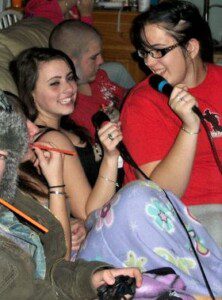
Music helping me get through one of my worst flare ups of CRPS in high school.
A picture of me sitting on a couch playing SingStar in high school around the time of a bad pain flare.

Written by Samantha Barrett, Special Events Coordinator

We all have our ways of coping with CRPS pain. I’ve been using music to get me through everything in my life, especially CRPS. It’s time for me to share with you.

For as long as I can remember, I’ve been singing along to music, making up my own songs, and dancing (even in a wheelchair) to anything and everything that comes on the radio. For a vast majority of my life, I was a dancer, a dance teacher, and a dance team coach. Everyone in my family played an instrument or could sing (not me though, I can’t get my voice to cooperate). I’ve always been on more of the A&R/music business side. At a young age, I started making mix tapes and making my own dance mixes on cassette tapes by recording pieces of songs and trying to make it flow into another song. Yes, I just dated myself by saying I started with cassette tapes. But, I eventually moved onto CD’s and playlists and gave them as gifts or pick me ups to friends and family.

Naturally, with my CRPS diagnosis a decade ago, I created mixes to help get me through. Sometimes, I needed upbeat music (normally titled “Happy Playlist,” or “Put a Smile On”). Other times, I needed to be able to feel my anger and sadness and let it all be absorbed by music (“Cry It Out,” or “Let Me Be Angsty”). I also have had countless karaoke machines in which I used to battle friends, create silly duets, and just let it all out. There was an old game that would rate who sang the song better, and I beat my friend Matt with the last note, he’s still mad to this day. So, with a current pain flare happening, triggered by a hip dislocation, I wanted to share some of my playlists with you. I’d love to know what songs you turn to. Headphones have helped me deal with vibration issues, but I’m lucky enough where I can normally listen on speakers to a degree. Some of these songs require a bit of an explanation, so bear with me! I narrowed it down to ten songs for each category. I have enough CRPS playlists to make up blogs for the next 5 or so years. And then I’d have to add songs from the newer years. We’d get a little stuck in our CRPS music circle.

I Need a Smile On My Face (Happy Playlist)

  1. “Good Vibrations”- Marky Mark and the Funky Bunch (Not only is this song just super upbeat, but it’s a nice reminder that Mark Wahlberg once had a music career. That’s enough to make me giggle. While we may not want to actually feel the vibration, I like to think that the vibration of music could make things better one day)
  2. “The Lazy Song”- Bruno Mars (Reminds me that it’s okay to take it easy, especially since people take actual lazy days. And there are some really goofy lines in this song).
  3. “Tubthumping”- Chumbawumba. So it’s not the most appropriate song when you really listen, but we all get knocked down and the important thing is we get back up and don’t let anything keep us down.
  4. “Proud Mary”- Tina Turner. This has always been my good luck song. Maybe it can be yours too.
  5. “Lose Control”-Missy Elliot
  6. “Rockstar”- Nickelback. Nickelback has such a bad reputation. I love their albums and I’ve been to four or five of their shows. But we all fantasize about being someone else that seemingly doesn’t have any problems, right?
  7. “Backstreet’s Back”-Backstreet Boys
  8. “Wouldn’t It Be Nice”- The Beach Boys. Really anything by The Beach Boys works here. Maybe it’s because everything makes me feel like I’m on vacation.
  9. “Happy”- Pharrell
  10. “Don’t Worry Be Happy”- Bobby McFerrin

Bonus: “Stronger” Kelly Clarkson

Cry It Out AND Be Angsty (Sad/Mad Playlists to Get the Frustrations Out)

  1. “Nerve Damage”- Lifehouse. I came across this song completely by accident. I saw the title and my heart dropped. It gets pretty intense musically for the chorus, which is perfect for angst. But, I relate to this song on really bad days. But to have a song like this out there is really reassuring in terms of not being alone.
  2. “Fix You”- Lifehouse. This song can make me cry any day of the week. There’s a deeper personal meaning to this song, especially since it came out right around my initial injury. But, even the title makes me cry.
  3. “I’m a Mess”- Ed Sheeran
  4. “Lullaby”-Nickelback. While it is a song that will make me sob, it also gives me a bit of hope because it’s another reminder that we aren’t alone and we have to keep trying
  5. “Nobody Knows”- P!NK
  6. “Broken”- Seether feat. Amy Lee
  7. “Faint” Linkin Park. If you need an angry song, this is perfect, I promise you.
  8. “Don’t Stop Dancing” Creed
  9. “Animal I Have Become” -Three Days Grace. Sometimes, I become a bit of a different person when I have bad pain days. And this song is just perfect. It’s a song asking for help from the pain and the anger.
  10. “Yesterday”- The Beatles

Music has really helped me through pain. Also, science has shown that singing out loud releases oxytocin, which can help minimize stress and anxiety while decreasing our feelings of depression and loneliness, which many of us face as a pain side effect. So, whether you can sing the product of Celine Dion, Paul McCartney, and Aretha Franklin or if your singing could break glass, sing out loud anyways! It’s good for you. Download these songs (legally) and get to belting out those choruses!