Jamynne details her life, from being a young shy girl, to becoming a paramedic that suddenly joined a club she never asked to be in- The CRPS Club. What has life taught Jamynne? What is to come for The CRPS Club?
Growing up in Northern Virginia, I remember being the shy girl who always wanted to fit in. Overweight and pudgy, I was bullied a fair amount during elementary school.You could say I was that proverbial “fat girl” that no one wanted to play with. Unless, of course, it was kickball. I had a strong leg, so generally I was one of the first few picked. But if we played Red Rover, tag, or anything related to that, forget it. My name was the last to be called and even then, you could hear my classmates groan as I slowly walked, head down, over to their group. It didn’t stop me from trying to fit in though, and it certainly didn’t stop me from wanting to be a part of what I perceived to be the “cool kids club.” Even when they asked me if I wanted to play “Ring around the Roses” [sic] and was shoved in the middle of the group while they danced around me singing, “blubber, blubber, blubber” as I cried, I didn’t stop trying to fit in. Somehow I knew that one day it would all work out…and if I could just get through that particular moment in time, things would get better. They had to. How could it get any worse? Growing up is awkward, at best. For anyone. And kids can be very cruel. But generally, things like that don’t last long…and things do get better. Even if it doesn’t feel that way at the time.
By the time I hit the 8th grade, the pounds started falling off me. I was gaining confidence in myself. I had friends. I was sociable. I played sports. I was involved with community theater. I was very active. Rebellious, but active. You could say that I was shopping around for “clubs” to belong to. It was not a struggle anymore to find people to hang out with. If I wanted to hang out with the rebels who smoked after school, so be it. If I wanted to hang out with my teammates from the softball team, I did. Or the community theater group, for that matter. There was not a shortage of places I could go. It was a big difference from elementary school. I had choices and those choices were mine. That felt good…even if the choices I made weren’t always the best ones for me. High school was more of the same. By my senior year, I was president of the drama club, I was a proud member of our show choir, and I was still playing softball. I wouldn’t say I was “popular,” but I had a lot of friends that I enjoyed hanging out with. I guess in a way, I had “arrived.” I was finally part of the “cool kids club.”
From there, while I wouldn’t say it was easy, I was still very shy, I didn’t have a problem making friends. Or fitting in. Or meeting new people. I enjoyed the challenge of clean slates and fresh starts. So much so, that at the age of 23, I picked up and moved to New Jersey after reading an article about one of the busiest EMS departments on the East Coast. I was a volunteer EMT at the time, but knew I wanted to become a paramedic one day. And this department seemed like it was everything that I wasn’t. It was tough. Brash. Aggressive. Cut throat. I didn’t feel like I was getting anywhere in Virginia and I do like a challenge. So, against my mother’s strongly worded advice, off to Jersey I went. I knew no one. I had no friends up there. I had no support system. And while I knew I could always come home if it didn’t work out, I had no intention of ever returning. I knew somewhere deep inside that I would find a way to make it work. And I did.
I moved to Jersey during the Blizzard of ’96.Looking back, I think that was probably a sign of things to come. I challenged the NJ EMT state exam and passed. I didn’t have enough experience to get that dream job, but it gave me something to strive for. In the meantime, I was hired at a transport company, and did everything I could to work my way up into EMS. I had a full time EMS position 7 months later. Once again, I was a member of the “cool kids club.” I LOVED EMS. I knew early on that it was a calling for me. A few years after moving to Jersey, and working as an EMT in urban environments, I decided my next step towards my dream job at my dream department…paramedic school. So, I applied and got into one of the most competitive programs on the East Coast and it happened to be in NYC. Since I was working in Jersey City at the time, in order to keep my full time job and benefits, I worked 12 hour shifts as an EMT on Fridays, Saturdays, and Sundays, and then went to school Monday through Thursday…clinical were from 8am to 4pm, and then class was from 6pm-10pm. For a year. It was so hard and there were times I didn’t think I’d get through it. But giving up wasn’t something that I could do. I wanted to be a paramedic.and I wanted to work in Newark. My last clinical assessment was at World Trade Tower II. I graduated about 3 weeks before 9/11. My job, my career, and the people I met through that brotherhood meant everything to me. Wearing that uniform, having that patch on your shirt, and knowing that this may just be the day you make a difference in someone’s life was why I got out of bed in the morning. It’s a club I couldn’t imagine not ever being a part of. I read a quote once that explains it perfectly: “You’re going to be there when a lot of people are born, and you’re going to be there when a lot of people die. In most every culture, such moments are regarded as sacred and private. No one on Earth would be welcomed, but you’re personally invited. What an honor that is.” And it was. I worked in some of the most dangerous cities in New Jersey and I wouldn’t have wanted it any other way.
I worked for Jersey City EMS when our country was attacked on 9/11. We were right across the river on that fateful day. For weeks, if the wind was right, the overwhelming smell of jet fuel and burning bodies could bring you to your knees. We were front and center to receive the thousands of survivors who came across the river on those boats. We were also receiving body bags to put into refrigerated trucks for identification at a later date. All the while grieving those we knew we lost. Day after day, night after night, week after week, we worked. And we, too, became another kind club. A 9/11 survivors club. Our whole nation did, really. This was a club I didn’t ask to become a member of, but the pride I feel when I think about the men and women I worked shoulder to shoulder with, as heartbreaking as it will always be, I can’t imagine being anywhere else…or with a better group of people.
Life, while not without its struggles, was pretty good. I became that paramedic. I had a handful of mentors who I looked up to and learned so much from. I had some great friends. I bought my first house down at the Jersey Shore. I got engaged. I got married….and then divorced. In short, life happened. But during all of that, I had that one constant- the job that I loved so much. Being a paramedic was literally in every fiber of my being. I skipped holidays, birthdays, anniversaries with family…just so I could be on an ambulance. That’s who we are. That’s what we do. We live for it. I certainly did.
In late 2005, I got the chance to become a member of that club, that one club that I’d wanted to be a part of since I was a volunteer EMT in Harrisonburg, V back in 1996. I sat for the interview, and I got the job! Finally! I worked my ass off to get there and I knew I would never want to leave. My department used to make fun of me because I was so proud to be there. These people were the best of the best at what they did, and now I got to wear the same uniform. It was such an incredible sense of accomplishment. It was, for lack of a better word, my “everything”. The ultimate “club.” Until it wasn’t. Until it became my “nothing.”
In March of 2013, I stepped off the ambulance and felt a “pop” in my knee. Figuring I tweaked it, I reported the discomfort, filled out the necessary paperwork, but refused to go the the ED. Paramedics are infamous for self treating. I am no different. I didn’t want to go out on worker’s comp. In fact, the few times that I did, I got a “return to work” time frame from the treating physician right off the bat and then used it as a challenge to beat the return date by at least 2 weeks. I was successful each time. It didn’t matter if I was ready to go back or not, I needed to be on that ambulance. It was as necessary to me as breathing. I took the weekend and iced it. I bought a TENS unit from the pharmacy and did that 3 times a day. There was something wrong. I knew it. But, I had just applied for a chief’s position and there was no way I was going out. It would heal in its own time, I was sure of it. If I had only known how wrong I was.
By May, it had swollen to twice the size. I have a high pain tolerance anyway, but it was pretty bad. Still, I managed to work my shifts…..with my partner and our amazing BLS taking on the majority of the heavy lifting. I would ice between calls but sometimes that was hard to do. When you work in one of the busiest EMS systems in the state, it’s not unusual to respond to 20-25 calls in a 12 hour shift. It’s tough to ice on days like that. On May 17th, 2013 I stepped off the ambulance for the last time. I heard a loud SNAP and I saw stars. I’m not sure what went, but I knew it was bad. Still, I hobbled home and figured I’d fix it up over the next week that I had off. The other thing about those of us in EMS is this: we are capable of being in such a state of denial, that it doesn’t matter how sick or injured we may be, it takes a hell of lot to admit that we can’t do our job. We may take a few days off to collect our thoughts, but we’ll never admit to how bad something is. And if we do, it’s really, really bad.
I ended up having surgery in June, 2013 for a macerated meniscus. I was told that the radiologist said she’d never seen such severe meniscal injury in someone who continued to work. For whatever reason, I was proud of that! 10 days post op I noticed that the pain hadn’t relented. Not only that, my entire leg was awkwardly swollen, purple, and ice cold. I have had arthroscopies before and I know how quickly I rebound. I also know what to expect. This was bizarre. I reported it immediately to my surgeon. Since I was injured at work, my worker’s comp case manager was present at the time as well. He told me that all was okay. That I needed to start PT, and that perhaps this was normal. He said my leg was stable, in good shape and gave me the go-ahead to work as hard as I wanted in PT. So I did. It didn’t get better. In fact, it got worse. Much, much worse.
While I won’t go into details because I am still a worker’s compensation case (we won our appeal to have it reopened. Unfortunately New Jersey Worker’s Comp laws err more on the side of the employer and it’s been an uphill battle from the start), I will say that I wasn’t diagnosed with CRPS until April 2014. By the time of my diagnosis, it had spread. The one thing we do know about CRPS is that early detection and intervention is key. I, like many people, was not that lucky. There was a pretty decent delay in treatment after diagnosis and I am now systemic. I have severe autonomic dysfunction from the CRPS. I have had both in patient and out patient ketamine infusions, I went through 9 months of IVIG plasma infusions, and I’m on my second medical port in less than 2 years because of clots. I have had sympathetic blocks. I have had a stellate ganglion block. I have tried Neurontin, Lyrica, and I live on Zofran because throwing up has become a daily part of my life. I’m in Stage 2/3 kidney disease. I suffer from insomnia. I rent my food. Most of the time, I can’t keep what I eat down or in. I lose my vision intermittently and because of that, I rarely drive. I pass out sometimes. I lose my balance. I drop things often because my dexterity isn’t anything like it used to be. These days I can cut my own food and feed myself without wearing the majority of my meals on my shirt. But that wasn’t always the case. I’m forgetful. I get confused and overwhelmed easily…especially in times of stress. I tire so easily and yet I can be up for days. I never thought, in a million years, that I could function with the pain that riddles my body each and every day. Then again, I’m not sure I am functioning. I spend most of my days sitting on my couch. I think that’s just existing, honestly. I would have to say that the pain, for the most part, is completely incompatible with life. My doctor says that I am one of the most challenging cases he’s ever had as I have yet to respond to anything that’s been thrown my way. He says that I’m a strong candidate for the ketamine coma but unfortunately, due to the high mortality rate, it’s not legal in this country. I’d go to Germany or Mexico to have it done, but I’ve been told those programs have shut down due to the same mortality concerns. Still, I’d take the chance if I could. This isn’t living. And we shouldn’t be expected to exist in this manner.
While that’s been pretty horrific on it’s own, I think what’s worse has been the complete isolation this disease is capable of causing. I lost my job, my career, and any hope of a pension and retirement when I got sick. Friends either don’t believe you, don’t understand the disease, or have a difficult time seeing you suffer. For that reason, they stop coming around or calling. The adage “I’ve got your six” or “once you wear a uniform, you’re family for life” doesn’t seem to be true either. I prefer to buy into the “out of sight, out of mind” philosophy as the majority of people that I worked with, side by side, for almost 20 years in various projects throughout the state, I haven’t seen or spoken to since my diagnosis. My immediate support system is a team of 3…2 of which are my parents. They live in Northern Virginia…approximately 250 miles away. The house that I was so proud to buy back in 2004 needs to be sold and relocating would be in my best interest…especially to a much warmer climate. But while I am tangled up in NJ Worker’s Compensation, I am stuck here.
I don’t know if I’ll ever be able to work again. I know I’ll never be a paramedic…and that has been the hardest pill to swallow. To go from doing that for a living to doing nothing has been a cruel, and painful transition. For a long time, I didn’t know who I was if I wasn’t wearing a uniform. It was my entire identity. I cannot explain the feeling one gets when they’re part of a team who, by the grace of God, is able to save the life of a critically ill or injured person. Unless you’ve experienced it yourself, it’s hard to understand. But I will say it’s an amazing honor and very little can top it. While it didn’t happen often, when it did, there was no beating it. I grieve the loss of that. I grieve the person I used to be. I grieve the loss of my own potential as I feel I could have done so much more with my career had CRPS not taken over every facet of my life. I grieve the loss of ME. Life, as I once knew it, is long gone. But that doesn’t mean that life is over… and I think that’s something that we all need to remember.
In April 2014, I became a member of a club that I never wanted to join, and along with millions of people who suffer just as I do, it’s an uphill battle every single day. It’s a battle for dignity. It’s a battle for respect. It’s a battle for tolerance. It’s a battle for inclusion. It’s just a battle. A lot of people get to the point where the battle is just too much. I get that, but I don’t want that to be my story. I’ll never again know the feeling of saving another life. But I am learning what it feels like to save my own. Every single day. I still enjoy the challenge of clean slates and fresh starts and since that part of me hasn’t changed, I think that may be where I’ll find a new normal. Who says life can’t involve a mulligan or two?
Early diagnosis leads to early intervention. Early intervention must equal aggressive treatment. That cannot happen unless there is adequate and appropriate education given to our healthcare providers about this horrific and debilitating disease. With treatment options scarce due to lack of funding, lack of research, lack of education, and lack of insurance coverage, it can force even the best person to take matters into their own hands. Our suicide rate is very high. Even without that statistic, the severe complications of CRPS can shorten our lives exponentially. It is a very scary reality. One that I live with every day.
In a way, I feel fortunate. I at least had an opportunity to start the dream….I just didn’t get to finish. At least not in the way I had always envisioned. But, what about those who don’t even get that? I saw a Go Fund Me page set up the other week by a single mom who was asking for help to get her son, Tommy, to Texas for an experimental treatment that may just help him walk for his 8th grade graduation. Can you imagine? When the only goal an 8th grader has is to be able to walk the few steps needed to get his diploma, there is something very wrong with our healthcare system. Can you imagine being the parent of that child and having to ask for and rely on the kindness of strangers in order to get him the help he needs? And what if that help doesn’t come in the way you need it to? What then? Can you imagine how powerless that must feel? Can you imagine being Tommy? When I think about him, and so many others like him, I’m grateful for the honor of wearing that uniform. I’m grateful that I got to know what that felt like. I’m grateful that I at least got to have a taste of what the rest of my life, as I knew it at the time, could have been. But that doesn’t mean I will ever stop grieving the loss of my potential,.and until more is made available to help all of us…until we find a cure…it will never, ever, be okay to allow this disease the power to halt a life lived before it’s ever begun. We talk about CRPS as if it doesn’t have a face. The cold, harsh reality is, it’s got millions of faces. I am one of those faces. And whether I like it or not, I’m a member of this club and will be for the rest of my life.
 surrounding town. Her mom, the notorious S-U-E, brought her to my fundraiser and we got to connect. It blew my mind that someone that was close to my age (and lived near me) was going through everything I was going through. She went off to college while I was still in high school, so communication became limited to Facebook. But, I always knew if I needed to talk, she’d be there. Now that we’re both older, we get to chat a little more frequently. Our schedules don’t always align, but we cheer each other on and try to check in on each other. We’ve been through some incredible moments and some of the lowest moments of life together. We have inside jokes that no one would understand. We’re able to discuss anything and everything. Topics that could make other people uncomfortable we openly chat about, since we’re both still constantly learning about living with chronic pain syndromes among other things. Her friendship is not something I take for granted. She is truly a lifelong friend.
 I have some other friends that I was able to virtually meet and then meet in person. Kerry, Ginger, Rachel, and Taylor are just a few. I’ll never forget meeting Kerry. We had always talked on Twitter, but
  then I heard her check in to the Achilles walk about 3 or 4 years ago. I turned around and felt like I was meeting a celebrity. I was so excited to finally meet this friend that I had been talking to online for so long. I met Ginger in person a year later at Achilles and instantly felt like I had known her forever. The three of us even united to do a live stream event, even though I FaceTimed into their Periscope session. We frequently discussed the three of us getting together, but schedules don’t always align. Rachel and I met through our CRPS/RSD Twitter accounts. We then became pen pals. We also always talked about meeting. I remember the day that I received a letter from Rachel with some very serious news about her health. I panicked for her and found her number so I could text her and try to be there for her in a way that was a little quicker than snail mail. She told me what she was about to endure, and we texted back and forth for the rest of the evening. I remember the first letter I received after her procedure. It had gone very well and she wasn’t experiencing the pain that she had been before. I was so happy for her. We also met at for the first time in person at an Achilles Walk. We didn’t get to chat much, but it was so nice to see her in person. She recently got married and I felt like I was living through her, I was so incredibly happy. And then there is Taylor. Taylor and I had been texting buddies because of things related to my work. I hadn’t known she was close to my age initially. Then, we found out we were going to meet and we were so excited. The day I met her, I felt like I met a long-lost sister. We ran (well, we hobbled) toward each other and gave the biggest bear hugs that we could tolerate. We talked, and talked, and talked some more. It was an instant connection. We text each other now when we can, since we live on opposite sides of the country, but I don’t doubt for a minute that the next time we see each other, it’ll be a lively reunion. Not only was she an instant friend, but instant family.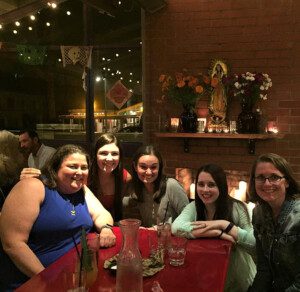
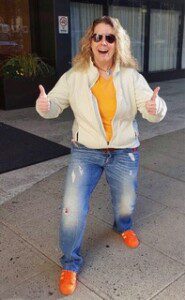 Written by Guest Blogger Jamynne Bowles
 In research funded by the RSDSA, scientists at the University of Bath in England are investigating a new treatment for CRPS that targets perception of and attention to the affected limb and surrounding space.
 By Samantha Barrett, Special Events Coordinator