Written by CRPS Warrior Erikka Elsbury. This blog first appeared in the April edition of In Rare Form.
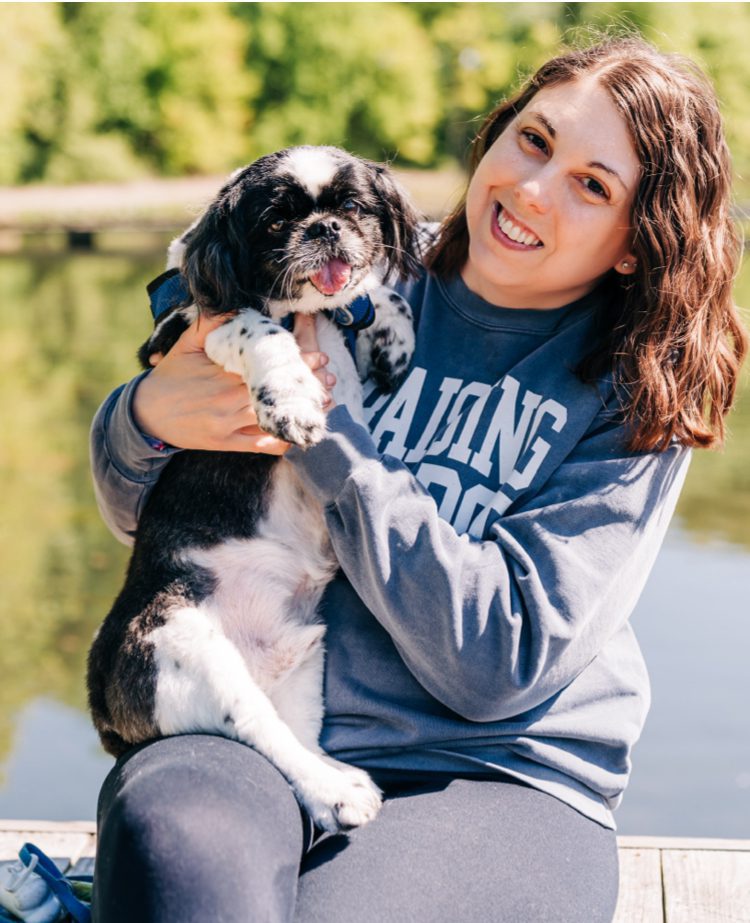
Used with permission
In 2007, my family and I traveled to New York City for the Achilles Hope and Possibility Walk. I saw the motto, “A journey of a thousand miles begins with a single step,” on the shirts RSDSA had for their team. I quickly knew that quote applied to my life and my journey with RSD/ CRPS.
Just five years prior, at the age of 12, I had been diagnosed with a condition so incredibly painful and debilitating that the average person and physician cannot comprehend it.
I had a very normal, happy childhood. I was surrounded by family, friends, and my dogs. One evening, a friend and I were goofing off when I fell in the hallway of my home and sprained my left wrist. I was accident prone. I had broken several bones and sprained multiple ankles and wrists throughout the years, so my parents and I did not think much of it. My dad helped me wrap it with an ACE bandage, and I went to bed.
The next morning, we had a snow day. It may have been the end of March, but in Ohio, blizzards are still possible! My wrist had turned purple and blue and was becoming increasingly painful. My mom took me to the ER where I was diagnosed with a sprain and sent home with Tylenol and ibuprofen. That night, CRPS set in. Over the next few weeks, I saw orthopedic doctors and hand specialists. Every one of them told us that nothing was wrong. They concluded I was exaggerating the pain for attention.
Living 45 minutes from Cleveland, we had access to excellent hospitals. My mom took me to an orthopedic doctor at the Cleveland Clinic. That day, I was diagnosed with Reflex Sympathetic Dystrophy. He immediately called one of his colleagues in Pain Management, Dr. Michael Stanton-Hicks, who I believe saved my life.
The next morning at 8 a.m., my mom and I met him. After speaking with him briefly, he asked what I had eaten and drank that morning. Since I had only taken a few sips of a hot chocolate, he had me change into a hospital gown and whisked me into a procedure room for a stellate ganglion block. For the first time in seven weeks, I felt relief. I completed a series of three nerve blocks over several weeks, along with physical therapy and medication.
Gradually, my pain decreased and became manageable.
During my sophomore year of high school, I sprained my right ankle and my RSD/CRPS spread immediately. I was registered to attend camp with my youth group and didn’t want to go on crutches, so I forced myself to walk. It probably saved me. While at camp, my foot doubled in size, my spasms returned, and the pain was unbearable. I knew my RSD was back, but I was four hours from home and couldn’t do much.
When I returned, Dr. Stanton-Hicks gave me two options: resume medications or continue swimming on the high school team and use it as physical therapy. I chose the swim team. I became a lifeguard and learned how to hide my pain when I was on my ankle and leg for too long. I maintained an active social life, and for a while, RSD/CRPS didn’t hold me back—until my junior year.
On a particularly cold and snowy day, I crushed my pointer finger in my car door while trying to warm up. On the drive home, I felt the familiar, fiery, shooting pain down my right arm. By the end of the night, my right hand was atrophied. Dr. Stanton-Hicks attempted multiple nerve blocks and even an epidural with a rehabilitation stay in a pediatric rehab hospital to stop the spread, but unfortunately, my RSD/CRPS was here to stay.
I am now in my 30s and have lived over half my life in severe, excruciating pain. At 18, during my senior year of high school, I had a spinal cord stimulator implanted because medication and physical therapy alone was not enough in terms of pain relief. I am currently on my third battery and will need surgery next year to get my battery switched out.
My spinal cord stimulator gave me my life back. I was able to go to college and became a registered nurse. I worked as a floor nurse up until two years ago when I realized my body couldn’t handle it anymore. My RSD/CRPS slowly worsened, and last year I began monthly low-dose ketamine infusions, which help my body and brain reset. It is an incredible feeling to get even a small break when it feels like your body is being assaulted 24/7. It has always been hard for me to describe what RSD/CRPS feels like. I describe the pain as dousing your arm in gasoline and lighting it on fire while lightning bolts shoot up and down your limb. Most people would be bedridden or in the ER with the amount of pain people with RSD/CRPS manage daily, yet we keep pushing through.
Pain is not only physically exhausting but mentally exhausting as well. For a long time, I was ashamed of my condition. I was told not to talk about my RSD/CRPS, so when it returned in high school, many of my friends were shocked to learn I had been suffering for years. I now work full-time and often feel I have more to prove, even though I know that isn’t true. There are days when I wish I could hand the mental burden to someone else.
RSD/CRPS has taught me many lessons. I learned to advocate for myself and others. Despite my condition, I graduated with my nursing degree and currently work in a doctor’s office. As a floor nurse, I made it a priority to advocate for adequate pain control for my patients.
I’ve learned that not everything is as it seems. On the outside, I look like a healthy 30-year-old. No one sees the medications I take daily, my schedule for charging my spinal cord stimulator, my ketamine infusion routine, the multiple medical appointments, or how carefully I arrange my bed just to get a few hours of sleep. Society often assumes pain comes with age—that young people cannot be chronically ill. I am constantly told, “Just wait until you’re older.” People assume I’m healthy simply because I’m young. It took seven doctors and seven weeks for me to be diagnosed. If not for my mom’s insistence, my pain may have been dismissed as teenage attention-seeking. Sadly, I know warriors who waited months or even years for a diagnosis.
I’ve learned that boundaries are healthy. I love helping others. I love family gatherings and having my nephews over. But I’ve had to accept that my health comes first. I used to push myself until I collapsed from exhaustion. Now, I reserve Saturdays as rest days. I sleep in as long as my body allows. I lounge. I binge-watch TV. I’ve learned that I cannot truly enjoy birthdays, holidays, or time with family if I am barely functioning.
From a young age, I learned the use it or lose it philosophy. Dr. Stanton-Hicks explained how important it was to use my affected limbs daily. Now, doing hand isometric exercises when stiffness sets in is second nature. My dog, Oliver, also motivates me to keep moving. We love exploring the beautiful parks near us.
My biggest advice to both new warriors and those who have lived with this for years: educate yourself and advocate for yourself. Though this disease is incurable, new treatments continue to emerge. If you feel unheard, seek a second opinion. I changed physicians last year after feeling dismissed, and I am finally receiving proper treatment and relief again.
Fortunately—and unfortunately—no one truly understands this life unless they live it. That’s why having someone you can talk to is essential. I met several girls through support groups and in waiting rooms. We quickly became friends. I was terrified before my first ketamine infusion, but they reassured me and checked in afterward. We support each other because we understand what the other is going through.
Just remember: none of us are alone.