CRPS Awareness Day 1: A Glimpse Into My Life

Tracy Coval documents her journey with CRPS and dystonia as well as treatment options ketamine and SCS

Written by Tracy Coval for the RSDSA blog.

Tracy Coval gives RSDSA a look into her life with CRPS and dystonia. See what she has done through her journey. Note this was initially posted on her blog, which can be found at this link (click here). Some of the images may be too graphic for some readers.

I was first diagnosed in 2002 with Complex Regional Pain Syndrome (CRPS/RSD) when I was 11 years old after a running injury. I was running in gym class and twisted my left ankle in. When I told the gym teacher I couldn’t run anymore, he wouldn’t believe me and had me keep going. The pain kept progressing, and I saw an orthopedist who diagnosed me with Tendonitis and put me in an air cast. The pain continued, and my ankle/foot was turning purple. After going back to the orthopedist 2 more times, the doctor finally told my mom, “I’m sorry but this is all in your daughter’s head. You need to get her psychological help”. After getting in an appointment with an orthopedic surgeon at Boston Children’s Hospital, I would learn of the name Reflex Sympathetic Dystrophy (the name was changed a year or so after to Complex Regional Pain Syndrome).

CRPS/RSD is a neurological disorder that causes pain waves to be sent to the brain, telling the brain that you are in chronic pain, even though nothing is wrong. CRPS/RSD usually develops after an injury, surgery, or even something as simple as a blood draw.  CRPS/RSD is known as the ‘suicide disease’ as many people can’t handle the pain anymore. The disease is rated on the McGill pain scale as being more painful than amputation, or giving birth naturally. CRPS usually develops in a limb, but there are cases where individuals are affected by it throughout their entire body. This is known as full body CRPS. The pain is the worst pain one could encounter. The pain feels like you are lit on fire, on top of stabbing, throbbing and aching pain. Think of sticking your hands in a bucket of freezing cold ice water and not being able to take your hands out of it. No one really understands CRPS, but the sooner you are diagnosed, the better chance you have to go into remission.

I would be told that I would need to be referred to a pain clinic, and that this would resolve on it’s own. Boy was this doctor wrong. I would learn that I would have CRPS for the rest of my life. A common phrase that was heard by my main provider was, “suck it up and live”. I was 11 when I heard this for the first time. I would then try every medication, nerve blocks, epidurals, lidocaine infusions, acupuncture, reiki, herbal remedies and more with no relief.

At the age of 14, I was sent to Children’s Hospital of Philadelphia (CHOP) to attend an aggressive physical therapy program. The goal was to retrain my brain to understand that non painful stimuli would not make my pain worse. This is known as desensitization and it’s done through physical activity.  Treatment was scheduled Monday through Friday, 7 hours a day. The staff were comprised of physical therapists, occupational therapists, social workers, art therapists, music therapists, and the main doctor.

The doctor running this programed believed it was crucial to be taken off all of your medication, and treated CRPS more as a psychological issue than a neurological issue. Both the physical therapists and the occupational therapists reminded me of drill sergeants; their approach towards the exercises were aggressive. In PT, I was pushed to my limits with many exercises, especially the ones where I was required to beat my record of the amount of reps I could complete in a minute. If I didn’t do more than my previous record, I would have to do it again. There were many tears, and too many vomit buckets to count.

After being there for two weeks, I had a few falls to my left arm, and I remember feeling this stabbing burning pain. It was discolored and swollen, and I couldn’t touch it. X-rays were performed and it was determined that the RSD had spread.

After being at CHOP for 1 month, I was finally discharged after being there for 1 month. The pain in my left ankle/foot and knee was gone but my left arm was horrible.

The pain relief in my left leg lasted for a year, and it was amazing. I went back to dancing 5 days a week, while doing physical therapy on my left arm. There was one day I was in dance, and I felt that familiar pain that I hoped would never come back. I followed up with my doctor at Boston Children’s who said there was nothing more that he could do for me.

At this time, I was finishing my freshman year of high school. I would now be on my own handling the pain. My mind set was to ignore the pain, and continue to do the things that I loved: art, dance, and cheerleading. By junior year of high school, I had taken a break from dance, as I fractured my spine. This recovery lasted for a year and a half. After getting cleared to return to activities, the CRPS was intensifying. I was noticing I was going through frequent flares, missing a lot of school, and it was getting harder to walk. I am amazed and proud to say I graduated high school.

2009 I started college at Lesley University in Cambridge, MA. I was excited to finally have the college experience. I was continuing dance and cheerleading, but realized I really needed help with the CRPS pain. After talking with a family friend, I got the name of a pain doctor who I still use to this day. The best part is he looks like Kramer from Seinfeld. I was his youngest patient at the age of 19. His treatment plan was to do a Spinal Cord Stimulator (SCS). A SCS is a mild electric current to your spinal cord. The goal is to block out the pain receptors by feeling the electric current instead. I went through the trial run, and found it extremely helpful. The trial gave me hope that I could go back to dance. I had my first SCS implanted December of 2011, my junior year of college. I had it done during my winter break. The SCS is a 6 month recovery that requires you not to bend. The pain from the surgery was extremely painful, but my CRPS pain was getting more tolerable, and I found I was finally getting relief. I am so grateful for all of my friends in school who were so helpful and understanding. My friends were awesome for pitching in, and I was fortunate that my professors were understanding of the surgery. After 6 months, I was back to dancing with my team. Words can’t explain how it feels to go back to something that you loved so much that had been taken away from you for so long. I was so happy, and really felt I was getting my life back. I was doing an art therapy internship with a pediatric inpatient psychiatric unit for over a year, and I was interested pursuing a career in social work.

After dancing for a year, I began feeling pain in my right foot. My foot was becoming discolored and was ice cold to the touch. When I followed up with my pain doctor, he confirmed the CRPS had now spread. He felt it was time to try a medication called Ketamine. Ketamine is mainly used during anesthesia, but there is reports that it helps treat CRPS. I would start with ketamine lozenges (it looks like the size of a starburst), and then I would go for infusions. The infusions would take 4-6 hours, and often I would be extremely out of it because of the side effects.

It was exciting to see how much the Ketamine was helping. I wasn’t missing as many classes, my flares were not as severe, and I was finally enjoying college more because the pain was better. I would go for infusions every 8 weeks, while being in my senior year of college.  By my second semester, I started working on an inpatient psychiatric unit specializing in eating disorders, and ecstatic to learn I was accepted into my top choice for graduate schools. I graduated Lesley University with my Bachelors of Science May 2013

Fall 2013 I started graduate school, while continuing to work part time. I was really busy, but happy with everything I was learning. My pain was still there but it was manageable thanks to the Ketamine infusions. Unfortunately, my treatment approach was about to change, as my health insurance stopped covering the ketamine infusions, and the ketamine lozenges. My doctor fought the insurance providers for months, but they wouldn’t budge. Next treatment plan: another spinal cord stimulator for the right side of my body. When I had the first SCS implanted, it was designed to control one side of the body. A year after I had my SCS implanted, a newer model came out where there is now an ability to get full body coverage. My doctor felt it was best to keep in my first one, and put in a second device. It was decided I would have this surgery done after I finished finals, and recover during winter break.

Two months before my surgery, I started having some issues with my job. Because the ketamine infusions had stopped, my flares were getting worse, and there were shifts I had to call out on. I had met with my nurse manager and had explained about CRPS, and had asked her if she wanted documentation. Her response was no. After a couple of weeks had gone by, I was called in to meet with the Director of Nursing who scolded me for calling out because she thought I was out partying and lazy. (I wish I was joking about this). I started hysterically crying and trying to explain I had a neurological disorder, and made sure to explain that my nurse manager was aware. I explained I was going to be needing neurosurgery again and it is out of my control when the pain flares occur. She asked to get the documentation, and set up a time to meet with human resources to talk to them about this. Once I met with human resources, I learned that my job would not be held when I come back from surgery, and I was let go from my position.

I had the surgery December 2013, and it was a rough and painful recovery. I would go to classes sitting on pillows, in attempt to try and be semi comfortable. I knew I needed to continue school as a distraction from the pain. Once I got through my 6 month recovery, my friend helped me get a job working at an emergency room working as a Patient Safety Assistant. Often, I would be working with psychiatric patients who were on a section 12, and needed supervision for safety reason.

Fall of 2014 I started my second year at school, and was assigned my first field placement; a homeless shelter for children in state custody. I was having difficulty balancing work, an internship, school, and RSD. I was offered at my internship an opportunity to be paid to work as a social worker on top of doing my school internship. For me this felt like the right fit as my internship was a shorter commute than my job at the ER.

Summer 2015 I decided I needed to take care of myself, and my whole self. I have struggled with weight all of my life, and had tried many different approaches to lose weight, and I was never successful. I decided to meet with a bariatric specialist, and after a lot of consideration and research, I decided to get the lap band. The lap-band is an adjustable silicone band placed around the top part of the stomach, designed to restrict food intake. At the time of surgery, a small device called a port (or reservoir) is placed under the skin of the abdomen. I wanted to lose weight on my own, but I knew that I needed help. Weight loss surgery is NOT a quick fix to losing weight; it is a tool to help. Weight loss surgery is a complete life change, and I was ready to take on that change. I had the surgery done on August 11, 2015 and I went into surgery smiling because I knew this was going to help my overall health, but especially the RSD. To this date, I have lost 100+ pounds, and I have never been so proud. It was worth the change, and I did not realize how important your diet is especially with a chronic illness.

I entered my last year of school, Fall of 2015, and my next placement was at a homeless shelter for pregnant teen and teen moms. I had been having a lot of muscle spasms, especially in my feet. My toes would curl and get stuck at times from the muscle spasms cramping my toes. I thought this was from the RSD and really didn’t think much of it. When I would bring this up to my pain doctor, he wasn’t sure why the cramping was so severe. I remember laying down on the couch Saturday morning with the worst muscle spasms. I took my meds hoping it would help loosen them. 2 hours later the muscles spasms were continuing and were so severe I was hunched over crying from the pain. My toes were curled and I was having uncontrollable cramping. It felt like the worst Charlie horse that would not release. 911 was called as I couldn’t move. My legs were locked, and it was the most frightening moment of my life. Paramedics had to carry me out of the house as I was howling from the contractions. After being in the ER for 6 hours, I was discharged, and told to go see my pain doctor immediately. I got an appointment with him a week later and described to him the symptoms and the ER event. I would learn I have a condition called Dystonia, and he informed me that he doesn’t treat this. He warned me that if this happens again, where I get locked in contractions, then I have to go to the ER ASAP to break the abnormal posture before my brain thinks this is the way my toes should be positioned.

Dystonia is a movement disorder where you have uncontrollable muscle contractions. Usually body parts will twist involuntarily, have repetitive movements and/or can often get stuck in different postures. I would later learn that often times CRPS/RSD and Dystonia like to be best friends. Not always, but it can happen.

After my first initial diagnosis, I would be in the ER two more times due to my legs locking up, one of the situations happened while I was driving and lost control of my car. I was hospitalized for 9 days, and all of the doctors felt that this was psychological and I was a drug seeker, even though my toes were stuck in a curled position. I was sent to a rehabilitation center for another two months. All of the doctors there tried different medications, Botox, physical therapy, and occupational therapy and nothing was getting better. The doctors all had team meeting and felt it was time I be transferred to another hospital as they felt that I need further help with pain control, but they also felt this was mainly psychological. I was transferred to another hospital to have a psychiatric evaluation performed per request by the insurance company. The three doctors who were in charge of my case felt this was not psychological, and felt it was in the best interest to be transferred to a Boston hospital to work with a Dystonia clinic. I was in the hospital for three days, and then finally discharged and wheelchair bound.

During the next couple of months, I would be tossed from specialist to specialist all agreeing that my case was too complicated, and there was nothing they could do. One doctor referred me to a neuropsychiatrist at Massachusetts General Hospital, and my appointment wouldn’t be for another 6 months. During this time, I taught myself how to walk again using forearm crutches. I did not have any form of physical therapy during this period, so I forced myself to practice every day, several times a day. I took myself off all of the opioids, muscle relaxers, and benzodiazepines. I decided to use medical marijuana to help with the pain and muscle contractions, which was one of the best decisions I have made. I was tired of having so much medication, and I wanted to prove to the doctors I was not faking this.

When I finally had my appointment with the neuropsychiatrist, I was amazed he spent an hour and a half with my dad and I. He agreed this was a form of Dystonia, and this was not psychological. I would then be referred to a neurologist who specializes in Dystonia. This specialist would spend over 3 hours with me for my first appointment. Apparently, there are several types of Dystonia’, but often physicians are not educated about Functional Dystonia because the United States is not up to date when it comes to Functional Neurological Disorders. Apparently, the United Kingdom is extremely educated on this, and if I was in the UK, the muscle contractions could have been reversed because there is a proper treatment team protocol that is used when a patient starts to show signs of a Functional Dystonia. The sooner it is caught, the faster it can be treated. I had learned during this appointment that if I got to this neurologist soon enough, this all could have been reversed. I would then be referred to a physiatrist to determine if my ankles/feet/toes could be saved.
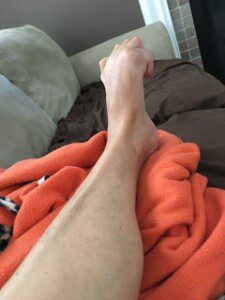
Tracy gives us a glimpse into life with CRPS with dystonia, ketamine, and SCS

While waiting to see the physiatrist, I would travel to Rhode Island to meet with Dr. Pradeep Chopra on May 24, 2016. Dr. Chopra is very well known for CRPS and his diagnostic work. After spending over 5 hours with my dad and I for our initial visit, another diagnosis added to my medical terminology list: Ehlers-Danlos Syndrome (EDS). EDS is a genetic disorder you are born with that affects your connective tissue. Usually this is seen with joint hyper-mobility, skin hyperextensibility (my skin is really stretchy, I know gross), and fragile tissue. Dr. Chopra was able to help me understand that I was born with EDS, and the EDS most likely caused the CRPS, and the CRPS caused the Dystonia. Dr. Chopra also felt something else was going on with my spine, but that will be discussed another day.

In September of 2016, I would meet with the physiatrist, who did a nerve block to numb my leg, and see if he could break the contractions. His thought was if my brain couldn’t feel the pain then the contractions would break; my toes never moved no matter how much he forced it. I learned that my toes were paralyzed, and my ankles were frozen. I was told it was time to meet with an orthopedic surgeon as I would need surgery. I was told it could be either reconstructive surgery, or amputation.

After waiting a month, I got an appointment with an orthopedic surgeon who is the Chief of Orthopedic Surgeons for Brigham and Woman’s Hospital. He looked at my feet, and said he didn’t even know if he could get to the tendons in my toes because of how severe the contractions were. He wanted to do a further exam by putting me under anesthesia and seeing if my toes would relax. We tried it with no such luck. The surgeon brought in 8 opinions to see what my best option was. All of the doctors felt amputation was most likely what was going to happen, but here was the action plan: tendons would be severed in each toe, bone would [be] removed from each toe, and pins would be placed. I was told to prepare for amputation as the surgeon was unsure that my skin would hold up when it came to suturing the wounds, and the plastic surgeon felt that I was not a good candidate for a skin graft. I learned this surgery will not fix the Dystonia, or my ankles, but it will help my walking and pain in the long run. Both feet have to be done, but the left foot will go first as it is the worst out of the two.

The first surgery was done on March 28, 2017 and I woke up with all of my toes. There were so many tears of joy and happiness as everyone is amazed this happened. I was given a 90% chance that I was going to wake up from surgery needing amputation on half of my foot. All of the doctors have been preparing me for amputation, so that was what we were all anticipating. I was under the knife for four and a half hours, as the surgeons worked as hard as they could. All the tendons of my toes were severed, bones were removed, and I also have a bone fusion for my big toe where the knuckle is.

On June 30, 2017, the second surgery was performed. During this procedure, the pins were removed from all of my toes, and my facia muscle was cut. The purpose of cutting the facia muscle was to see if it would lengthen the Achilles tendon. The surgeon and the Dystonia specialist explained that if we did not do work on my tendon, I would never be able to walk again.

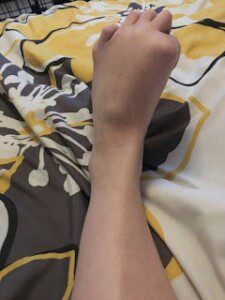
My foot morning of surgery 3/28/17
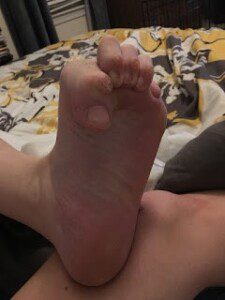
Tracy Coval's foot pre surgery with dystonia and CRPS

My foot morning of surgery 3/28/17

Tracy's foot with dystonia and CRPS before surgery and SCS and ketamine

The first time looking at my foot after surgery 3/28/17
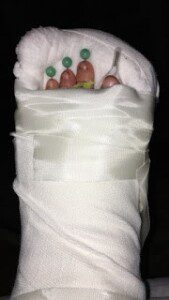
Tracy's foot post surgery with CRPS, dystonia, and impacted by SCS and ketamine

2 weeks post-operative after the pins were taken out and the facia muscle was cut
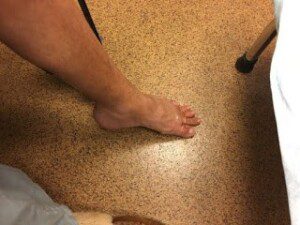
Tracy Coval's foot 2 weeks after surgery. Foot was regaining some normalcy with CRPS and dystonia

Please consider making a donation to RSDSA today!
A Halloween Tale for CRPS With a Fun Message

Samantha writes a special Halloween story about CRPS and what is coming up after Halloween for awareness month
Halloween a Few Years Ago

Written by Samantha Anderson

‘Twas the day of Halloween, and all through RSDSA,

Anticipation was occurring, for another important day.

While others prepared costumes of Wonder Woman and Zeus,

Samantha was writing a Halloween blog, although for another use.

Tonight, she would dress as a unicorn in full,

To pass the trick or treaters candy by the bagful.

The clock will strike midnight, and a new month will arrive,

Just in time for a new campaign to thrive.

The first of November means it is the time,

To shed some awareness through story and rhyme.

A new blog will be posted every day,

For members of the RSDSA community to relate to in some way.

Tips, tricks, and stories we hope will compel,

Other readers of our blog to write for us as well.

Thirty different stories will be shared right here,

For you to repost for those you have near.

Stories will supplement our events through the weeks,

If you haven’t seen them, be sure to take a peak!

That’s right, RSDSA community! We will be featuring a new blog or vlog every day for you to read and share. Why? Because tomorrow starts CRPS Awareness Month! If you would like to submit a blog for consideration, please send it to [email protected]. If you haven’t seen the events coming up this month, head over to our events page to see what is to come. We think this is going to be a wonderful awareness month that will help us relate with one another and will help others gain more insight into RSDSA’s mission and the lives of those affected by CRPS. We could always use more than thirty blogs/vlogs, as we can post multiple OR save them for a future #TheTuesdayBurn.

Want to share what you’re doing to make this November the best CRPS Awareness Month ever? Send us a post on Facebook or a Tweet using #CRPSAwareness17 #ThisIsCRPS. Get your voice heard. When our voices come together, they create a beautiful harmony that can be heard across the world.

If you cannot make it out to one of the CRPS Awareness Month events, please know that sharing these events and helping get the word out and obtaining donations helps RSDSA reach our initiatives. We are excited to try new things this awareness month!

Have a happy and safe Halloween and we will see you all back here tomorrow for CRPS Awareness Month!

PS. If you are Facebook savvy, you will notice that our new filter for CRPS Awareness month goes up tonight on Facebook. Just search RSDSA when adding a frame to your picture! There are two available.

RSDSA: The People and Programs Behind the Website

RSDSA's executive vice president, director Jim Broatch with doctors Terri Lewis and Pradeep Chopra. All work towards CRPS progressBy Jim Broatch, MSW, Executive Vice President, Director

With CRPS/RSD Awareness Month approaching, we wanted to feature a message from our Executive Vice President and Director, Jim Broatch. So many people rely on RSDSA for resources. Here at RSDSA, we want to be able to best help you and best support you. We want to create a hopeful environment. Every day, we look to see what we can do better for our community. Jim Broatch too the time to write up a bit of what we do daily. We will continue to move towards progress. Please join us in shedding more light on CRPS/RSD, not only in the month of November, but every month of the year.

I would like to introduce National Pain Report readers to the many programs and activities of the Reflex Sympathetic Dystrophy Syndrome Association (RSDSA).  Too often, people are referred to our website or find us via a link during an exhaustive internet search. They see that our site houses a tremendous amount of helpful information but may lose sight of the fact that RSDSA is a vibrant organization which has been serving the CRPS community since 1984.  Two moms with children with CRPS started our organization.

Our mission is to provide support, education, and hope to everyone affected by Complex Regional Pain Syndrome (CRPS), formerly known as Reflex Sympathetic Dystrophy (RSD) while we drive research to develop better treatment and a cure.

In terms of the first part of our mission, RSDSA has established two funds to support those with CRPS.

  • The Maria Lane Fund is designed to help individuals navigate the public/private insurance landscape and to promote greater professional awareness of CRPS. This fund also helps to sponsor the development of education programs for healthcare professionals in an effort to increase awareness of CRPS.
  • Our second fund is the Patient Assistance Fund in honor of Brad Jenkins. It provides emergency financial grants to individuals in distress. Since 2015, the fund has provided over forty thousand dollars in emergency financial aid. Sadly, at times, our fund is the only available source which keeps families from living on the street.
  • For the past three years, RSDSA has co-sponsored a free week-long camp for children in pain. One child remarked that the camp experience had literally saved her life. She had already tried suicide.
  • This summer, RSDSA also developed a young adult’s weekend retreat to help those aged 18-29 transition into higher education, the workforce, and or living on their own. Read about Melissa’s experience here.
  • Later this year, we will publish the third edition of an invaluable financial and social services directory called In Pain and Agonizing over the Bills.
  • Our staff and board of directors are always available to help individuals navigate this scary, perplexing diagnosis and begin their recovery journey. People can call us via our toll-free line 1-877-662-7737 or send an email, [email protected]. Whether you have had CRPS for decades or just months, we’re here to help and listen. One young adult just diagnosed, thanked us and wrote, “I have been completely overwhelmed and frustrated, but you gave me some hope and inspiration to research and fight to get better.”

Spreading awareness in the medical, legal and insurance fields, as well as to the community at large, is an integral part of our mission.  Each year, RSDSA hosts regional educational conferences for people with CRPS and their care givers. Each conference is filmed and archived on RSDSA’s YouTube channel and we have also complied hundreds of peer-reviewed journal articles in our web library.

  • Philip Getson, a New Jersey physician who has treated hundreds with CRPS is featured in two free accredited courses for physicians, psychologists, and nurses
  • We also have developed a ketamine protocol for emergency departments on how to manage CRPS flares
  • A free accredited pediatric CRPS course for pediatricians, nurses, and physical therapists is currently being authored

The third leg of our mission is research. Since 1992, RSDSA has funded more $3 million dollars in pilot studies and pain fellowships.  Three years ago, we established the International Research Consortium with the goal of fostering increased collaboration amongst CRPS researchers worldwide. Their mandate is to promote research directed at relieving the pain and disability of CRPS, facilitating its prevention, and ultimately, finding a cure.  Read about RSDSA’s current-funded research.

RSDSA exists to serve your needs, no matter how you are affected by CRPS. We are here to help and are guided by the thoughts of Henri J.M. Nouwen, “Often we are not able to cure, but we are always able to care.” RSDSA is so much more than a website. It truly is a community of caring. We invite you to look beyond our website to see the people and programs which give it life.

Please consider making a donation to RSDSA today!

Dental Care and Chronic Pain

Written by Louis Siegelman, DDS

Many aspects of daily life are a significant challenge for patients dealing with chronic pain conditions like complex regional pain syndrome (CRPS) or fibromyalgia. Dentistry can often be an extremely difficult environment with its inherent discomforts. Most dentists provide their care with local anesthesia as the sole means of pain control. Some dentists will also use nitrous oxide, which delivers excellent analgesia, and/or a benzodiazepine, such as diazepam (Valium) or triazolam, for relaxation. A limited number of dentists can provide more advanced multimodal therapy that is within the limits of a dental license. Such dentists may be oral surgeons, dentist anesthesiologists, or others with extensive postdoctoral training in anesthesia and pain control. These dentists with more comprehensive training can provide intravenous sedation for oral surgical, pediatric, or general dental procedures.

A comprehensive evaluation and consultation should be the first step in developing a treatment plan that suits the patient’s needs. A detailed past dental and medical history needs to be reviewed. Co-existing mental health conditions relating to panic and anxiety, depression or posttraumatic stress disorder are considerations. Coordination with other involved healthcare providers, such as pain management doctors, internists, neurologists, and surgeons, may be required. All of this information forms the basis for appropriate dental and anesthetic treatment planning.

Multimodal treatment includes a pain management strategy for pre-emptive analgesia, intra-operative comfort, physical therapy, and postoperative pain relief. The goal is to cover as many pathways of discomfort for patients during the peri-operative period as is reasonable and indicated for specific patients and procedures. Possibilities include alpha agonists, NMDA receptor antagonists, antihistamines, opiates, acetaminophen, NSAIDs, benzodiazepines, steroids, anti-emetics, local anesthetics, and sedative hypnotics. Common routes of administration may be topical, oral, intravenous, or intramuscular. Skillful use of these medications can provide a patient experience that minimizes pain, swelling, nausea, and anxiety. Talk therapy with the dentist or mental healthcare professional can be instrumental in overcoming obstacles to care.

Many patients with chronic pain face constant suffering and may be unwilling to seek professional care for their dental conditions because of fear of additional pain. They may also expect the same level of anesthesia and pain control available for minor medical procedures in the dental environment. Trained dental providers are available, but it’s important for patients to ask questions like what was the type of training the doctor received, how many patients like your self the doctor sees, and how often he/she does these procedures? Many offices and programs offer information online about their services, and treatment philosophy. Calling the office and asking questions of the dental team members is a great way to see if a doctor will be best able to serve a your individual needs.

Louis Siegelman, DDS, is a dentist anesthesiologist practicing in New York City. Click Here to visit Dr. Siegelman’s website.

RSDSA Review. Summer 2009.

A Nurse’s Fight Back Against CRPS – Impacting Other Nurses

Nurse Beth and Jim Broatch educated other nurses about CRPS. Beth lives with CRPS while fighting against itWritten by Nurse Beth Seickel for the RSDSA Blog
When RSDSA was asked to be a part of ASPMN-LI’s 16th Annual Pain Conference, we were happy to join. Nurse Beth, a CRPS warrior, was one of the first people we wanted by our side during this. She was kind enough to write about her experience as she is a nurse fighting CRPS while also educating others.

RSDSA was invited to be a part of the American Society for Pain Management Nursing-Long Island Chapter’s (ASPMN-LI) 16th Annual Pain Conference at the DeMatteis Center for Cardiac Research and Education in Greenvale, New York, an annex of St. Francis Hospital on Long Island. ASPMN-LI’s mission is “to advance and promote optimal nursing care for people affected by pain by promoting best nursing practice. This is accomplished through education, standards, advocacy, and research.”

This dynamic group of nurses and nurse practitioners strives to improve the quality of care for patients living with chronic pain. In 2016, the ASPMN-LI chapter jumped on board to support RSDSA’s First Long Island CRPS/RSD Awareness Walk in Eisenhower Park, NY. Collaborating with the ASPMN-LI chapter enabled the event to host over 225 attendees. Many of whom had never met another with this condition, but they all publicly spoke about their chronic pain due to all the “myths & stigmas” surrounding it.

This year, ASPMN-LI chapter’s board president, Lynn Grimaldi, RN-BC, shared the board’s decision to create a team to support RSDSA’s Second Long Island CPRS/RSD Awareness Walk on September 9, 2017. RSDSA cannot thank ASPMN-LI enough for their continued support for all living with the challenges of CRPS.

On June 2, 2017, Jim Broatch, Executive Vice President and Director of RSDSA, and I were honored to join this dynamic group at their 16th annual conference of pediatric & adult nurses and nurse practitioners, many of whom had never heard of CRPS. Therefore presenting, “Your Patient Has CRPS, Now What?: Insights into Complex Regional Pain Syndrome” was extremely well received.

Despite the fact I lost my nursing career 10 years ago from CRPS, it was a pleasure to share my journey with other nurses as I have a unique perspective being a nurse and
chronic pain patient. In addition, I know how little to no education on chronic pain is provided in nursing and nurse practitioner schools even though nurses are the front runner for providing education and pain relief to their patients. Unless nurses’ pursue additional education on chronic pain conditions such as CRPS, how can any changes be made? This is why the partnership between RSDSA and ASPMN-LI is so important as they are the front runners for all living with chronic pain.

Thankfully, Jim Broatch, who has been there for me the past 10 years, was not only able to do the driving to the conference, but share the presentation in order to minimize my CRPS flares since mobility limitations and medications present numerous obstacles.

However, it was unbelievable the impact that was made. So many nurses and nurse practitioners shared stories of patients they had treated who didn’t have a clear diagnosis, despite extensive diagnostic tests. Looking back now, they can see the many symptoms associated with CRPS that were present and unrecognized. Many felt overwhelmed by the enormous impact CPRS has had in both adults and pediatrics and wanted to learn more. Some provided empathy for what CRPS brings to patients’ lives and how patients can best be served in a variety of settings.

We had many RSDSA resources available and they were absorbed like sponges! A few RSDSA resources include:

For me, it was a pivotal moment to share a unique perspective as a nurse and a chronic pain patient. Maybe this is why I developed CRPS?

Thank you ASPMN-LI for partnering with RSDSA whose mission is to provide support, education & hope to all affected by the pain and disability of CRPS/RSD, while driving research to develop better treatments and a cure.

Please consider making a donation to RSDSA today.

The Top 10 Shoe Brands for CRPS Warriors

Written by Guest Blogger Ashley Epping

I developed CRPS at 12 years old in my left wrist. After being diagnosed, I spent the next six years dancing competitively, staying at the Pediatric Cleveland Clinic, creating art, traveling abroad and applying to colleges. I never once thought about my shoe choice because I didn’t need to. Though I would always see others in my support groups posting photos of shoes that worked for them, and to be honest most were not versatile enough to wear for specific occasions such as professional or dressy settings. For the first six years my pain was only located in my upper body, but in the following years the pain spread to the lower regions. For the first time in my life, I was not able to purchase shoes based on the fact that they were cute. I am a 22 year old business student, living in New York City. The typical CRPS friendly shoes were not an option for me.

I spent the next few months observing and researching shoes that could serve all purposes. I needed shoes that were equipped for walking, standing, exercising, and were standard for business, social, and/or dressy occasions. All the while serving relief for CRPS symptoms. I needed shoes that could handle swelling, hyper sensitivity, poor balance and support painful legs.

I was successful in finding shoes that fit my lifestyle, and I figure that others may have the same issues I did when looking for shoes. I have put together a list of my findings for all CRPS sufferers who are in need of some kicks.

1. Teva
Teva sells an arrangement of sandals, sneakers and boots, but their most accommodating shoe for swollen and sensitive feet are their adjustable strap sandals. The sandals adjust at the ankle and around the ball of the foot to create the perfect fit everyday no matter the severity of symptoms.

2. Eurosoft
Eurosoft is made up of mostly fashion forward products; shoes that are meant to be worn for style, while also keeping you comfortable throughout the day. The shoes are created with padding in the sole and arch supportive. They offer casual open slip ons for day to day wear, and also offer wedges for a more fancy occasion. Eurosoft is sold by wholesalers, but the most convenient locations are Amazon, DSW and [sic] JCPenny’s.

3. Sketchers
Sketchers offer boots and sandals, but their sneakers are worn most often for CRPS. Sketcher’s sneakers offer light weight technology, air-cooled memory foam, and flexible soles.

4. Christian Dietz
This brand is on the [sic] pricy side, but if you are looking to make an investment these shoes will last you years. Their products range from sneakers to dress wear to orthopedics; allowing all different accommodations. These shoes are incredibly fit for people who wear braces. Christian Dietz is sold through the store Enslow, which has been serving the medical community since 1909.

5. New Balance
New balance is a commercial sneaker brand, but has recently come out with NBRxPerformance Foot Health products. These sneakers are categorized by running, walking and insole options. New Balance connects doctor’s recommendations to certified retail partners and trained fit specialists to fit you with the right sneaker.

6. Dankso
Dankso has a wide range of products, but the most supportive and specialized shoe for CRPS purposes is their clog model. Though these shoes are not highly recommended for walking long distances, they are one of the top shoe brands for people who need to stand for long periods of time.

7. Birkenstock
The most CRPS friendly products from Birkenstock’s are the slip on Arizona sandals, and the slip on Boston clogs. These shoes are made to be adjustable and roomy for cozy socks, and/or in our case for swollen, sensitive feet. These products tend to be a little pricy, but they are real leather, which does last for a very long time.

8. Ecco
Ecco offers a variety of products, but the best ones for sensitive feet are their slip on booties, flats, and casual sneakers. This brand has created a feature using premium materials plus dynamic comfort. They use “next generation platform technology” which is inspired by nature and old world leather. In case a fancy occasion arises they also offer low heel pumps with the same comfort technology.

9. Adidas
Adidas is a commercial brand, but they have come out with their Ultra Boost technology, which are designed to propel you forward while maintaining your stability. They are engineered to expand with your foot and avoid irritation, and come with rubber soles that have extraordinary grip for wet and dry surfaces. These sneakers are the favorable choice for the gym or physical therapy.

10. Naturalizer
Naturalizer offers incredible options for professional shoes; if you are looking for a shoe with a small lift, that are sleek, durable for walking and standing, than their a top choice. Their prices have a wide range, but lower prices can be found through their retailers such as Nordstrom Rack and DSW.

There’s a Monster in the House – CRPS Even Affects A Caregiver

Stephanie and Valerie are the perfect example of how a caregiver can be affected by CRPS tooWritten by Guest Blogger Stephanie Umlor for the RSDSA blog.

While we live with CRPS daily and can let it take over our thoughts, we often don’t realize how our loved ones are affected. This is a reminder that every caregiver and loved one can be affected by this CRPS “monster” as well.

A reality of anger, hurt, and pain rages havoc on our bodies and minds CRPS is a methodical monster. Convincing us that we are helpless, worthless, a burden, as well as unable to to love someone the same way as we did before. Leaving us in an atmosphere so overwhelming we might as well stay. I call this “ CRPS Pain Limbo;” I know most medical professionals refer to it as “ The 5 Stages of Grief.” I think with CRPS sufferers we tend to stay in the anger and bargaining stage more than any other one that’s why I call it CRPS pain limbo.

What happens if one day you stop and wonder if maybe my spouse may feel the same as I do? Impossible right? Not at all, CRPS may not impact the ones we love with constant pain or fatigue but it does impact them psychologically. They feel Helpless, Worthless, maybe as a burden, and they feel isolated or alone which are a lot of the same feelings we feel. I realized this year from a situation due to CRPS how my wife (Valarie) was feeling as devastated as I had been through the last 7 years. I have accepted that CRPS is a part of me and the perception I believed was reality became an obstacle I had to go through to be where I am now.

Reality is a hard pill to swallow and I had my dose from Vascular test results that were given to me June of this year. When the Vascular specialist came into the room to talk to me I figured he would be like the rest of every doctor, I will admit it he wasn’t. When he first started talking he sounded like Charlie Brown’s teacher speaking, then it started to make sense he was telling me I have bilateral Peripheral Artery Disease(PAD)! He continued by telling me that it was completely neurological and there was nothing he could do, but then he said,” This is CRPS at it’s finest! I mean This is what CRPS can do in its truest form.” I know most people probably took that as a crude statement, when I told Valarie she did but I didn’t. He explained that he had extreme concerns about possible wounds that could develop on my feet and not heal which would or could cause an amputation. I let it sink in and then said, “ So I could possibly lose a toe or my foot, that’s what you’re saying?” The look on his face was unforgettable along with the words that followed that look, “ That would not be the case in your situation! Due to the constriction in your legs the amputation would happen either right below the knee or above it.” My heart sank and continued sinking as I was heading back to my car. I got into my car thinking I was going to throw but the end result was me bursting into tears and a quick phone call to my wife.

When Valarie got home from work, I met her at the back door; her eyes along with the way she wrapped her arms around explained everything I have ever thought or wondered. Still to this day I have no idea why or how the so called CRPS pain limbo melted away to let me see how she was feeling through all of this. For many years I never could understand why my wife was so quiet about certain aspects of CRPS, then becoming frustrated. I imagined it was because I wasn’t who I use to be physically and I was just a burden in her life now, how wrong I was! In that split moment of that hug all of those times flipped through my mind like a photo album and then I said, “ I understand now and I am sorry.” I went on to explain that during the years I never contemplated how she was handling everything. She told me she, too, felt helpless not being able to take the pain away, she felt worthless because I always refused her help, she never wanted to say was in pain due to how could it even compare to what I feel on a daily basis, and she felt alone because she wanted to understand how I felt but I just wouldn’t let her in.

Like I said earlier reality is a hard pill to swallow and CRPS is an intelligent monster causing catastrophic effects to the ones we love and the ones suffering from painful sensations. I would definitely go through it all again to be able to feel the calming relief I felt that day and continue to feel. Learning that communication, involving the people closest to you, and realizing my wife may not be able to fully understand my pain but she can relate to the emotions endured with CRPS has created a very stress free life.I feel strongly that if a CRPS sufferer feels alone and misunderstood their spouse, partner, or girlfriend/boyfriend [or other caregiver] probably feels the same way. So, please try to communicate with them because they are our biggest cheerleaders .

How CRPS is Like Pennywise and “IT” – What We Can Learn

How can CRPS be compared to IT and Pennywise, the horror movie and villain that have taken over the nation? Here is howWritten by Samantha Anderson

To compare CRPS to one of the biggest horror re-makes of this year, “IT,” seems like a bold move. But, let’s say CRPS is Pennywise. How can we find similarities?

When the remake of Stephen King’s “IT” came out, I wanted absolutely nothing to do with it. Horror movies are not my number one go to, at least not any more. Last week, I was having a particularly down day, so my husband suggested date night. We work opposite schedules, so this made me incredibly happy. We decided a movie would probably be for the best, but then the only movie we “mutually” wanted to see was “IT.” Yes, readers, I may have fudged the truth a little bit, as I did not want to sacrifice date night.

We went to the theater, which has brand new, fully reclining seats so it is super comfy (bonus). I was a little anxious going into the movie, but I liked horror/thriller movies at one point, so I thought I could do it. I’m going to say that I saw a grand total of 7 minutes of the 2 hour and 20-minute movie. I hid behind my Snowcaps box for a majority of the film. My husband felt awful that I was so scared. But as I kept saying, “It’s date night, this is fun, woooo!” Although, I am sure that got less enthusiastic as the movie dragged on. I watched any part that was not gory or particularly freaky and I heard everything.

As I was sitting here, trying to decide what to write about this week, I realized that CRPS can be a lot like “IT.” While comparing Complex Regional Pain Syndrome to a really bizarre horror movie seems far-fetched, hear me out. The more I think about it, the more I am amazed. Some spoilers ahead for those that have not seen the movie or read the book!

There can be a pattern. For me, I live with the pain every day, but flare ups are particularly bad. While Pennywise and all of his crazy antics haunted the town every couple decades, it took the children from this movie time to determine the pattern. Seemingly enough, no one had determined this pattern before, or at least they had not documented it. For me, my pain tends to come in patterns. Certain times of the year are bad for me, like changes of season or storms. I also tend to flare after my clumsy self gets some kind of injury. Establishing a pattern gives a certain edge to all of this. Having more knowledge can make things less scary, as you can determine preventative measures or ways to try to avoid triggers/cope with flares. That is similar to what the kids did. They found the pattern and determined that they had to stop Pennywise before the cycle started again, therefore preventing casualties in the future.

Do not be afraid of the entity. I am not afraid of clowns. Pennywise himself does not scare me. He is just an entity that causes mayhem. His appearance and name do not make me shutter. I am not afraid of CRPS either. I know what it does to my body and to the bodies of so many. I know the mayhem it causes in myself and my peers in pain. But CRPS will not scare me into submission. I will not just accept it and let it control me. I will fight back against it. Whether I am raising awareness or funds, I will fight back. When I flare, I cannot let it take over. Pain is scary, the unknown is scary, but CRPS and Pennywise can float away together. I will not let these entities that think they are so scary and intimidating impact my life like that.

Children are our future. In the movie, the children are the ones that are realizing what is going on. They are seeing all of their fears come to life as a part of Pennywise’s plan. But they come together to strategize on how to beat Pennywise and save other kids, present and future, from his tactics. Today, we have to realize that, in the CRPS community, children are our future as well. Kids are getting diagnosed with CRPS younger and younger. These kids come together at camps and online to support each other and to show chronic pain who is the boss (them). The Pediatric Pain Camp is a prime example of this. These kids discuss becoming doctors, nurses, physical therapists, and other medical professionals or advocates to shed light on CRPS. They are looking for solutions that the adults may not have thought of yet or that have been thought of, but not acted on yet. They are giving us hope that we will all defeat our personal Pennywise, or CRPS. We have some incredible kids that want to help us all.

Noise can be the scariest part. As I said, during the movie, I hid behind a box of Snowcaps. There were quite a few parts of the movie (that I wasn’t watching) when my anxiety started rising to a level I could not explain. The score from the movie was really getting to me. There was a solid few minutes where the “anticipation” sound was so loud, that even while I was looking away I could feel the anxiety. I looked to my husband to tell him my anxiety was up and noticed he was already looking at me since he could feel the vibration through the floor and knew that it could aggravate my pain. Sometimes, it is our triggers that can be the scariest. Whether it is loud noises, storms, stress, or an additional injury, these are the things that can scare us and cause us the most pain. Anticipating all of this can be just as bad. At least life does not come with an anticipation soundtrack. Yikes!

Our own personal fears are what get us. Pennywise feeds off the fear of children. He is able to make these children see their biggest fears come to life in order to feed off of them more. Our own fears can be worse than the CRPS. Being afraid of what our friends and family think can prevent us from interacting with them. Being afraid of our futures can send us in to a spiral of thoughts of feeling stuck or lost. Being afraid of the pain can make it so we avoid doing anything at all. All of these fears and stresses can trigger our pain. By not submitting to all of our fears, we can save ourselves some pain. While no one should ever make your feelings seem invalid, we have to remember that we are so much stronger than our fears. There is always a way to overcome them. There is always hope.

In the end, the overall message is that when we come together to fight “evil,” we truly can win. So, when we all come together to raise awareness for CRPS/RSD, raise funds for research, and support each other, we are slowly defeating the evil we experience every day. We have that power.

Slowing Down with CRPS – How To Say No While Staying Happy

Samantha makes cakes and cupcakes despite her CRPS. When is the right time to say no and start slowing downWritten by Samantha Anderson

I’ve lived with CRPS for 11 out of my 24 years on this planet. I’ve always been a type-A personality that hates turning down a job or a favor for anyone. This has gotten me into a pickle. Why is slowing down important?

Based on personal experience, and observation of the CRPS community for over a decade, there is one thing that so many of us have in common. We all struggle with slowing down. What do I mean by slowing down? I mean leaving work or cutting back hours, not making cupcakes for your niece’s birthday party, staying home instead of going out, and the like.

Over the years, I have noticed that I have a problem with saying no. Whether it is taking on extra assignments, volunteering to help watch a younger family member, making extra pies and baked goods around the holidays- I just cannot seem to say no. Why do I have such a problem saying no? To me, for a long time, it was like I was letting CRPS win. By baking those cupcakes, making those pies, and working extra hard, I thought I was telling CRPS to “Take that!” I thought it would make me everyone else’s “normal.” But, my body was saying to CRPS: “I’m going to exhaust myself and let you come into my life a little more.” It led to more pain, stress, frustration, and depression than I would like to admit. I would get frustrated that people forgot I was living with CRPS while I was trying to forget it myself. Pushing too much was making me sick. That’s a problem. What was I thinking?

Here’s where things get complicated. A few months back, I was discussing limits with others. We have to push ourselves in order to get things done, but it is possible to push too hard. Where do we find the balance? How can we find the balance before we hit our frustration and depression points? That is what we should figure out. This is what I have come to… Pain changes daily. Some days my pain is way higher than other days. If I am having a bad pain day, I need to do what I can to try to make myself comfortable. That has to be the first priority. If I am able to get comfortable, maybe I can take on something I can do from my couch or my bed. But if not, I have to take that as a day for myself. On my lower pain days, I have to consider what my options are. Do I make 70 cupcakes now and chance the use of my hand for a few days and then go to the birthday party? Normally, I do that. But now, I can try to recruit someone to help me so it is not as taxing on my CRPS. But I’ll never miss a birthday party. Do I take on extra projects and stay awake through the night trying to figure out how to get them done? Not ideally.

So, how do my experiences help you out? We have to help each other slow down. There are always ways to still do things while slowing down. Whether you recruit someone to help you finish something, start saying no more, or plan out your time to make sure you have time to recover from any outing. You can do it. I know how much I hate saying no, likely like most of you. But we have to say no to doing too much and yes to helping ourselves and making sure that we are as happy as we can be. If we do not start saying no to some things, we will get overwhelmed and our CRPS pain can increase. We can live fulfilling lives without taking on everything that is offered to us. I keep a check list of daily activities I need to do including things to do for work, for myself, for my dog, for the house, etc. If the list gets too full, I see what I can move to tomorrow. I am only human, you are only human. We may be CRPS superheroes to many, but not saying no is our kryptonite.

To remember this, I have started to post messages to a chalk board/cork board every morning or before I go to bed so I see it in the morning. I write friendly reminders to myself and encourage my husband to help me with some of these memos. Today, I have on my board: “Family always comes first” on a sticky note on my laptop. On my chalk board, it says: “You are only one person. Strong, but one person.” Conveniently, I just received a text from my mom that reminded me that I have been pushing myself and that I need to remember to take care of myself and do what I can. So, now I will go about my day remembering all of that. I will go take care of my cousins after work, but for now I’m going to check some things off my check list and put on some Ed Sheeran to get me through this day. CRPS, I’m not letting you win in any way today.

A New Month, An Almost New Season – What’s Coming in CRPS/RSD

Fall has arrived in the CRPS RSD community and we have a lot coming up. See our upcoming events and how you can help us here!I can’t believe it is September already! Before we know it, the leaves will start falling, pumpkins will start glowing, and it will be sweater weather (at least here in New England). Not only do all of these amazing things happen, but this is when our events really start to kick up. Woohoo!

We’re starting September off with a bang. This coming weekend, we will be in East Meadow, New York at Eisenhower Park for the 2nd Annual Long Island CRPS/RSD Awareness Walk. This event is going to be spectacular, as the committee members have worked tirelessly to put together a great day. There will be raffle items, crafts, fake tattoos, a barbeque, and of course an environment of hope and support on top of the walk. While online registration is closed, you’re welcome to bring your team down on Saturday morning for walk-up registration. For more information, you can visit their FirstGiving page by clicking here.

If Long Island is close, but just a little too far, we have another fabulous event the next weekend. This will be the 5th one of these walks. The 2017 CRPS/RSD Awareness Walk at Cooper River Park in Pennsauken, New Jersey is always a fun time. There will be music, fun, and another environment of hope and support at this walk. This fun-filled crowd makes every walk a great time. Help them celebrate this major milestone walk! While online registration is closed, you can walk-up and register the day of the walk. For more information, please visit the FirstGiving page by clicking here.

We’re continuing to move about the east coast as we travel to Easton, PA for Knock Out Pain 5K and 1 Mile Family Roll and Stroll. This event is put on by an entire family that has come together to support their loved one with CRPS, as well as the entire CRPS community. We are sure this is going to become an annual event. Help support this event by clicking here! Don’t miss out!

Following these fun-filled walks are two golf events in October. The first is our Longest Day of Golf. On October 2, we intend to have a golfer taking to the green to complete as many holes of golf as possible. We are looking for per hole pledges and one-time donations. If you’d like to make a one-time donation, you can donate by clicking this link. If you’d like to make a pledge per hole and pay your pledge amount times the holes completed, please email Samantha at [email protected]. From there, we are cruising on over to Galena, Ohio for the 2nd Annual Tame the Pain Golf event. If you know golf fanatics, encourage them to sign their teams up for this day of golf. There are prizes, raffles, lunches, team pictures, and a full day of golf for our participants, all for a good cause. You can find out more by visiting the Tame the Pain page here.

This is where we need your help. November is CRPS Awareness Month. We currently have a few walks scheduled, but we want to know what you want to see. What do you expect from RSDSA? Is it an event? An online awareness campaign? Vlogs? Blogs? Merchandise? Let us know what you want to see from us. If you want to plan an event on our behalf, be sure to contact us at [email protected]. We want to serve the CRPS/RSD community well this fall and make each and every one of you proud. Won’t you help us?