CRPS Retreats and Gatherings – The Positive Impact of the YA Retreat

A group picture from our retreat for young adults with CRPS, which left quite a positive impactWritten by Guest Blogger Melissa Lanty

RSDSA is focusing on how we can better serve the community, especially with November (CRPS Awareness Month) quickly approaching. One of our young adults contributed this blog shortly after our first young adult weekend, which was a great success. Read what Melissa has to say about how this weekend impacted her! Be sure to keep an eye on our events calendar for all things CRPS coming up!

The first time I heard of CRPS/RSD was when my cousin, Ken, was finally given a diagnosis for the intense, burning pain he had been experiencing.  By the time the doctors figured out his diagnosis it already spread, jumped, and did all the horrible things this disease can do.  I saw the scariest form of RSD/CRPS through my cousin, so when I was diagnosed with the same disease I was terrified.  I joined support groups and found pages to follow online, but most of the time I met with people they were all in very different life stages than me, and the advice I was given was often about what I should give up, what I needed to give into, how to adapt to the fact that I am now disabled.

When I got the RSDSA newsletter in my mail and saw the page for a young adult with RSD/CRPS retreat, I immediately went to the website and signed up to go.  It wasn’t until later, when I realized it would be a 4 hour drive, that I started to worry it would be me and maybe two other people sitting around talking about all the things we used to do.   I couldn’t have been more wrong.

I arrived at the beautiful Shawnee Inn on the Delaware River Gap, after getting myself lost for only 10 minutes, and met 9 other amazing young women with RSD/CRPS.  After throwing my stuff in a room, I joined the girls with the basic intros, where we are affected, swapping stories of what we’ve tried, thought about trying, and etc. about this disease.  After talking for a while I realized that this felt nothing like the support group meetings I have been to.  Instead of talking about what we can no longer do, we all talked about things we do despite this illness.  We laughed a lot as we shared our stories and experiences, by the end of the weekend my chest was actually sore from all the laughing we did.  For the first time since my diagnosis I met other people who deal with CRPS in a similar way as me.  People who work a full time job, go for hikes, kayak rides, boat, swim, travel, and push through the pain like I do.  We shared stories of bad flares and doctors who didn’t believe us, like I had with others I had met, but we also talked about college experiences, traveling, working full-time being on our feet all day, doctors still treating us like children, and so many other things that didn’t really apply with others I had met with RSD/CRPS.

When the weekend was over, I was sad to head back home and leave the group.  Even though we had just met it felt like we had known each other for years.  I sincerely hope there will be another retreat for this group again in the future.  I look forward to more adventures with these women, and hopefully others to join us too.  I’ll have to remember to be ready for anything, because this group lives life to the fullest for sure.

Palliative Care for the Person with Complex Pain Generating Syndromes

Dr. Terri Lewis writes about complex pain and palliative careWritten by Dr. Terri A. Lewis

What is palliative care and what does it mean for people with complex pain syndromes? Dr. Lewis sheds light on this topic for people that are curious about it and would like to know more.

What is Palliative Care?

Palliative care (pronounced pal-lee-uh-tiv) is specialized medical care for people with serious illness. This type of care is focused on providing relief from the symptoms and stress of a serious illness. The World Health Organization (WHO) defines palliative care according to the following criteria –

Palliative care is an approach that improves the quality of life of patients and their families facing the problem associated with life-threatening illness, through the prevention and relief of suffering by means of early identification and impeccable assessment and treatment of pain and other problems, physical, psychosocial and spiritual. Palliative care:

  • provides relief from pain and other distressing symptoms;
  • affirms life and regards dying as a normal process;
  • intends neither to hasten or postpone death;
  • integrates the psychological and spiritual aspects of patient care;
  • offers a support system to help patients live as actively as possible until death;
  • offers a support system to help the family cope during the patients illness and in their own bereavement;
  • uses a team approach to address the needs of patients and their families, including bereavement counseling, if indicated;
  • will enhance quality of life, and may also positively influence the course of illness;
  • is applicable early in the course of illness, in conjunction with other therapies that are intended to prolong life, such as chemotherapy or radiation therapy, and includes those investigations needed to better understand and manage distressing clinical complications.

WHO Definition of Palliative Care for Children

Palliative care for children represents a special, albeit closely related field to adult palliative care. WHO’s definition of palliative care appropriate for children and their families is as follows; the principles apply to other pediatric chronic disorders (WHO; 1998a):

  • Palliative care for children is the active total care of the child’s body, mind and spirit, and also involves giving support to the family.
  • It begins when illness is diagnosed, and continues regardless of whether or not a child receives treatment directed at the disease.
  • Health providers must evaluate and alleviate a child’s physical, psychological, and social distress.
  • Effective palliative care requires a broad multidisciplinary approach that includes the family and makes use of available community resources; it can be successfully implemented even if resources are limited.
  • It can be provided in tertiary care facilities, in community health centers and even in children’s homes.

What Services Are Coordinated by a Program of Palliative Care?

Palliative care is specialized medical care coordinated with community supports designed to focus on providing relief from the symptoms and stressors imposed by serious illness. The following features characterize palliative care philosophy and delivery:

  • Care is provided and services are coordinated by an interdisciplinary team;
  • Patients, families, palliative and non-palliative health care providers collaborate and communicate about care needs;
  • Services are available concurrently with or independent of curative or life-prolonging care;
  • Patient and family hopes for peace and dignity are supported throughout the course of illness, during the dying process, and after death

Services address life planning, community care specialties, referrals and program eligibility management, insurance coordination, nursing, occupational or physical therapies, pain management, social supports, psychological and mental health supports, spiritual supports, diet, nutrition, and disease management education, assistive technology and home modifications. These include-

Physical problems. (the symptoms or side effects)

Treatments may include:

  • Medicine
  • Nutritional guidance
  • Physical therapy
  • Occupational therapy
  • Integrative therapies

Emotional, social, and coping problems. Patients and their families face stress during illness that can lead to fear, anxiety, hopelessness, or depression. Family members may take on care giving, even if they also have jobs and other duties.

Treatments may include:

  • Counseling
  • Support groups
  • Family meetings
  • Referrals to mental health providers

Practical problems. Some of the problems brought on by illness are practical, such as money- or job-related problems, insurance questions, and legal issues. A palliative care team may:

  • Explain complex medical forms or help families understand treatment choices
  • Provide or refer families to financial counseling
  • Help connect you to resources for transportation or housing

Spiritual issues. When people are challenged by illness, they may look for meaning or question their faith. A palliative care team may help patients and families explore their beliefs and values so they can move toward acceptance and peace.


What is the Difference Between Palliative Care and Hospice?

Palliative medicine is a medical subspecialty provided by doctors who offer palliative care for people who are seriously ill. Palliative care relieves suffering and improves quality of life for people of any age and at any stage in a serious illness, whether that illness is curable, chronic, or life-threatening.  It is not necessary to be at the end stage of illness (3-6 mos prior to impending death) to receive or benefit from palliative care services.


Who Should Receive Palliative Care Supports?

Patients panic when they hear “palliative care” and think it means they are dying. But palliative isn’t only for people who are chronically or terminally ill, and it is not the same as hospice care. Palliative care may be offered for people with illnesses, such as, but not limited to:

  • Cancer
  • Heart, lung, or kidney diseases
  • Dementia or Alzheimers
  • HIV/AIDS or cancer
  • Neuromotor diseases such as Parkinson’s, ALS (amyotrophic lateral sclerosis), Muscular dystrophy, or Multiple sclerosis.
  • Injuries that arise from trauma or medical harms
  • Any chronic disease that results in the need for long term coordinated care of medical and community supports for an extended period.


When Should Palliative Care Begin?

Palliative care should be considered whenever a determination is made that the a disease or injury is present that requires multiple services coordinated over a long period of time in order to optimize care, treatment and quality of  life.  The goal of palliative care is to place the right resources at the disposal of the patient and the care team to ensure that services delivered optimize targeted treatment goals and outcomes while helping the individual and family to remain as independent as possible in the care that is provided.

For the chronic pain patient, this may mean beginning care when treatment and pain management require intensive supports through a combination of modalities that require risk management and coordinated inputs from multiple specialty providers working in concert to assure that patient’s desires and outcomes are monitored.


Palliative Care and the Person with Chronic Pain Generating Diseases

Palliative care in America is not uniformly available or consistently provided to eligible individuals. This is a function of state regulatory implementation, insurer limitations, and access to trained and knowledgeable medical professionals and carers.  To investigate the availability and implementation of palliative care services in your state, look to these links-

https://www.nhpco.org/sites/default/files/public/palliativecare/corporate-practice-of-medicine-50-state-summary.pdf

Palliative care: The legal and regulatory environments parts I & II

https://www.nhpco.org/sites/default/files/public/palliativecare/legal_regulatory_part1.pdf

https://www.nhpco.org/sites/default/files/public/palliativecare/legal_regulatorypart2.pdf

Click here to look for qualified provider organizations and practitioners

What Are the Limitations and Access Issues Associated with Palliative Care in the USA?

Palliative care is an important service for persons with chronic illness. It not only improves patient outcomes but it prevents secondary and tertiary harms from poor handoffs between specialty treatment providers.  It also prevents duplication of services and helps to control costs of care. But it is not uniformly available.  As an essential service it is plagued by uneven regulation and resource allocations across the states.  Some states do not have enough trained medical providers, and some states have lost providers due to reimbursement by insurers for the services provided.  On the whole, insurers limit provider choices through narrow networks which may in turn result in capitation or rationing of care to fewer people than the number that actually need the service.

What is certain is that the population is aging and needs are greater than ever. Not only is medical education a critical need but so is opening of regulatory process to allow eligible persons access across the lifespan as their care needs change. Persons with chronic pain generating syndromes often find themselves dealing with multiple diagnoses that will benefit for multidisciplinary approaches including palliative care.

For more information visit:

CRPS From An Outside Perspective – Interview With a Husband

Samantha and Aaron discuss CRPS RSD from an outside perspective as husband and wifeBy Samantha Anderson, Special Events Coordinator

After several requests for my husband and I to give a bit of our story and let everyone know how things work with us, I decided to interview him to find out what he thinks about CRPS/RSD as a person that lives with it daily without physically experiencing it.

10 years ago, I started dating my now husband. We were each 14 years old. This was less than a year after my CRPS/RSD diagnosis. As a matter of fact, I was still on crutches when I started dating the boy with the blue mohawk. At that point, I didn’t know the extent that CRPS/RSD would actually impact my life. I know the doctors told me I’d never walk again, but my physical therapist was determined to get me there. Now that he’s stuck with me for all of eternity (or so I tell him every day), I figured I’d ask a few questions about what it was like learning about all of this CRPS nonsense as I did, while being able to add my own commentary. We have received a lot of requests for advice or for a story on how we “make this work,” so here we go. with CRPS from an outside perspective [Note: This article is not meant to say that it is more difficult to love someone with CRPS, or to say we are not as worthy of love. It is to simply get the mindset and thought process of a significant other as they see all of this [happening to a loved one].

Samantha: Okay, so you knew I was at least some form of injured when we started dating Do you remember me telling you about RSD (now CRPS) at any point of the beginning of our relationship?

Aaron: Yeah, I think so. I kind of had no choice, I’m pretty sure you had crutches at that point. But I don’t remember you specifically saying “Oh, I have RSD.”

S: I didn’t talk too much about CRPS/RSD then because I was too preoccupied with trying to figure out what dating was. Ha! Do you think I have changed in any way now that I openly discuss the diagnosis?

A:  I mean, yeah probably. With me, you realized I wasn’t going anywhere after you told me. You’re much calmer when you explain it to people now, although I’m sure you’re sick of the question. [Sammie’s note: I’m never sick of the question. I’d rather educate people than let them make assumptions] Back then, you didn’t know much about it and would get overwhelmed. Now, you just answer peoples’ questions and try to educate them.

S: I remember a few years into us dating, when my CRPS started to spread, you looked everything up with your sister to try to learn more. What do you remember about that?

A: I remember being on the RSDSA site. To be honest, it scared me. I was thinking everything would just be a mess forever and that the actual flare would last forever. That was overwhelming. But I wanted to know what I could do to help, even though there wasn’t anything specifically I could do other than support you. My sister was equally as overwhelmed. Seeing that it could last the rest of your life was scary to teenage me. [Sammie’s Note: I have gotten to manageable levels of pain, however I do get significant pain flares that set me back. Ones that I didn’t even anticipate as a teenager].

S: Through this entire process, what has been the most difficult part of dating me?

A:  Seeing you hurt or sad is probably the worst, knowing there isn’t much I can do at all. I can deal with everything else, as long as I have you. There isn’t anything that we can’t get through.

S: What has being with a physically disabled person taught you more about the world or about disabilities as a whole?

A:  People can be scummy. They don’t have respect for others. It gets really annoying when people just don’t care when we go out when you’re flaring and they step in front of your wheelchair or try to move you. It makes my blood boil. Don’t get me wrong, there are people with good intentions, but the bad sticks out so much more. You don’t tend to notice the good ones. You remember the people that let the door close, let the elevator go, shoved into the wheelchair, and things like that. [Sammie’s Note: The video clip below, from the TV show “Speechless,” is something that happened to me in a Yankee Candle one day].

S: What is something that you do to handle the stress and pressure that I put on you? How do you unwind so you don’t breakdown?

A: Usually video games. That takes me to another world. But, I found my purpose in life. My goal in life is to make your life better. Whatever I can do to help you is my end goal and makes me feel better. I’m not “dealing” with it, it’s called love. Knowing I’m even just making you smile for a moment is enough, truly. But everyone needs an out. A healthy out. That’s why I play video games. And that’s why I go fishing. Even if you don’t believe when I caught a huge fish.

S: Haha. I always believe you. What have you found the scariest part of CRPS to be?

A: Complete lack of control. Like, yeah some of the medicines help you not flare up, but if you stub your toe, who knows if you’ll be able to walk for the next month. [Sammie Note: So, I know I’m pretty fragile and I forget that, plus my toe is a magnet for wall corners, sorry Aaron!]

S: Based on what you’ve seen from me, how would you describe CRPS now?

A: I usually just explain it as a nerve condition. I could be wrong, but I say imagine if you broke your arm and your body reacts to that like there’s a problem. But with RSD, it just does that even though there isn’t necessarily a real issue. Your body is treating you like you’re broken and it causes your brain receptors to think there’s pain. It’s all overreacting. It’s like an allergy to pain, but neurological.

S: What would you say to all of the significant others of people with CRPS out there?

A: If you love someone, you should be willing to do whatever you can. Even when there’s nothing you can do, you should try to make them smile. However, if you can’t stand the heat, get out of the kitchen. Don’t leave someone hanging on for your own selfish reasons, just to leave them high and dry. Trust me, their heat is much worse than the heat in your kitchen.


What I learned from having this discussion with my husband is that he’s in this as much as I am. I understand why he tries to play defense when we’re out in public and someone gets too close to my left side. I understand why he panics when I faint and fall. While he doesn’t experience the physical pain, he experiences a lot of the emotional pain, especially since he is so eager to help. One thing that we’ve had to really focus on is that he cannot compare his pain to my pain. Sometimes, he doesn’t speak up when he’s in pain because he feels as though it is nothing compared to what I live with. But pain is relative to each individual. He’s allowed to be in pain and not face judgment for saying he is. To answer the question about finding a significant other that fights instead of flies, I’d just say that you have to dive into it. Date people, but be open with them. If they run on the first date, they weren’t worth your time. There are some fantastic men and women out there that are willing to join your team. Anyone that does not want to stick it out misses out on how fantastic you are.

How DRG Differs from SCS – The Idea of Pleasant Stimuli in CRPS

Written by Dr. Chu for the RSDSA blog.

As most patients suffering from Complex Regional Pain Syndrome know, long-term data regarding standard treatment for this oftentimes debilitating condition has been mediocre at best. In fact, most of the usual treatment available, until recently, have been extremely limited. Nerve-specific medications can have intolerable side effects and low responder rates. Injections such as sympathetic nerve blocks are typically short-lived. Even more advanced therapeutics such as Dorsal Column Stimulation (traditional SCS) have mixed results with patients reporting unwanted areas of stimulation or loss of pain relief over time.

The idea behind neuromodulation is simple, of course. Change the way our nervous system transmits pain signals by blocking it with low levels of electrical current delivered to the spinal cord via small implantable wires and replacing painful sensations with more pleasant ones, thereby giving patients relief. Traditional spinal cord stimulation has been used to treat a variety of chronic pain states. Originating back in, that late 1960s to treat refractory cancer pain, this technology has evolved to successfully help patients suffering from many different types of pain, including failed back surgery syndrome, chronic nerve pain, headaches, chronic pain that develops after trauma or surgery and many more, including CRPS.

I often tell my patients the simplest way to think about this it [is] to remember the last time you stubbed your toe. Between hopping on one leg and screaming at your furniture, you were probably also rubbing your toe. You instinctively do it because it makes your toe feel better. You are distracting your brain from the intense pain by introducing another type of sensation- the sensation of a nice massage.

But as I mentioned, traditional SCS is often not precise or targeted enough for patients with CRPS. Let’s say you suffer from complex regional pain syndrome of the foot that has been refractory to the usual conservative treatment. Spinal cord stimulation may be a reasonable option to treat the continuous pain in your foot, but you may also experience unwanted stimulation in other areas like your low back or thigh. Alternatively, doctors may be able to capture your painful areas with stimulation, but it may not provide durable pain relief.

Given these limitations with traditional SCS, pain physicians around the world have been so excited about Dorsal Root Ganglion Stimulation, a new, ground-breaking, novel treatment option for patients suffering from CRPS. Like traditional SCS, pain relief is achieved through an implantable medical device which delivers low levels of electricity. However, the primary difference is that physicians are now able to precisely place the stimulator leads to target specific areas of pain or damaged nerves, avoiding unwanted areas of stimulation. In addition, the therapy is “sub-threshold,” meaning pain relief is achieved without any paresthesia.

While this therapy has been available in other parts of the world for more than 5 years, the FDA only recently approve (Feb 2016) this treatment for the use in the US. Results from the U.S.-based ACCURATE study have recently been published. In comparing DRG stimulation to traditional SCS, the study found that after following CRPS patients for 12 months,

  • More patients found pain relief with DRG stimulation (74%) when compared to SCS (53%)
  • More patients reported better focused relief of their painful areas with DRG (95%) vs SCS (61%)
  • More than 33% of patients in the study experienced 80% pain relief or better.

CRPS affects many patients in many different ways. More advanced treatments such as the ones discussed here may not be for everyone. However, if you or someone you know is suffering from CRPS, have undergone more conservative therapy without benefit, have significant functional limitations due to pain from CRPS, or continue to rely on high-doses of opiod therapy, DRG stimulation may be right for you.

Please consider making a donation to RSDSA today!

RSD Is An Angry Ocean – Why It’s Okay to Be Angry

RSD is an angry ocean according to Sara
Artwork done by Sara’s daughter

Written by Guest Blogger Sara

We love to post uplifting stories about people living with CRPS/RSD. But, what about the moments where it is nearly impossible to be positive? Do we let that go unnoticed, or should we reach a point of acceptance that RSD comes with a range of emotions. Sara covers her feelings on RSD and how it is like an angry ocean.

Each day, I face the endless ocean, scanning the horizon, tipping my head to the sky searching for signs of storms.  Will the currents be calm, allowing me to drift easily under a sunny sky with my aching and ancient bones; or will the storms clouds gather, thunder booming, lightning splitting the horizon with the surf threatening to pull me under?  Navigating life with RSD is a lot like diving into the vast ocean.  It’s nearly impossible to comprehend the depth, vastness and magnitude of it; and it’s practically alive.  One day calm and “background”, other days it’s a Category 5 Hurricane, tearing apart cities and wiping entire towns off maps.

The days I find the hardest are the days I wake up angry.  On the surface, all appears calm.  There is nothing that screams out “BE ANGRY,” and yet, I am.  I’ll try to shake off the feeling, the same way I try to shrug off the buzzy hands, the stiff joints, the swollen limbs and yet, it won’t go away.  I open my browser and as I scroll through my various feeds – Facebook, Instagram, blogs; that angry itch grows.  So many people doing things that I miss being able to do, writing about accomplishing x, y, and z while having an autoimmune and loving life.  I’m left feeling like a failure.  I’m struggling to keep up with the basics.  I’m frustrated and angry. I’m angry that I’m angry; I’m guilty that I’m angry.  I’ve got a list a mile long and for that, yes, I again feel guilty.  While others lead off with, “So grateful to my autoimmune- it’s forced me to slow down and now I smell the roses, enjoy time to knit, learn coding and Chinese, and am grateful to watch each sunset as I haven’t let this stop me or take my happy away!” I’m left feeling frustrated and sad as my list goes more like: “Struggling to find a doctor locally to work with my main RSD doctor, depressed by the amount of medications I have to take, angry and depressed from my Spinal Cord Stimulator (SCS) and the pain and discomfort it causes me, the isolation and loneliness I experience, hearing “but you look fine,” trying to make my body listen to me and like a stubborn child it ignores my command, my treatment is less effective every year, the punishment I get from my body when I push too hard and do too much, the length of time to recover when I do push too hard and do too much, feeling like I’m sitting on the sidelines of life rather than being fully engaged as I once was, being bone tired, yet sleep evades me due to the pain, there is no cure, there is no cure, there is no cure.”

As you can see, my list is less than cheery.  I’ve struggled with feeling like a failure as a result.  Feeling as though I wasn’t dealing with my disease properly.  I spent so much extra energy, time, and stress trying to push my feelings of anger down, away, anywhere really, except express it.  Finally, on a trip to the beach, with the sun beating blissfully down and warming my sore bones, the answer came to me.  As I idly read the beach signs, a thought occurred to me.  Anger is much like a rip current.  The ocean may look calm but you can still get caught in the undertow.  They are powerful and not to be ignored.  If you struggle against a rip, you can tire yourself out and drown, which is how I was feeling trying to bury my feelings of anger and frustration.  Instead, go with it.  Eventually you will get out of the rip and make your way to shore again.  Isn’t that what we are all trying to do?  Make our way home.  On the days that I’m experiencing anger, hurt, frustration, I let those feelings out.  This fall will be 19 years since RSD walked into my life and shattered any sense of normalcy.  After nearly 20 years you would think that I would be accustom to this beast.  After all, I’ve had it for more than half of my life.  The answer is a resounding NO!!!  I still rail against it, go back to the day and rewind it in my mind as if I could make it stop, think of the years lost as my ortho told me that the surgery went great and all was fine as I fell apart.  Some days, I can put those feelings in a box and on a high shelf, other days they spill out and I have to deal with them.  My advice: be angry, be mad, let it out.  RSD is so difficult to deal with and it’s a wily beast.  It takes every ounce I have and nearly all of my spoons to get through my day.  Why waste any of those precious spoons or energy pushing away a completely valid feeling?  It would be the same as experiencing a very sad event in your life and doing the old “stiff upper lip, buck up buttercup” approach.  Hardly helpful and certainly not doing an ounce of good.  When you are angry, I say let yourself be angry.  If you wake up 1 week in or 40 years in from your diagnosis and you are mad that you have RSD and you have to deal with the pain and problems associated – be mad!  Let yourself be angry!  My children have a book that talks about their emotions, how they can be happy, sad, mad, excited.  “If you are mad or sad, that’s ok, it won’t last forever.”  I love that book.  It acknowledges that you can have the less than happy emotions, while saying that it’s ok, and that they won’t last forever.

While seeking out the good vibe blogs is a wonderful thing and I do love a silly animal video, I also think that reading raw, real blog accounts is equally important.  Life is hard enough, before throwing in something like RSD.  Be kind, and let yourself feel the entire range of emotions.  If you’re mad, be mad however that is to you, whether that’s screaming, breaking something, writing something, whatever you need to do to channel your anger.  Let it out, don’t swallow it down, in my experience that will only create another current to swim against.  Go with the flow of your emotion, and when the feelings subside, make your way back to the beach.

Cheers to being angry!

To read more of Sara’s writing, please visit her blog by clicking here!

“A Happy Seven” Short Film Review – Relating Back to CRPS

Juli Wordgirl reviews "A Happy Seven" for our blog and offers her own insight to the CRPS/RSD communityWritten by Guest Blogger Juli Wordgirl

Chronic Pain Blogger, Juli Wordgirl, offers her insight into the short film entitled “A Happy Seven.” How does she think this relates back to the CRPS/RSD community?

Life with Complex Regional Pain Syndrome (CRPS) is very difficult for me. Over the past nine-years I’ve made some difficult decisions, and I’ve had to face the consequences of those decisions—whether they are my fault or not. But in the past two-years (especially the last six-months), I’ve made the decision to be pro-actively more positive in my mind-set. One of the steps I’ve taken in my pro-active path is finding a local chronic pain support group. The following review is based on my post on the support group’s Facebook page, which I wrote immediately following group May 2017. The support group meets twice a month (first Saturday of every month, and last Thursday of every month). The people there are uniquely qualified to offer support because they understand everyday life with constant pain. It’s so refreshing to not have to explain over and over again what’s no difficult about simply opening my eyes and getting out of bed. “A Happy Seven,” the short film we viewed, captures nicely, in video, life with chronic pain.

“Last night at support group, we had a great discussion. The group’s support was awesome. I know I felt better when I left; my physical pain wasn’t gone, but my emotional pain was lessened. The group was blessed with a visual treat of watching a short-film “A Happy Seven.” It’s about a day in the life of a young-woman who has Fibromyalgia. The following is my personal reaction and review of the short film. I encourage everyone to view this film when opportunity arises.

The film opens with a beautiful tree while the young-woman is speaking. Then startling, harsh FEEDBACK sound interrupts and the screen switches to the woman in pain crawling on a carpeted floor. She says, “I don’t want to slow down. I need to get up.” Soon it’s clear the feedback is an indicator for pain: the louder the feedback, the worse the pain

Scene switch to woman and her mother. The mom is overly concerned, looking at her daughter with love. The mother hen-pecks about her daughter’s meds, how her caretaking is going, and what her pain level is–maybe a 5? The woman responds, like we all do, that’s she’s fine and she smiles. But the smile fades into the blank stare of pain as she gazes out the window.

The next scene is the woman and her brother. They look genuinely happy playing together, while the mother looks on with consternation. The young-woman sees the look, lowers her eyes, and seems to feel condemned. Then the brother leaves the room, and the young-woman struggles to stand from the floor. Next, she is lying in bed but not sleeping. Flat on her back, completely still and unmoving, with tears falling from her eyes. FEEDBACK. The phone begins to ring on her headboard. She makes no move to answer the phone.

She is remembering a talk with a friend who is enthusiastically urging the woman to take a long-planned trip. The friend says to just do it, it will be fine, she will go slowly with the woman. The young-woman says, with blatant honesty, that it will never happen, but the friend ignores her and runs up the stairs ahead of her still making plans for a trip that is ripping the heart of the woman.

In the kitchen later, the sister and woman are peeling carrots talking about family when a sudden flare causes the young- woman to scream and fall to the floor. The sister sits with the woman until the flare passes, then asks about the pain level, “Is it an 8?” The woman says it’s more like a 7/10 for her.

The next scene is my favorite, because I hear it all the time. The young-woman is meeting with some “friends.” They call out what they think might be the cause of her pain: “It’s a disorder,” Arthritis,” Psychosomatic,” ” Too much dopamine,” “Get outside more, “It’s not even real, and (my favorite) “You don’t look sick.” The woman’s reaction is a swirl of non-stop thoughts: “You don’t see me, don’t know me, I’m in too deep, a burden, it’s too hard, I’m trying so, so hard, I need to slow down, stop looking at me like that! Just let me feel safe!”

A great illustration of fibro fog comes next, when someone asks a really easy questions of, “How long have you known your friend?” The woman stumbles for an answer, “Umm, umm, ahh, ahh, umm. We met at grade school.” How many of us do the same thing? I do it all the time. Light feedback grows to LOUD FEEDBACK!

FEEDBACK. Now the woman is throwing up. She’s crawling up stairs. She’s trying to start a shower. She climbs in, fully clothed, and just sits in the falling water. She is panting, with labored pain filled breath. The sister enters the bathroom, immediately see her sister, sensing her pain. So the sister simply climbs into the shower to wrap her arms around her younger sister. They both sit in the falling water.

Now the woman is dry and alone in bed, sleeping. The movie is closing, and her voice is heard saying, “Learn to breathe.” The screen switches back to the beautiful tree from the opening screen as her voice continues, “I may never feel good, but I can be well. And I can be happy.’ And the credits roll.

This movie resonated with me because I feel like I live in a constant “7,” except when I flare into a 10 or 15 or 20. “A Happy Seven” is beautifully scripted, filmed, and acted. It felt genuine to me. I felt like it was a day in the life of me. Relatability is a large part of targeting an audience, and this short-film did it well. These are the opinions of Juli Wordgirl, and are in no way affiliated with any group or persons. Once again, I encourage everyone, with any chronic pain disease or illness, to view this film in its entirety. Gauge for yourself and see what you think. Wordgirl uses and defines words of all sizes to create awareness of CRPS and related conditions. Word Up!”

This is the entire review post on the pain-group’s Facebook site. Embarrassingly, there were spelling errors found when I copied it into a Word document. Bad on Wordgirl! Oh well, even Wordgirl makes mistakes—that’s how CRPS works on the brain’s limbic system, right?

The point is: CRPS affects the whole person, not just the physical body. Recent scientific links have found that Fibro actually IS CRPS. For more information, please view Dr. Philip Getson’s YouTube.com video “A Different Approach Extended with Philip Getson, DO.” There are, of course, different opinions about the Fibro/CRPS link; but after thinking about the commonalities—how can they not be related [This is the opinion of Juli Wordgirl]?

Unfortunately, “A Happy Seven” is not currently available for general viewing. When it is released, I ardently urge everyone to watch its well-captured viewpoint of life with chronic pain. Word up!
Knock Out Pain Together – An Inspirational Story of Coming Together

Sarah Phillips-O’Steen is an ally to the CRPS community. Ever since she was 2 years old, she has been witnessing what CRPS/RSD can do to a loved one. Her father, Julian Phillips, has been living in pain since his daughter was toddling around. As Sarah will tell you, he’s always been good at hiding his pain, but she has never known him without it.

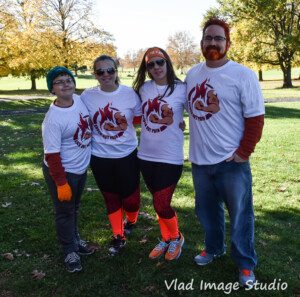
In January 2015, Julian took a terrible fall that sent him into one of the worst CRPS/RSD flare ups that he had ever experienced. This guided him into full body CRPS. While Julian was spending time in hospitals, fighting the pain, Sarah witnessed some of the grim realities that come with CRPS. Medical staff didn’t know how to handle a person in so much pain, never mind the fact that they even had the slightest idea of what CRPS/RSD was. Sarah decided enough was enough. While sitting by her father’s bedside during a ketamine infusion, she started researching awareness event ideas, primarily benefit 5k’s. She stumbled upon a 5K in Charlotte, NC that benefitted RSDSA- Fight the Flame 5K. Sarah then immediately reached out to them and established a friendship with the Stillitano family. Once Julian was released from the hospital, Sarah approached him and her family with the idea to do a 5K and to fundraise for RSDSA. Julian wanted to take it a step further and start a support group for those suffering from all types of chronic pain. Thus, Knock Out Pain was born. It is a full out family affair. Julian and Sarah’s mother work on the support group, while Sarah, her siblings (Craig and Hannah), and other family members work on fundraising and awareness. They held their first benefit that March in Trexlertown, PA.

For Sarah, RSDSA was a natural choice to donate to. According to Sarah, RSDSA has done and continue(s) to do some great things. When needing guidance to start this project, RSDSA Executive Vice President and Director Jim Broatch was there, supporting and helping her get the right contacts and start on the right foot.

Knock Out Pain 5K and 1 Mile Fun Walk will be taking place on September 17, 2017 in Easton, PA. This is their 3rd fundraising sports event and 2nd 5K. Last year, with their first 5K, they were thrilled with the 50+ participants and their hope is that they can double that figure this year. What makes this event stand out is that it’s the only 5K in the Lehigh Valley that benefits RSDSA AND it is a small family event. It is a wonderful demonstration of what happens when we are all able to come together to support a loved one in need. Sarah will tell you that the event is not a giant event that you’ll get lost in the crowd in, but it’s an event to bring people together and to make people aware of this disease that affects people worldwide, although little have heard of it. You can be the next Usain Bolt or you can be the polar opposite. All levels of runners and walkers are welcome at this event.

The overall goal of the 5K is to raise awareness for CRPS. That is the goal for the entire family. Sarah’s personal goal is to make her father proud and touch at least one person’s life. She hopes people walk or run (no pun intended) away from this 5K armed with knowledge that there are more diseases out there that impact people and their families that deserve time and attention, too! Sarah wants to make sure that people realize that diseases can be invisible and we all need to remember we shouldn’t judge anyone until we walk a day in their shoes.

Knock out pain together and join this event to help make changes in the lives of those with CRPS/RSDMaking it more of a family affair, Sarah has stated that she never would have started this had it not been for her husband supporting her through and through. They have an amazing 5K committee that includes friends of theirs on top of family- Rob, Aubrey, Mike, and Kathy. Other friends continue to support them behind the scenes by sponsoring, campaigning, web designing, graphic designing, and being a shoulder to lean on when times get stressful or emotional.
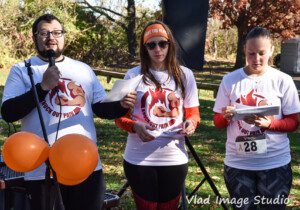
While Julian is Sarah’s number one inspiration, when she stops and thinks, she sees all of the other people and reasons that she puts on Knock Out Pain 5K. Her mother has dedicated her life to being by Julian’s side through surgeries, medications, frustrations, setbacks, and more and has continuously changed her own life around so Julian could have more of a “normal life.” Sarah states that her mother is an inspiration of what a true wife/mother/grandmother should be. Then, there are two men that have the same hopes, dreams, and desires as Sarah, which is that everyone will know of CRPS one day. Those men are her husband, Kyle, and brother, Craig.  They continue to push her and support the cause, all while working tirelessly with Sarah to make Knock Out Pain something. But, Sarah also does this for her kids and youngest sister, Hannah. The inspire her to set a good example of what a leader looks like. She wants to encourage them to set goals and achieve them, no matter what obstacles may appear.

Participating in awareness and fundraising events is important. Giving back to the cause that helps families and individuals affected by this monstrosity of a disease is important. Sarah likes to give back to those that need it. Both Sarah and her husband feel they have been blessed throughout their lives by the kindness of others, and now is the time to pay it forward.Running a Knock Out Pain event for CRPS awareness and fundraising

As Sarah stated, “What do you have to lose?” Join us at Knock Out Pain 5K on September 17, 2017. It will be a fun morning getting some exercise and/or meeting new people while learning more about CRPS. You can register for this event by clicking here. If you cannot make it out to the event, you can also give a general donation to this walk.

We are incredibly inspired by the entire Phillips/O’Steen family. Thank you to Sarah, Julian, and the rest of the family for taking on such amazing tasks within the CRPS/RSD community and for continuing to give back.  Help them help you and others with CRPS! Let’s Knock Out Pain together!

RSD and Me – A New Full Time Job

Living with RSD can feel like a full time job. How can you adapt to the changes and make a positive difference in your life with RSD/CRPS?Written by Guest Blogger Sylvia Miller

Being diagnosed with RSD CRPS can cause people to go through a range of emotions: denial, frustration, confusion, sadness, incompleteness, etc. Sylvia writes about what it was like trying to find an answer that wasn’t RSD/CRPS. What happens after the RSD diagnosis? How can you impact your life regardless of the pain?

3 years ago, I suffered a fall and fractured my ribs.  From that point forward, it seemed to be that I reached out to any doctor to [try to] understand the pain I encountered.   A physician diagnosed me as having RSD, but I thought, surely, this doctor is wrong.  So, I continued to research and search for any understanding about RSD and locate any physician to tell me I did not have RSD.  The news I dreaded hearing confirmed I was diagnosed with RSD. There is no cure, so, where do you go from the point of diagnosis and what do you do after the diagnosis?   Searching countless and excessive research to help me stop the insanity of the pain became a full-time job.  Having family and friends get a glimpse and understanding what I was dealing with was a full-time job.

I was placed out of work and my new full-time job became searching for answers and searching for doctors to help me.  From injections to consults with no relief.  Grasping out to every newspaper, government official and talk show host to spread awareness and no response.  Feeling alone and trying to get family members, friends, acquaintances to understand this disease.   This truly is a full-time job.   I believe unless you experience something yourself, you can truly never understand the depth.

Cancelling plans with friends and family has been consistent as the pain permits me from participating in activities. Finding new ways to do simple household chores has become a challenge but you reinvent a new way to handle. Anxiety has now become an issue. From physical therapy to Yoga to walking, trying anything to keep me occupied in hopes the pain will come to a halt.  Feeling alone has become the new reality.

For now, my search continues, but confirmation is that I get through every day and know somewhere there is an answer that will give life back, stop the insanity, and remind myself daily to never ever give up and positivity is a strong force.

My CRPS Experience at the Young Adult Weekend

Jess was one of the young adults at our CRPS retreat. Read about her experiences and why events like this are so importantWritten by Guest Blogger Jess Henry-Cross

Jess was a participant in our very first CRPS Young Adult Weekend this past June. She was more than happy to write a brief blog about her experience and how it changed things for her. Why are events like this so important? Read about what Jess experienced to learn more.

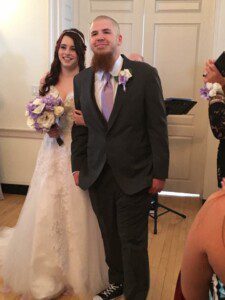
Around 2:30 in the afternoon on Sunday, June 18th I found myself holding back a few (happy) tears.  I was driving home after spending the last 45 hours with a group of women who recharged me in a way I had never even dared to hope for.  I didn’t want the weekend to be over.

I signed up for the RSDSA Young Adult Weekend with one goal – to go kayaking on the Delaware River.  I figured that I would give myself bonus points if I met a person or two who I could have a good conversation with.  One of my worst habits is my constant expectation of disappointment, so imagine my surprise when I walked into this group of brave, beautiful, adventurous, determined, energizing, bad-ass rock stars.  This weekend blew my mind.  The instant connection and pure understanding amazed me.  I had no idea how powerful it would be to venture into a community where others don’t just get [CRPS] RSD, they have [CRPS] RSD.  I guess there really is something to those support groups I’ve heard about!

This ended up being a collaborative weekend where we all learned from and challenged each other.  Some of us learned what our limits are and some of us expanded our limits.  We had crucial talks on advocating for ourselves, whether it be in a doctor’s office, with an insurance company, on a college campus, out in the workforce, in a restaurant where the music is too loud, and even within our own groups of family and friends.  There were midnight talks in hotel rooms, the contents of which will never leave those four walls.  We shared and brainstormed tips and tricks for forming and maintaining relationships, self-care, transitioning from being a child with chronic pain to being an adult with chronic pain, sneaking into a wedding reception, and making the best s’more.  I’m so proud to say that we all found adventure in some form on the Delaware River.  Jess, who has been living with CRPS for 8 years, was able to fulfill her goal of kayaking in the Delaware during the young adult retreat

Over the last 8 years I have accumulated a lot of different things in my “living with RSD” toolkit.  I’ve managed to find some great doctors, I have friends and family that support me, and I have access to a constant rotation of various treatments that keep me moving and grooving (and hopefully some more kayaking).  I’ve come a long way from the darker days of my original diagnosis, but up until this weekend I was still too stubborn to admit that I needed to connect with a community that fully understood the burning pain I feel in my bones and the brain fog that steals my precious time.  I think my toolkit took a hint from The Grinch and grew several sizes to fit in this remarkable group of new connections.  I wish I could go back to freshly diagnosed 20-year-old me and tell her to do more than just ‘like’ a few Facebook pages and subscribe to a newsletter.  To anyone out there who has never reached out for support, this is your sign – do it!  To RSDSA – keep doing things like this.  Keep bringing us together.  The hugs may be gentle, but the support is fierce and life changing.

If you would like to donate to help make a Young Adult Weekend happen again, please visit rsds.org/donate!

Ending the Negative Cycle of Suicidal Thoughts: A Toolkit of Hope

Suicide is a dark place, and if you are currently seeking the light, you know how difficult it can be to find that light switch. There are times when you think you’ve found the way out only to find it’s a dead end. In addition to suicidal thoughts, depression can cause appetite changes, disruption in the sleep cycle, addiction, and a lack of interest in things that once brought joy.

It can also lead to social withdrawal, which can leave you feeling as if you have to deal with these difficult and confusing feelings on your own. Use the resources in this toolkit to find the help you need, as well as some helpful mood-boosting strategies you can implement daily.

How to Find Support
Although you may be feeling alone, the good news is that you aren’t. There are people out there that not only want to help you, but can! The following is a great place to start when are you building your support network:
● Talk to your doctor
● Talk to someone you trust
● Ask your family to help you find a psychologist
● Plug in online
● Call a suicide hotline: Call the national Suicide Prevention Lifeline at 988

Mood-Boosting Strategies
From surrounding yourself with color to taking care of yourself mentally, physically, and emotionally, coping doesn’t have to be overwhelming or time consuming. There are quick and easy methods you can implement that will have lasting effects.

Practice Self-Care
The cycle of negative thoughts can take a toll on your mood, your stress levels, and even the amount of sleep you get. Practicing self-care is an easy way to ensure that your mind and body are taken care of, so find something that makes you happy and healthy and do it often. Whether that means playing a quick game of basketball with friends or setting aside time each day for deep breathing and reflection, carving time out of your schedule to do what makes you happy and relaxed will help you on even your worst days.

Get Social
When you are feeling down, you may withdraw socially and isolate yourself from the world. However, it’s important to maintain your relationships with others to keep a strong social bond which will help your self-esteem and, ultimately, your ability to get through the tough times. If you prefer the four-legged variety, consider getting a furry companion such as a service dog. Animals can sense your feelings and emotions, and can provide unconditional love, companionship, and judgement-free comfort.

Get Creative
Many people have a creative spark, even if they don’t use it every day. Channel your energies into something creative — such as writing, drawing, painting, singing, or playing an instrument — for an instant mood lift. For many people, being able to get negative emotions out on paper or through song is an important part of growing as a person and learning how to cope with difficult symptoms. Even if you don’t have a creative bone in your body, consider surrounding yourself with your favorite colors as a useful trick that can help you stay calm, relaxed, and happy. The use of colorful artwork and bright paint in your most-used areas will help boost your mood and keep you uplifted, so don’t be afraid to get colorful.

Exercise Daily
It might be hard to think about getting in a workout when you’re feeling low, but exercise is an important part of feeling better. Working out is a great way to boost your mood and lift your self-esteem. Increase the boost by getting outside to soak up some vitamin D.

More Mood-Boosters
● Get it out on paper
● Give aromatherapy a try
● Find your sleep routine
● Eat more superfoods
● Turn up the music

Breaking the cycle of suicidal thoughts and depression is no easy feat, but like any obstacle, with a little help and hard work, you can get through it. Use the tips in this toolkit to find the hope you are looking for. You can put a stop to this cycle.